
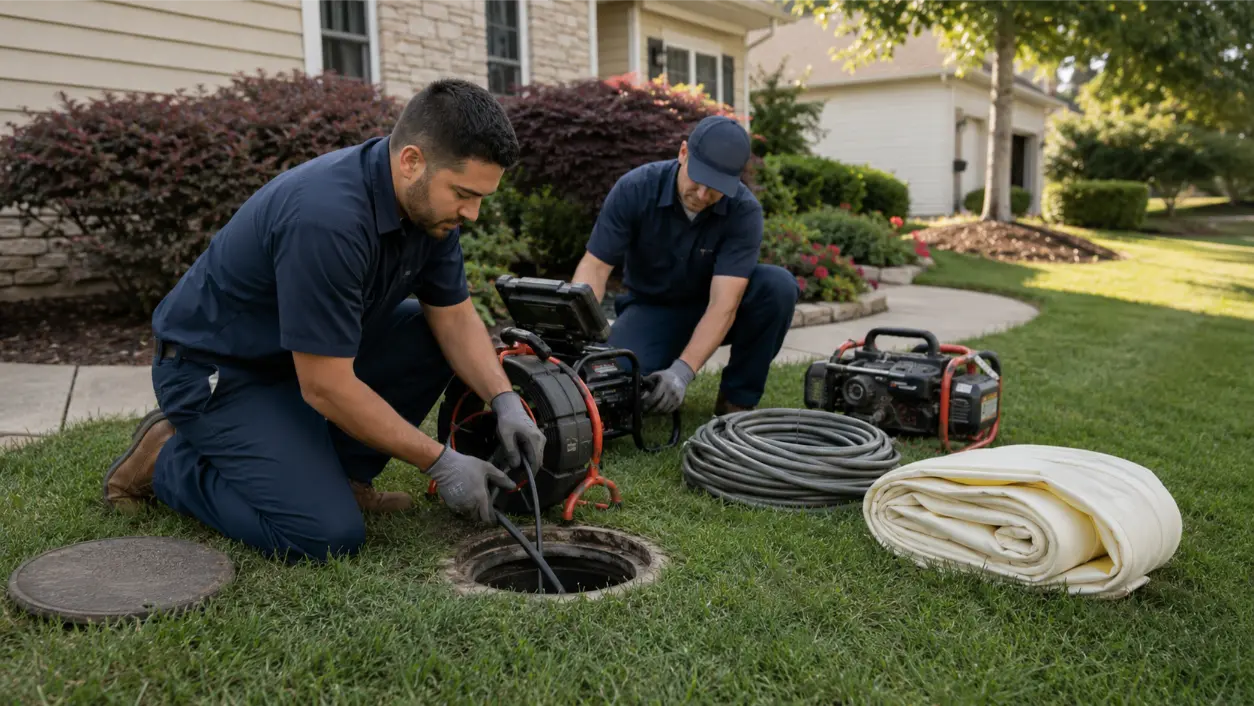
Sewer repair without digging is possible in many situations, but it is not the right answer for every damaged sewer line. Trenchless methods can rehabilitate or replace certain underground pipes while reducing the amount of excavation across lawns, driveways, patios, floors, and other finished areas. The deciding factor is the condition and geometry of the existing pipe—not simply the homeowner’s preference to avoid a trench.
For homeowners in Atlanta, Marietta, Acworth, Kennesaw, Woodstock, and surrounding Metro Atlanta communities, Daniel’s Plumbing Services offers CIPP, pipe lining, no-dig sewer repair, trenchless sewer repair, drain cleaning, and sewer repair services. The process should start with diagnosis so the repair method matches the actual defect.
Short Answer: Yes, Some Sewer Lines Can Be Repaired With Minimal Excavation
Traditional sewer replacement often means exposing the damaged line from above, removing the failed section, and installing new pipe. That approach is still necessary in some cases. Trenchless technology changes the access strategy: instead of opening the entire pipe route, a contractor may work through existing cleanouts or limited access points to rehabilitate the line internally.
The U.S. Environmental Protection Agency has long recognized trenchless rehabilitation methods for sewer systems, including cured-in-place pipe, or CIPP. Current plumbing codes also specifically address sewer relining and cure-in-place rehabilitation. Georgia’s adopted 2024 International Plumbing Code with Georgia amendments took effect January 1, 2026, so permitting and installation details should be checked against the current local requirements for the property.
What Does “No-Dig Sewer Repair” Actually Mean?
“No-dig” is useful shorthand, but homeowners should interpret it carefully. Many trenchless projects avoid a continuous trench along the sewer route, yet some access work may still be necessary. A cleanout may need to be exposed or added. A connection may need localized excavation. A severely damaged area may require a spot repair before the rest of the line can be rehabilitated.
A better description is reduced-excavation sewer repair: the goal is to repair or rehabilitate the line while preserving as much of the surrounding property as practical.
How CIPP Sewer Pipe Lining Works
Daniel’s Plumbing is a certified NuFlow partner specializing in NuDrain cured-in-place pipe lining. Its NuFlow pipe repair page describes NuDrain as a non-invasive method for rehabilitating drain, sewer, storm, and roof-drain piping from inside the existing line.
The basic process usually follows these stages:
- Inspect the pipe. A camera survey helps identify roots, corrosion, cracks, offsets, buildup, deformation, and other conditions that affect repair selection.
- Clean and prepare the host pipe. Roots, scale, grease, corrosion products, and loose material must be removed as appropriate so the liner can be installed against a properly prepared surface.
- Measure and plan the liner. The contractor selects the liner length and installation approach based on pipe diameter, access, bends, branches, and the location of the defect.
- Install and cure the liner. NuFlow describes an epoxy-saturated flexible liner that is pushed or pulled through an access point, pressed against the host pipe with an internal bladder, and cured in place.
- Verify the finished work. Post-installation camera inspection and flow testing may be required by the applicable code, permit, system, and installation standard.
NuFlow describes the finished result as a structural “pipe within a pipe.” Its official NuDrain product information lists sanitary drain and sewer applications among the systems that can be rehabilitated with the technology.
When Trenchless CIPP Can Be a Strong Fit
Cracks and Deteriorated Joints
A pipe may still follow the correct route and slope while developing cracks, small holes, or deteriorated joints. If inspection shows the host line remains suitable for rehabilitation, lining can sometimes create a new continuous interior pipe without exposing the entire run.
Root Intrusion After Proper Cleaning
Roots commonly enter through existing openings. Cutting roots can restore flow, but it does not close the entry point. Where the host pipe is otherwise suitable, lining may help address the damaged section after roots and debris have been removed and the pipe has been prepared.
Corroded or Rough Drain Piping
Older cast iron can develop scale, corrosion, rough interior surfaces, and localized deterioration. Camera inspection and cleaning help determine whether the remaining pipe can support a rehabilitation approach or whether too much structural integrity has been lost.
Pipes Under Finished Areas
The value of trenchless work becomes especially clear when a sewer line runs beneath a driveway, patio, slab, landscaped yard, finished floor, or other area that would be costly or disruptive to excavate. Avoiding a continuous trench can reduce restoration work when the pipe itself is a good candidate.
When Sewer Repair Without Digging May Not Be the Right Solution
The most important part of trenchless repair is knowing when not to use it. A homeowner should not choose CIPP before the line has been inspected.
Severe Collapse or Loss of Pipe Shape
CIPP depends on the existing pipe route and enough host-pipe geometry to install the liner correctly. A badly collapsed, crushed, or inaccessible section may require excavation, localized replacement, pipe bursting, or another method.
A Major Belly or Slope Problem
A sewer line depends on gravity and consistent slope. If the pipe has settled into a significant low point where water and solids collect, lining generally follows that existing geometry; it does not automatically raise the pipe or recreate the proper grade. Correcting a major slope problem can require excavation and physical realignment.
Access or Connection Problems
Some lines do not have practical access for the selected trenchless method. Branch connections, diameter changes, fittings, property-line connections, or the condition of the connection to the public sewer can affect what is feasible. These details should be mapped before the repair is sold.
Code or Permit Requirements
The current 2024 International Plumbing Code includes specific requirements for relining and cure-in-place rehabilitation of building sewers and drains, including inspection and applicable installation standards. Georgia adopted the 2024 IPC with amendments effective January 1, 2026. The contractor should confirm the permit, inspection, material, and local code requirements that apply to the actual property rather than assuming every jurisdiction handles the work identically.
CIPP vs. Traditional Sewer Replacement
Neither method is automatically better. They solve different conditions.
- CIPP may be attractive when: the pipe route and slope are acceptable, the host pipe can be cleaned and prepared, defects are suitable for rehabilitation, and avoiding broad excavation provides meaningful value.
- Traditional excavation may be necessary when: the pipe has severe collapse, a major belly, incorrect alignment, inaccessible failures, or other conditions that need the line physically repositioned or replaced.
- A combination can also make sense: a localized excavation may correct one failed section while another part of the line is rehabilitated trenchlessly.
The right comparison is not “digging is bad and lining is good.” It is “which method corrects the verified defect with the least unnecessary disruption?”
What Should Happen Before a Trenchless Sewer Repair Is Recommended?
A diagnosis-first process protects the homeowner from paying for the wrong repair. Before committing to lining, ask for a clear explanation of the defect and why the proposed method fits it.
- Map the symptoms: backups, slow drains, root recurrence, odors, or previous repair history.
- Locate available cleanouts and the approximate sewer route.
- Clean the line enough to see the actual pipe wall where required.
- Perform a camera inspection and identify the defect locations.
- Confirm whether slope, deformation, and access are compatible with the proposed method.
- Review the repair limits, connections, permit requirements, and any areas that may still need excavation.
- Perform post-repair verification appropriate to the installation and code.
If multiple drains are slowing at the same time and you are not yet sure whether the main sewer is involved, Daniel’s Plumbing’s guide to multiple slow drains explains the warning signs that can justify a main-line evaluation.
How Much of the Yard Can Trenchless Repair Save?
The amount of property disturbance varies. A favorable lining project may use existing access points and leave most of the yard, driveway, or interior finishes untouched. Another job may need one or more small excavations for access, connections, or a section that cannot be lined.
That is why homeowners should be cautious with absolute claims such as “zero digging.” Ask the contractor to mark where access is expected, what surfaces are likely to remain intact, and what restoration—if any—is included in the scope.
Questions to Ask Before Choosing No-Dig Sewer Repair
- What did the camera inspection show?
- Is the pipe still structurally and geometrically suitable for lining?
- Is there a belly, collapse, or alignment problem that lining will not correct?
- How will roots, scale, grease, or corrosion be removed before installation?
- Which section of pipe will be lined?
- Will any excavation still be required?
- How will branch connections or fittings be handled?
- What permits, inspections, or recorded camera surveys apply?
- How will the finished line be verified?
No-Dig Sewer Repair in Metro Atlanta
Daniel’s Plumbing Services provides CIPP, pipe lining, no-dig sewer repair, trenchless sewer repair, sewer cleaning and repair, and pipe rehabilitation across Acworth, Marietta, Atlanta, Kennesaw, Woodstock, Roswell, Sandy Springs, Smyrna, Cartersville, Alpharetta, Johns Creek, Canton, and other surrounding Georgia communities.
If you are trying to avoid tearing up a yard, driveway, patio, or finished area, contact Daniel’s Plumbing Services and ask for an inspection-first evaluation. The goal should be to confirm whether the damaged line is a real trenchless candidate before choosing the repair method.
Frequently Asked Questions
Can a sewer line really be repaired without digging?
Yes, some sewer lines can be rehabilitated with trenchless methods such as CIPP using existing or limited access points. The line must first be inspected to confirm that the defect, pipe geometry, access, and condition are suitable.
What sewer problems can CIPP repair?
CIPP can be considered for certain cracks, deteriorated joints, corrosion, root-entry defects, and other damage in qualifying gravity sewer or drain pipe. The exact application depends on the host pipe and the selected lining system.
Can CIPP fix a collapsed sewer pipe?
Not every collapse can be lined. If the host pipe has lost too much shape or continuity, the contractor may need localized excavation, replacement, pipe bursting, or another method.
Can trenchless repair fix a sewer-line belly?
Generally, lining follows the existing pipe path and does not physically raise a severe sag or recreate proper slope. A major belly may require excavation and realignment.
Does trenchless sewer repair work under a driveway?
It can be especially useful where a qualifying pipe runs under a driveway, slab, patio, or landscaping because the method may reduce the amount of surface removal. Some access excavation may still be necessary.
Do you need a sewer camera inspection before CIPP?
Inspection is a critical part of determining whether lining fits the defect. The current plumbing code also contains pre- and post-installation inspection requirements for certain relining work. The exact process should follow the applicable code, permit, manufacturer instructions, and installation standard.
Is trenchless sewer repair always cheaper than digging?
No. Total cost depends on pipe length, diameter, access, cleaning, defect type, permitting, restoration, and the repair method. Trenchless work can reduce excavation and surface restoration in suitable projects, but it is not automatically the lowest-cost option in every case.
This article provides general plumbing and construction information. Sewer repair methods, permitting, code requirements, pipe condition, access, and site constraints vary by property. Use a qualified plumbing professional to inspect the line and confirm the appropriate repair method before work begins.
RELATED LINK: U.S. Environmental Protection Agency — Collection Systems O&M Fact Sheet: Trenchless Sewer Rehabilitation