
If you need to repair corroded cast iron pipes in an older home, full replacement is not always the only option. Some deteriorated cast-iron drain and sewer lines can be rehabilitated from the inside with cured-in-place pipe, or CIPP, creating a new structural liner within the existing pipe. Other lines are too deformed, collapsed, offset, inaccessible, or otherwise damaged for lining to be the right repair. The key is to determine the pipe’s actual condition with inspection and cleaning before deciding whether rehabilitation or replacement makes more sense.
Daniel’s Plumbing Services provides pipe lining, drain and sewer repair, and related plumbing services across Atlanta, Marietta, Acworth, and surrounding Georgia areas. The company is a certified NuFlow partner and uses NuDrain CIPP technology for qualifying drain, sewer, storm, and roof-drain applications. For homeowners trying to preserve an older plumbing system, the practical question is not simply how old the cast iron is. It is whether enough of the existing pipe remains in the right shape and condition to support a successful rehabilitation.
Why Cast Iron Pipes Corrode
Cast iron has been used in drainage systems for generations because it is strong, quiet, and durable. Over time, however, the inside of a drain line can develop scale, rust, pitting, rough surfaces, channeling, joint deterioration, and other defects. Waste buildup can cling to the roughened interior, and recurring clogs may become more frequent as the effective opening narrows.
Corrosion does not always progress uniformly. One section may remain structurally sound while another develops deep pitting or a damaged bottom. That is why age alone cannot tell you whether a pipe should be lined or replaced.
What CIPP Does to an Existing Cast Iron Pipe
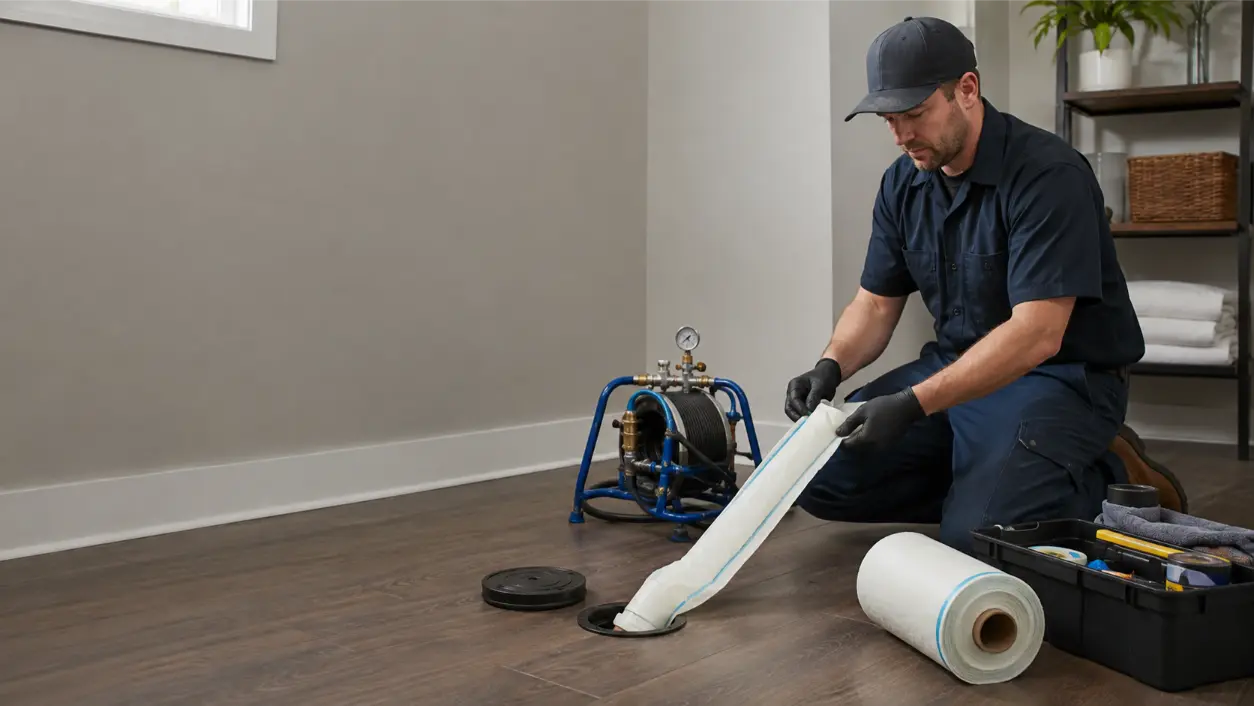
Cured-in-place pipe rehabilitation installs a resin-saturated liner inside the existing pipe. The liner is positioned through an access point, pressed against the interior wall, and cured to form a continuous new pipe inside the host pipe.
NASSCO describes CIPP as a widely used trenchless rehabilitation method that can create a new seamless structural pipe inside deteriorated gravity piping. NuFlow’s NuDrain system is designed for non-pressurized drainage networks and can be used with host pipes including iron, metal, clay, concrete, plastic, and fiberglass.
For an older home, the attraction is straightforward: when the pipe qualifies, lining may preserve floors, walls, slabs, landscaping, or finished areas that might otherwise be disturbed to reach the original pipe.
When Corroded Cast Iron May Be a Good Candidate for Lining
CIPP is most promising when the pipe is deteriorated but still provides a usable pathway for cleaning, liner installation, and curing. NASSCO notes that lateral CIPP can be appropriate when a host pipe has cracks, fractures, or holes but has generally maintained its original shape.
Conditions that may support rehabilitation include:
- Internal corrosion and pitting that can be cleaned and prepared.
- Cracks or small holes within a pipe that still retains its basic geometry.
- Leaking or weakened joints that can be incorporated into the lined section.
- Root intrusion that can be removed before rehabilitation, when the underlying pipe remains suitable.
- Drain, waste, vent, sewer, storm, or roof-drain piping within the capabilities of the selected lining system.
- Pipe located under slabs, inside walls, beneath landscaping, or in other areas where conventional replacement would be disruptive.
These are screening considerations, not a diagnosis. A qualified contractor still needs to inspect the actual line and confirm that the product, diameter, access, bends, branches, and structural condition fit the proposed repair.
When Replacement May Be the Better Choice
Trenchless rehabilitation is powerful, but it cannot correct every form of failure. A liner follows the path and shape available to it. If the host pipe has lost that usable geometry or the surrounding problem cannot be addressed from inside, replacement or another repair method may be more appropriate.
Replacement may deserve stronger consideration when inspection shows:
- A collapsed section with no usable opening.
- Severe deformation that prevents proper liner placement.
- Major offsets or separated joints that materially disrupt the pipe path.
- A section that cannot be adequately cleaned or prepared.
- Insufficient or impractical access for the proposed lining process.
- A required change in pipe layout, slope, size, or routing that lining cannot accomplish.
- A defect involving surrounding soil, structure, or another condition that interior rehabilitation alone would not correct.
In some homes, the best answer can also be a hybrid: line the sections that are good candidates and replace a localized area that is structurally unsuitable.
Why Camera Inspection Comes Before the Repair Decision
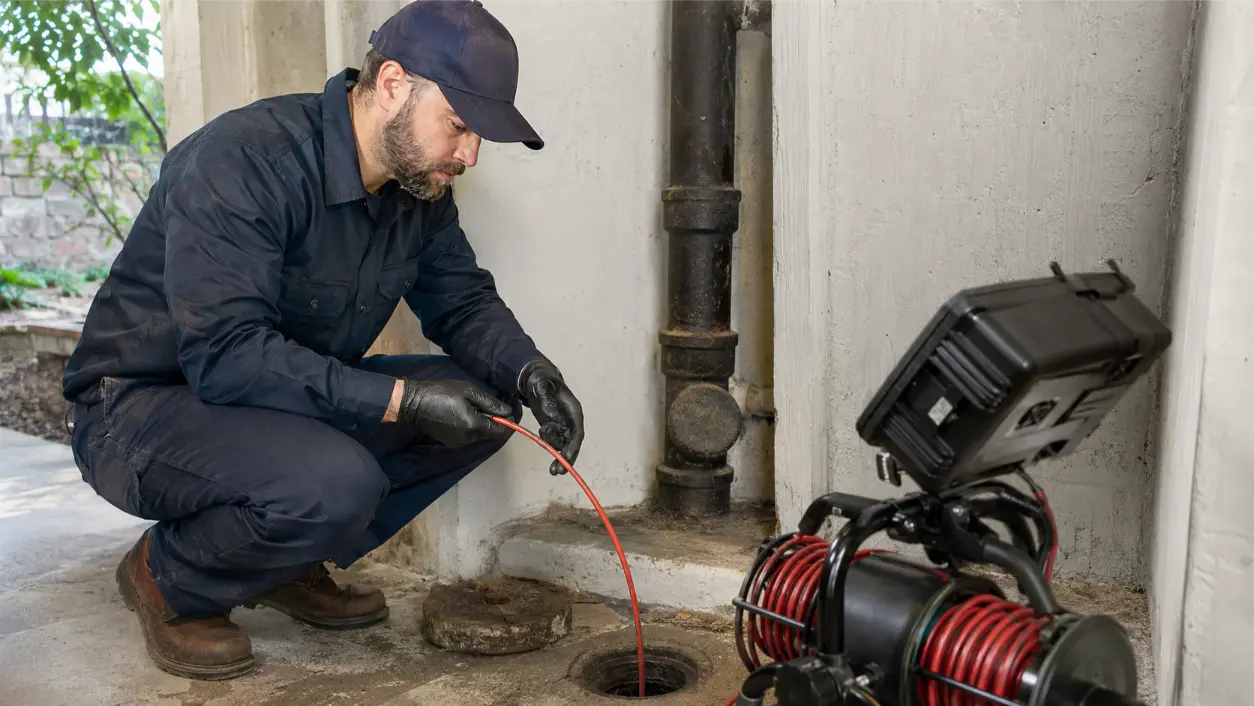
A sewer camera inspection helps the plumber see what cannot be determined from symptoms alone. NuFlow’s published process begins with camera inspection of blocked or corroded piping, followed by cleaning appropriate to the condition before the liner is installed.
The inspection can help identify:
- Corrosion pattern and interior surface condition.
- Cracks, holes, fractures, and joint problems.
- Roots and accumulated debris.
- Offsets, bellies, deformation, or collapse.
- Branches, bends, fittings, and access points.
- The approximate locations where defects begin and end.
A camera is an important diagnostic tool, but the final repair recommendation may also depend on cleaning results, measurements, access, building conditions, and the specific lining system being considered.
Cleaning Is Part of the Structural Evaluation
Corroded cast iron often contains scale and deposits that hide the true pipe surface. Before lining, those materials need to be removed using methods appropriate to the pipe and condition. The objective is not just to clear a clog. It is to prepare the interior so the rehabilitation system can be installed as designed.
Cleaning can also change the repair decision. A line that initially looks heavily obstructed may reveal a usable host pipe after preparation. Conversely, cleaning may expose deeper deterioration or missing material that makes replacement more appropriate. The condition after cleaning matters more than an assumption made from a partially blocked camera view.
What the NuDrain Process Looks Like
NuFlow describes the NuDrain process in three broad stages. First, the pipe is inspected and cleaned. Second, a flexible epoxy-saturated liner is pushed or pulled into place through an existing access point and pressed against the host pipe with an internal bladder. Third, the resin cures and the bladder is removed, leaving the new liner inside the original pipe.
The manufacturer states that NuDrain can be used in horizontal laterals, vertical stacks, drain-waste-vent systems, sewer, storm, and roof-drain applications, subject to the project’s specifications and installation requirements. Daniel’s Plumbing Services identifies itself as a certified NuFlow partner for this type of pipe-lining work.
Does Lining Make the Old Cast Iron Disappear?
No. CIPP rehabilitates the pipe from the inside; it does not excavate and remove the existing cast iron. The original pipe remains around the new liner. That is one reason lining can reduce demolition and excavation when compared with conventional replacement.
This distinction is important when homeowners compare proposals. A lined pipe and a newly excavated replacement are different repair strategies. The right choice depends on the pipe’s condition, location, access, project goals, and the performance requirements of the repair.
Can Lining Be Used Under a Slab?
Potentially, yes. Under-slab cast iron is one of the situations in which trenchless rehabilitation can be especially attractive because conventional access may require opening finished floors or concrete. NuFlow states that NuDrain can rehabilitate piping beneath and within a building envelope using existing access points where the system and condition permit.
However, an under-slab location does not automatically make a pipe lineable. If the pipe is collapsed, badly displaced, improperly sloped, or otherwise unsuitable, selective excavation or replacement may still be necessary.
CIPP Versus Full Replacement: What Should a Homeowner Compare?
Do not compare only the quoted price. Compare the entire repair scope.
- Condition: Is the existing pipe structurally suitable for lining?
- Access: Can the pipe be properly cleaned, measured, and reached?
- Disruption: What flooring, concrete, walls, landscaping, or finishes would replacement affect?
- Layout: Does the existing route and slope need to change?
- Coverage: Is the proposal treating one damaged section or a larger deteriorated system?
- Verification: Will the contractor document the condition before and after the work?
- Product: What lining system is being proposed, and is it intended for the specific application?
The lowest-demolition option is not automatically the right option, and the most invasive option is not automatically the most durable. A condition-based recommendation is more useful than choosing a repair category in advance.
Signs an Older Cast Iron System Deserves Inspection
Homeowners should not wait for a complete collapse before investigating a recurring drainage problem. Consider a professional evaluation when you notice:
- Repeated clogs in the same drain or branch.
- Slow drainage that returns after routine clearing.
- Sewer odors or signs of leakage.
- Visible rust, scaling, or deterioration on exposed cast iron.
- Known older cast-iron piping beneath a slab or in hard-to-access areas.
- A prior camera inspection showing corrosion, roots, cracks, or damaged joints.
These symptoms do not prove that CIPP is required. They indicate that the condition should be evaluated before repeated short-term clearing becomes the only strategy.
Cast Iron Pipe Repair Checklist
- Confirm where cast iron remains in the plumbing system.
- Document recurring symptoms and prior repairs.
- Perform a camera inspection of accessible drain or sewer sections.
- Clean the pipe appropriately so the actual surface can be evaluated.
- Identify corrosion, holes, cracks, roots, offsets, deformation, and collapse.
- Determine whether the pipe has maintained a usable shape for lining.
- Review access points, bends, branches, diameter, and liner limitations.
- Compare CIPP, localized repair, and replacement based on condition and disruption.
- Ask what pre- and post-installation documentation will be provided.
- Confirm that the proposed product is appropriate for the specific drain or sewer application.
Frequently Asked Questions
Can Corroded Cast Iron Pipes Really Be Lined?
Yes, some can. CIPP systems are used to rehabilitate corroded cast-iron drainage piping when the host pipe can be adequately prepared and remains suitable for liner installation. Severe collapse, deformation, offsets, access problems, or other structural conditions can make replacement more appropriate.
Can CIPP Repair Holes in Cast Iron?
Depending on the system and pipe condition, CIPP can rehabilitate pipes with cracks, fractures, holes, corrosion, and joint defects. The pipe must still fall within the technical limits of the selected lining system, so camera inspection and preparation are essential before making that determination.
Is Pipe Lining the Same as Epoxy Coating?
No. CIPP generally uses a resin-saturated tube that cures into a new liner inside the host pipe. Spray or brush-applied coatings are a different rehabilitation category and may have different structural capabilities. Ask which technology is actually included in a proposal.
How Do I Know if My Cast Iron Is Too Damaged to Line?
You usually cannot tell from age or symptoms alone. Inspection after appropriate cleaning is used to evaluate whether the line has maintained the shape, access, and condition needed for the proposed CIPP system. Collapsed or severely displaced sections are common reasons to consider replacement or localized excavation.
Should I Replace All the Cast Iron in an Older Home?
Not automatically. Some sections may be serviceable, some may qualify for rehabilitation, and others may need replacement. A system-level inspection can help prioritize the actual defects instead of replacing piping solely because of its age.
Get the Pipe Condition Before Choosing the Repair
Corroded cast iron does not always mean immediate full replacement. When the host pipe remains suitable, CIPP can create a new structural liner inside existing drainage piping while reducing the need to open finished areas. When the pipe has collapsed, deformed, shifted, or otherwise fallen outside the lining system’s requirements, replacement may be the more appropriate path.
Daniel’s Plumbing Services offers pipe lining, sewer repair, drain cleaning, and related plumbing services for homes and businesses across Atlanta, Marietta, Acworth, and surrounding Georgia communities. As a certified NuFlow partner, the company can evaluate whether NuDrain CIPP may fit the condition of an existing drain or sewer line. Homeowners can contact Daniel’s Plumbing Services to schedule an inspection and discuss rehabilitation versus replacement options.
Plumbing, construction, and technical disclaimer: This article provides general educational information and is not a site-specific plumbing, structural, engineering, code, or warranty determination. CIPP suitability depends on pipe condition, material, diameter, access, geometry, cleaning results, product limitations, local requirements, and installer evaluation. A qualified plumbing or trenchless-rehabilitation professional should inspect the actual system before recommending lining, excavation, replacement, or another repair method.
RELATED LINK: NASSCO — Pipe Rehabilitation