
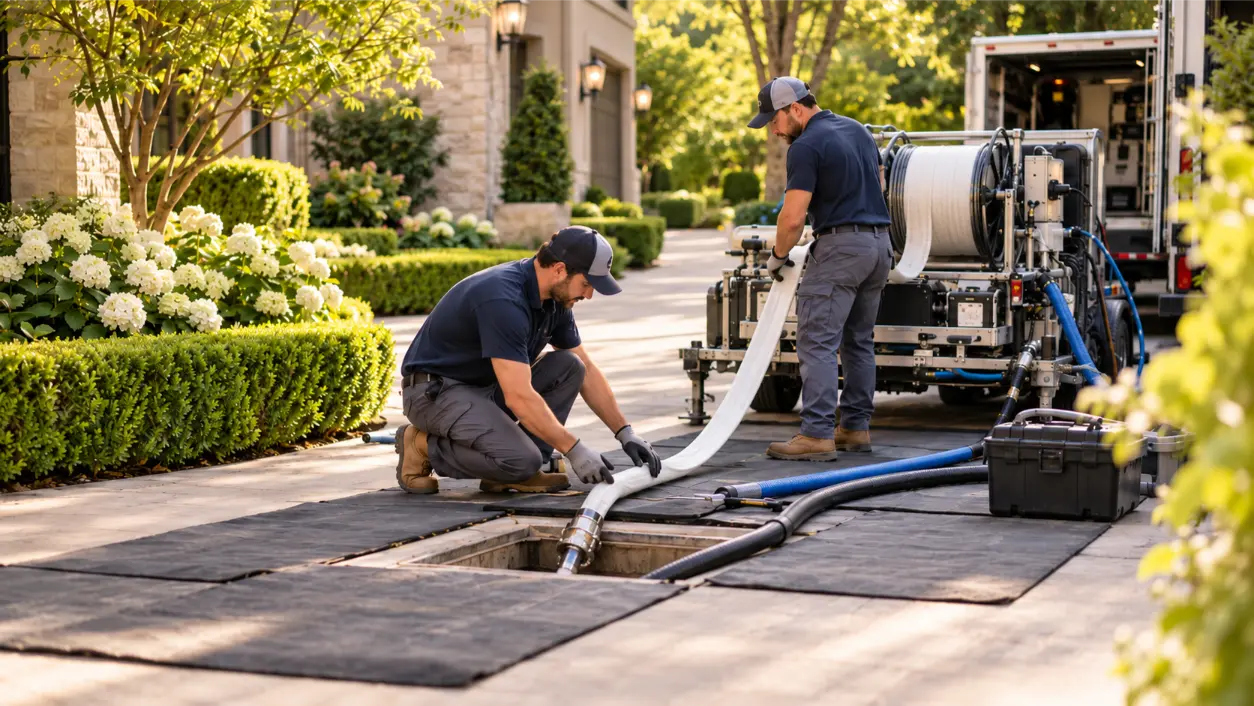
Homeowners looking for sewer repair without damaging landscaping often face an uncomfortable choice: fix a failing underground pipe or protect the lawn, trees, flower beds, and outdoor spaces they have worked hard to maintain. Fortunately, some sewer lines can be rehabilitated from the inside rather than excavated along their full length.
The key is finding out what is wrong with the pipe before anyone starts digging. Trenchless methods can limit disturbance, but the condition and location of the sewer line determine what is actually possible.
Why Traditional Sewer Repairs Can Be So Disruptive
A residential sewer lateral carries wastewater away from a home toward a municipal connection or other approved wastewater system. Because much of the line runs underground, conventional replacement may require a trench across grass, planting beds, walkways, or other finished parts of the property. Even after a pipe is repaired, rebuilding a retaining edge, replacing sod, repairing an irrigation line, or restoring compacted soil can add work to the project.
This is particularly frustrating when the visible landscape looks healthy. A mature tree, newly installed patio, or established garden may sit directly above the pipe. The goal should not be to avoid excavation at any cost; it should be to identify a repair method that solves the plumbing problem while disturbing as little of the property as reasonably possible.
Start With a Diagnosis, Not a Shovel
Warning signs that deserve attention
Recurring backups, several slow drains at once, persistent sewer odors, gurgling plumbing, and repeated root-related clogs may suggest a problem farther down the drain system. One slow sink is not proof that the underground sewer line has failed. A trained plumber needs to distinguish a localized blockage from a damaged sewer lateral before recommending a major repair.
Backups involving wastewater require particular care. Avoid contact with sewage, keep people and pets away from contaminated areas, and seek professional help instead of repeatedly running fixtures into a backed-up system. If the issue affects multiple properties, the public sewer may also need investigation.
Why a sewer camera inspection matters
A sewer camera inspection lets a plumbing professional observe accessible portions of the pipe from the inside. Footage can help reveal root intrusion, joint separation, cracking, corrosion, accumulated debris, or an apparent collapse. The contractor may also need to determine line location, pipe material, dimensions, and access points; a camera alone does not answer every question about slope, surrounding soil, or repair feasibility.
Before approving either replacement or lining, ask to see the findings and the specific section that needs attention. Daniel’s Plumbing offers trenchless pipe lining evaluations and camera inspection options for qualifying pipes in Atlanta, Marietta, Acworth, and surrounding communities.
How Trenchless CIPP Can Preserve Your Yard
CIPP stands for cured-in-place pipe. Instead of pulling out the entire buried line, a contractor prepares the existing pipe and installs a resin-saturated liner through an accessible opening, such as a cleanout, where conditions allow. Once positioned and cured, the liner becomes a new interior pipe surface. The original pipe generally remains in the ground.
With the NuFlow NuDrain method, a professional first inspects and cleans the line, then places a flexible liner, expands it against the host pipe, allows it to cure, and performs a final camera check. NuFlow explains the stages on its official NuDrain process page. Daniel’s Plumbing presents itself as a NuFlow certified partner offering NuDrain rehabilitation.
For an eligible sewer lateral, CIPP may avoid opening a continuous trench through the lawn. This can help preserve plantings, paved surfaces, and other finished areas. However, trenchless does not always mean zero digging. A contractor might still need to expose or install an access point, repair a badly damaged segment, or reach a connection that cannot be treated internally. Homeowners should ask which areas of the yard will actually be touched.
A Six-Step Checklist for Protecting Your Landscaping
1. Document what you want to preserve
Take photos of the yard before work begins. Identify valued trees and shrubs, garden borders, irrigation zones, decorative lighting, stonework, fences, and retaining features. Mark recently installed improvements or delicate areas that may not be obvious to a plumbing crew. This creates a practical conversation about access routes and helps everyone recognize which areas need special care.
2. Locate the line and available access points
Ask where the suspected sewer line runs and whether an existing cleanout can support inspection and repair. A favorable access point near the house or property boundary may significantly reduce disturbance, while an inaccessible or poorly positioned cleanout can change the plan. Locating the pipe accurately also helps protect nearby plantings and hardscape.
3. Review the actual camera findings
Request an explanation of what the inspection shows, where the damage starts and ends, and whether the line has a shape or obstruction that could prevent rehabilitation. Ask whether cleaning will remove roots or debris safely and whether there are signs of a serious offset or collapse. A repair decision should be based on those findings, not solely on how attractive a no-dig option sounds.
4. Compare lining, targeted excavation, and replacement
Ask for the recommended method and the reasoning behind it. In some situations a complete CIPP liner is suitable; in others a short spot excavation may repair a localized failure with less overall disruption than a full replacement. A severely compromised line may need excavation despite the landscape impact. The most sensible option is the one that addresses the defect reliably, with a realistic plan for restoring anything disturbed.
5. Agree on equipment access and landscape protection
Before the crew arrives, discuss parking, hose routes, work areas, staging space, and how irrigation heads, surface roots, edging, or pavers will be protected. Ask whether protective boards or alternate access paths make sense for the specific site. If any digging is planned, confirm how underground utility locating will be handled. Georgia 811’s official process explains advance notice, utility markings, and checking responses before excavation.
6. Verify the sewer repair and inspect the yard
Ask how the completed pipe will be checked, whether post-repair camera footage is available, and what signs would justify follow-up. Walk the affected areas with the contractor to identify disturbed soil, irrigation issues, or surfaces that require restoration. Keep inspection records, the scope of work, and warranty terms together. The plumbing repair and the landscape condition are two separate things worth confirming.
When No-Dig Sewer Repair Is a Good Candidate—and When It Is Not
Conditions that may favor CIPP lining
Trenchless lining may be worth evaluating when the host pipe is accessible, its route and diameter are compatible with the system, and its condition allows safe cleaning and liner installation. Depending on the inspection, some pipes affected by cracking, deterioration, joint leakage, or root intrusion may qualify. This is one reason no dig sewer repair landscaping searches often lead homeowners to ask about CIPP before committing to excavation.
Lines running under established lawns, ornamental beds, a driveway, or other expensive-to-restore areas may have an especially strong practical reason to consider lining. The landscaping benefit, however, does not replace the technical screening process.
Situations that can require some digging
Major collapse, an obstruction that cannot be cleared, a seriously displaced section, unsuitable pipe geometry, missing access, or a drainage-grade problem may require excavation or a different repair approach. The ability of a particular liner to bridge damage also depends on the system and the project design. A surface that looks untouched is not a successful outcome if the wastewater line still fails to drain correctly.
When excavation cannot be avoided, ask whether the damaged area can be exposed through a smaller, carefully planned opening and whether the contractor can limit equipment traffic on planted surfaces. The best repair plan balances pipe condition, access, long-term performance, and property impact.
Compare the Whole Project, Not Just the Pipe Work
The price of a sewer project is not always the same as the total cost of getting a property back to normal. For a conventional excavation, restoration may include soil grading, sod, irrigation repair, paving, garden reconstruction, or replacement of damaged hardscape. A trenchless project may have more specialized installation work but less surface restoration. Neither approach is automatically cheaper in every case.
When comparing proposals, ask for a clear distinction between plumbing labor and materials, required access work, landscape or concrete restoration, inspection, and any exclusions. If a proposal describes a repair as “no-dig,” ask exactly what that term means on your property. A written scope is more useful than a general promise that the yard will look untouched.
Special Care Around Trees, Irrigation, and Hardscape
Tree roots are both a potential cause of sewer trouble and an important part of the landscape to preserve. Avoid cutting major roots casually or using excavation equipment near a prized tree without discussing the risk. If the affected area is near a mature tree, consider getting input from a qualified arborist before excavation begins.
Tell the plumber about sprinkler supply lines, drip irrigation, low-voltage lighting, French drains, and any recently installed underground features. Utility location services may not mark every privately owned line on the property, so share the records you have and ask how additional private lines will be identified. A little coordination before work can prevent a second repair project afterward.
Questions to Ask Before You Approve the Repair
- What did the sewer camera inspection reveal, and can I review the footage?
- Which section requires repair, and why is your recommended method suitable?
- Can you use an existing cleanout, or will you need a new access opening?
- Exactly which lawn, planting, pavement, or irrigation areas might be disturbed?
- Who handles utility locating, restoration, final inspection, and any necessary permits?
- What is included in the written estimate, and what conditions could change the scope?
Frequently Asked Questions
Can you repair a sewer line without digging up the yard?
Sometimes. CIPP lining can rehabilitate eligible sewer lines through existing access points, potentially avoiding a long trench across the property. A camera inspection and an access assessment determine whether the method fits your line. Some projects still need limited excavation.
Will trenchless sewer repair damage my lawn?
Trenchless work is designed to reduce surface disturbance, not promise a completely untouched lawn. Equipment access, cleaning, existing cleanouts, and any required spot repairs affect the impact. Ask the contractor to identify work zones before installation.
Can CIPP repair a sewer pipe damaged by tree roots?
Some root-intruded pipes may be candidates after professional inspection and appropriate cleaning. If the pipe is severely collapsed, misaligned, or inaccessible, another method may be needed. A liner does not make a poor diagnosis or an untreated obstruction disappear.
Is it better to line a sewer or replace it?
Neither is universally better. Lining can be attractive when preserving landscaping matters and the existing line is suitable. Replacement may be necessary for severe damage or problems that a liner cannot correct. Compare the inspection findings, scope, access needs, and restoration requirements.
Should I call Georgia 811 if the plumber expects little digging?
If excavation is planned, the responsible party should follow applicable Georgia 811 notification requirements. Georgia 811 currently instructs users to submit a locate request at least three business days before digging and to check utility responses before work begins. Confirm timing and responsibilities with the contractor rather than assuming a trenchless label removes the need for coordination.
Protect the Yard by Choosing the Right Diagnosis First
For homeowners hoping to repair a sewer without digging up the yard, the most useful first step is not choosing a repair technique: it is finding out whether the buried pipe can be restored internally. Daniel’s Plumbing Services helps homeowners in Atlanta, Marietta, Acworth, and nearby Georgia communities evaluate sewer and drain problems, including potential NuDrain CIPP solutions. Explore its plumbing services or make an appointment to discuss a sewer camera inspection and a property-conscious repair plan.
Important: This article provides general information, not a site-specific plumbing, excavation, engineering, or safety assessment. Repair eligibility, permits, utility locating, tree protection, and wastewater handling depend on actual site conditions and applicable requirements. Use qualified professionals for diagnosis and work; avoid exposure to sewage or unsafe excavation.
RELATED LINK: NuFlow — How NuDrain Pipe Lining Works