
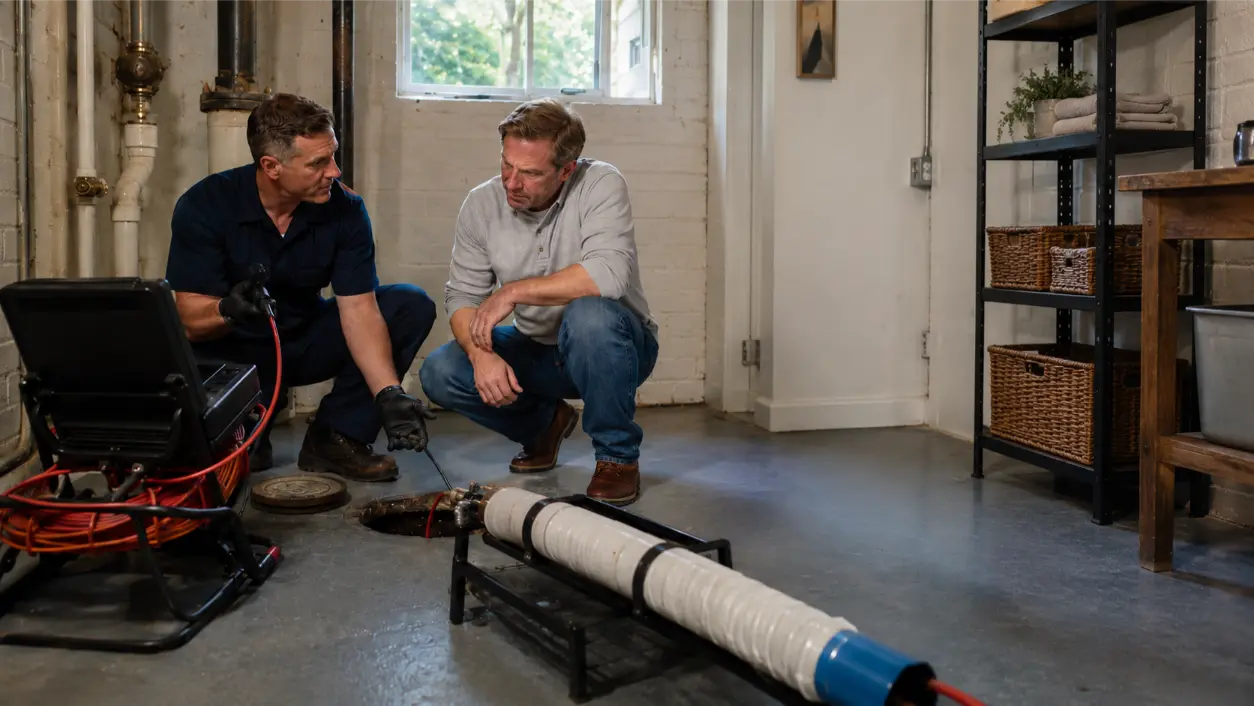
If you are asking how long does CIPP last, the most responsible short answer is this: properly designed, installed, and tested cured-in-place pipe is commonly engineered around a service life of 50 years or more, but that number is not an unconditional guarantee that every liner will perform for exactly five decades. The actual life of a CIPP repair depends on the condition of the host pipe, the liner and resin system, structural design, cleaning and preparation, curing quality, installation workmanship, loads, temperature and chemical exposure, and how the repaired line is used over time.
Daniel’s Plumbing Services offers trenchless pipe lining across the Atlanta area and is a certified NuFlow partner using NuDrain CIPP technology for qualifying drain, sewer, storm, roof-drain, and related applications. For a homeowner or property manager deciding whether lining is worth the investment, the useful question is not simply whether somebody advertises “50 years.” It is whether the specific pipe can be properly evaluated, prepared, designed, installed, and verified for long-term service.
The 50-Year Answer: Where It Comes From
The 50-year figure is not unique to one contractor. NASSCO, an industry association focused on underground infrastructure assessment and rehabilitation, states that a properly designed, installed, and tested renewed lateral pipe using CIPP technology has a minimum life expectancy of 50 years. NuFlow currently publishes a 50+ year life expectancy for its NuDrain CIPP system.
There is also field evidence behind the broader expectation. In a retrospective evaluation of CIPP used in municipal gravity sewers, the U.S. Environmental Protection Agency reported that the sampled liners showed no reason to anticipate they would fail to reach their intended 50-year lifetime, and potentially longer. That type of evidence is useful because CIPP has now been in service long enough for older installations to be examined rather than relying only on accelerated laboratory testing.
Still, “50 years” should be read as an engineering and service-life expectation for a properly executed system, not as a promise that every residential installation has a 50-year warranty.
Design Life Is Not the Same as a Warranty
This distinction matters when comparing proposals. NASSCO has cautioned against confusing a design life with actual remaining useful life or with a contractual warranty. A liner can be engineered using assumptions intended to support decades of service, while the installer or manufacturer warranty may cover a much shorter contractual period.
Ask for three separate pieces of information:
- The intended or engineered service life of the lining system.
- The actual written manufacturer warranty, if applicable.
- The contractor’s workmanship warranty and what it covers.
Those are related, but they are not interchangeable.
What Determines How Long a CIPP Liner Actually Lasts?
CIPP is manufactured in place inside the existing pipe. That gives the method major trenchless advantages, but it also means the quality of field preparation and installation matters. Several factors have a direct influence on longevity.
1. Host-Pipe Condition
The existing pipe must be evaluated before lining. Corrosion, cracks, roots, joints, deformation, missing sections, groundwater, offsets, and access all influence whether a particular line is suitable. A pipe that is already collapsed or severely deformed may need replacement or localized excavation instead of lining.
A camera inspection helps identify the visible condition, while cleaning can reveal defects that were hidden beneath scale, grease, roots, or debris. Longevity starts with choosing the right repair for the actual pipe.
2. Cleaning and Surface Preparation
A liner cannot compensate for careless preparation. NuFlow’s published process begins with inspection and cleaning before the resin-saturated liner is installed. The host pipe needs to be prepared so the liner can be positioned and cured as intended.
Incomplete cleaning can leave obstructions, irregularities, or hidden defects that affect fit and final geometry. Preparation should be matched to the pipe material and condition rather than treated as a routine drain-clearing step.
3. Liner and Resin System
CIPP is a category of rehabilitation, not one universal product. Systems can use different tube materials, reinforcement, resin chemistries, thicknesses, and curing methods. The selected system has to fit the pipe diameter, structural requirements, temperature, chemicals, geometry, and service environment.
NuFlow publishes that NuDrain meets or exceeds several ASTM material test standards and lists a 50+ year life expectancy. For any proposal, ask exactly which lining system is being installed rather than relying only on the generic term “epoxy liner.”
4. Structural Design and Liner Thickness
The liner must be designed for the loads it is expected to carry. Underground sewer lines may be affected by soil, groundwater, traffic, depth, host-pipe deterioration, and other structural conditions. Building drains may have different constraints.
Proper CIPP design uses material properties and project conditions to determine a suitable finished thickness. A generic one-size-fits-all liner is not the same as a system selected for a specific pipe.
5. Curing Quality
The resin must cure correctly to achieve the intended physical properties. Depending on the CIPP system, curing may use ambient conditions, hot water, steam, hot air, UV, or another approved process. Time, temperature, pressure, resin saturation, and installation procedure all matter.
If curing is incomplete or uneven, the finished liner may not achieve the performance assumed in the design. This is one reason qualified installation and quality control are central to long-term performance.
6. Installer Workmanship
NASSCO identifies installer workmanship and inspection among the keys to successful CIPP rehabilitation. Because the final pipe is created in the field, experience and process control matter at every stage: cleaning, measurement, wet-out or resin preparation, insertion, inflation, curing, reinstatement of branches, and final inspection.
Homeowners should evaluate the contractor’s training and the actual lining system being used, not just the trenchless method in general.
7. Chemical and Temperature Exposure
A residential sanitary drain is different from an industrial line exposed to unusual chemicals or elevated temperatures. Material compatibility can affect long-term performance.
If the line serves a commercial kitchen, industrial process, high-temperature discharge, or unusual waste stream, tell the contractor before the system is specified. The resin and liner should be appropriate for the actual exposure.
8. Movement and Conditions Outside the Pipe
CIPP can renew structural integrity inside deteriorated piping, but it does not correct every external condition. Significant ground movement, major settlement, an unstable building component, or a continuing slope problem can affect the system independently of the liner material.
If the host pipe has a belly, severe offset, or routing problem, the contractor should determine whether lining addresses the real failure mode or only the damaged interior surface.
What Can Cause Premature CIPP Failure?
Premature problems are more likely when one or more fundamentals are wrong. Examples can include:
- Poor candidate selection.
- Insufficient cleaning or preparation.
- Incorrect liner sizing or design.
- Incomplete or improper curing.
- Wrinkles, folds, or installation defects that materially affect service.
- Poorly reinstated branch connections.
- Exposure outside the lining system’s design limits.
- Continuing structural movement or severe host-pipe geometry problems.
EPA’s retrospective sewer evaluation noted that some observed defects in older CIPP installations appeared related to practices around reinstating lateral connections. The lesson is not that CIPP is unreliable; it is that execution quality matters.
How Do You Verify a CIPP Installation?
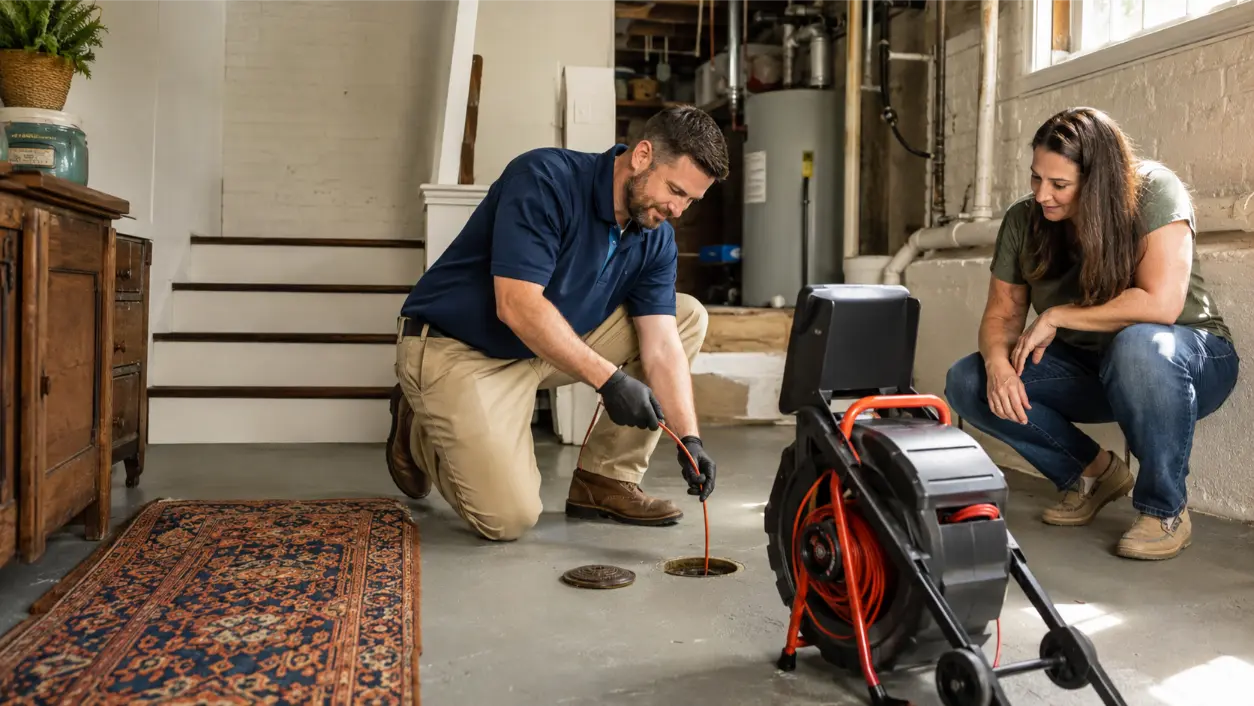
For residential and commercial drain lining, post-installation camera inspection is an important practical check. It allows the contractor and property owner to see the finished liner, branch openings, transitions, and general condition of the rehabilitated section.
Depending on the project, larger municipal or engineered CIPP work may also use material testing, thickness measurements, samples, or other QA/QC procedures. The appropriate level of verification depends on the project scope.
For a homeowner, ask what documentation will be provided before and after installation.
Does CIPP Need Maintenance to Reach Its Expected Life?
A lined pipe still belongs to a working drainage system. CIPP can address deterioration, infiltration, corrosion, cracks, or roots within the rehabilitated section, but it does not make the plumbing immune to misuse or problems elsewhere.
Good long-term habits include:
- Avoid putting grease, wipes, and inappropriate materials into drains.
- Address recurring blockages instead of repeatedly forcing them through.
- Maintain upstream fixtures and connected plumbing.
- Investigate unusual backups, odors, or drainage changes promptly.
- Use appropriate cleaning methods for the installed liner and plumbing system.
If future mechanical cleaning is needed, tell the service contractor that the line has been rehabilitated so the cleaning method can be selected accordingly.
Is CIPP Pipe Lining Permanent?
“Permanent” is not a useful technical promise because all infrastructure has a finite service life. A better description is long-term structural rehabilitation. Properly designed and installed CIPP is intended to restore service for decades and can function as a new structural pipe within the old one.
NASSCO’s 50-year expectation and NuFlow’s 50+ year published life expectancy support treating CIPP as a long-term repair strategy rather than a temporary patch. But no contractor should turn that expectation into an unconditional claim about a specific pipe before inspection and design.
How Does CIPP Longevity Compare With Pipe Replacement?
Both CIPP and conventional replacement can provide long-term service when correctly designed and installed. The more important difference is often how the repair is accomplished.
Replacement removes and installs pipe through excavation or demolition. CIPP rehabilitates the existing route from the inside, which can preserve slabs, floors, walls, landscaping, paved areas, or building finishes when the host pipe is a suitable candidate.
The best option should be based on pipe condition, access, geometry, structural needs, disruption, project cost, and the ability of each method to correct the actual defect—not lifespan marketing alone.
Questions to Ask Before Hiring a CIPP Contractor
- What exact lining system and resin will be used?
- What published service-life expectation applies to that system?
- What is the written manufacturer warranty?
- What workmanship warranty does the contractor provide?
- How will the pipe be inspected and cleaned before lining?
- How will you determine whether the host pipe is suitable?
- How is liner thickness or structural design determined?
- What curing method will be used?
- How will branches or connections be reopened?
- Will I receive a post-installation camera inspection or other documentation?
- What conditions would make you recommend replacement instead?
Frequently Asked Questions
How Long Does Sewer Lining Last?
Properly designed, installed, and tested CIPP sewer lining is commonly expected to provide at least about 50 years of service, and some systems are published at 50+ years. Actual life varies by material, design, installation quality, loading, environment, and pipe condition.
Does CIPP Really Last 50 Years?
The 50-year expectation is supported by industry design practice, NASSCO guidance, manufacturer data, and retrospective field evaluation. However, it should be treated as a service-life expectation for a properly executed system, not a guarantee that every installation will last exactly 50 years.
Can CIPP Last Longer Than 50 Years?
Potentially. EPA’s retrospective evaluation found no reason to expect the liners it studied would fail to reach their intended 50-year life and noted they might last beyond it. NuFlow also publishes a 50+ year life expectancy. Actual service beyond that point depends on project-specific conditions.
What Is the Difference Between CIPP Design Life and Warranty?
Design life is the service period used in engineering and material-performance assumptions. A warranty is a contractual promise with defined terms, exclusions, and duration. A 50-year design basis does not automatically mean a 50-year warranty.
How Can I Help a CIPP Liner Last as Long as Possible?
Start with correct candidate selection, thorough cleaning, an appropriate lining system, qualified installation, proper curing, and post-installation verification. Afterward, maintain the drainage system and address unusual problems early.
Evaluate the Pipe, the System, and the Installation
CIPP has earned its place as a long-term trenchless rehabilitation method because properly designed and installed liners are commonly expected to serve for decades. The often-cited 50-year figure is meaningful, but it is most useful when paired with the conditions behind it: correct design, suitable host pipe, proper preparation, quality materials, controlled curing, qualified workmanship, and verification.
Daniel’s Plumbing Services offers pipe lining, drain cleaning, sewer repair, and related plumbing services for homes and businesses across Atlanta, Marietta, Acworth, and surrounding Georgia communities. As a certified NuFlow partner, the company can evaluate whether NuDrain CIPP is appropriate for a deteriorated line and explain the expected service life, installation process, and alternatives for the actual property. Homeowners and property managers can contact Daniel’s Plumbing Services to schedule an inspection or consultation.
Plumbing, construction, and technical disclaimer: This article provides general educational information and is not a site-specific engineering, plumbing, structural, code, warranty, or service-life guarantee. CIPP performance depends on pipe condition, material, diameter, access, structural design, liner and resin system, installation quality, curing, loading, temperature, chemical exposure, and other project conditions. Review the actual manufacturer’s documentation, written warranty, contractor scope, and inspection findings before choosing rehabilitation or replacement.
RELATED LINK: NASSCO — Pipe Rehabilitation