
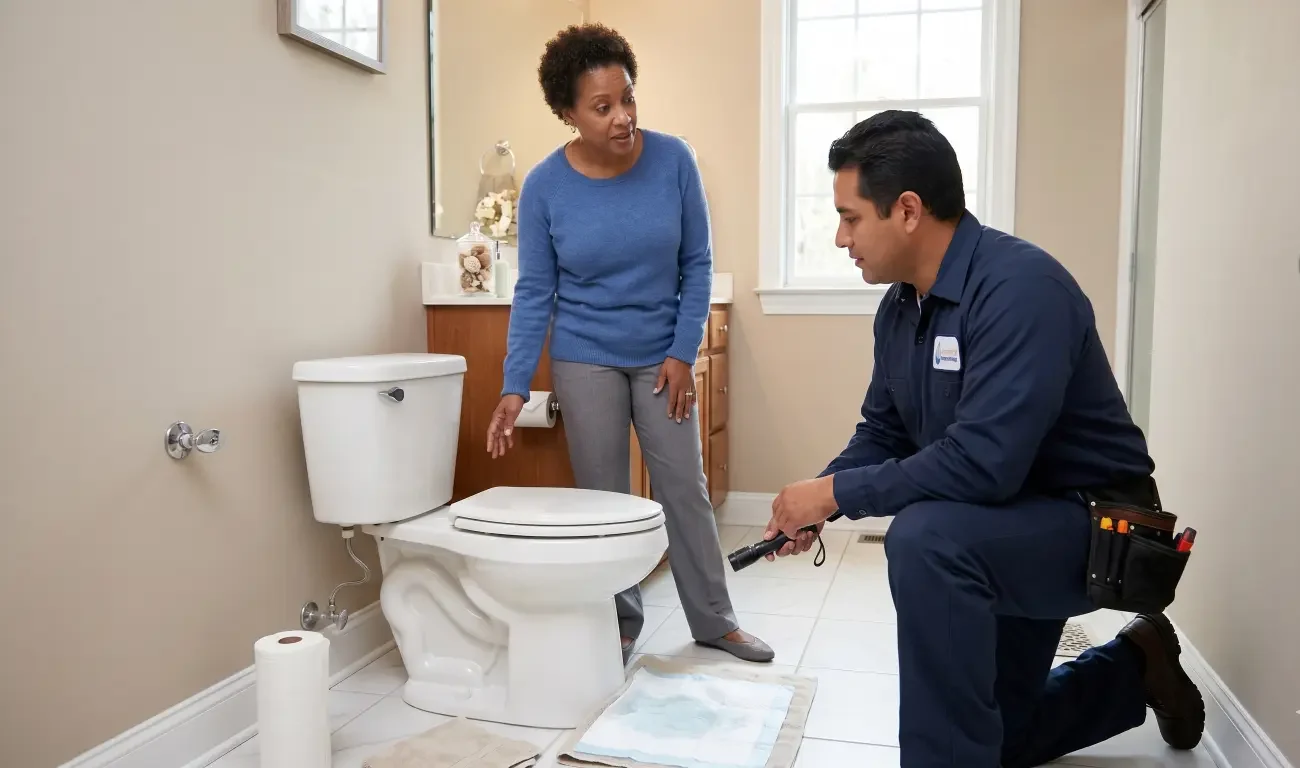
A toilet overflowing once is stressful. A toilet overflowing twice in a week is a warning sign. The first overflow may have looked like a one-time clog, especially if plunging seemed to fix it. But when the same toilet backs up again, or when another drain acts strange at the same time, the problem may be deeper than too much paper in the bowl.
For homeowners, the priority is simple: stop the water, protect the bathroom from damage, clean up safely, and figure out why the toilet overflow keeps happening. Repeated overflows can point to a partial drain blockage, a toilet issue, a venting problem, a sewer line problem, or a backup that involves more than one fixture.
This guide explains what to do immediately, how to reduce damage, what signs point to a larger plumbing issue, and when to call a professional plumber before the next overflow causes more serious cleanup.
First: Stop the Water
If the toilet is actively overflowing, stop the water before troubleshooting. Look for the shutoff valve behind or beside the toilet near the wall. Turn it clockwise until it stops. If the valve is stuck, leaking, or inaccessible, remove the toilet tank lid and lift the float or flapper to stop more water from entering the bowl. If water is still flowing and you cannot control it at the toilet, turn off the home’s main water supply if you can do so safely.
Do not keep flushing. A second flush can push more water onto the floor and may make the backup worse. If the bowl is already high, give the water level time to drop before trying any next step.
Once the water is stopped, protect the area. Move rugs, towels, storage baskets, trash cans, and anything absorbent away from the floor. If water has reached a hallway, vanity, baseboard, or nearby room, begin containing it immediately.
Second: Treat Cleanup Seriously
Toilet overflow cleanup depends on what came out of the toilet and how far it traveled. Water from a toilet can contain bacteria and other contaminants, especially if waste was present or if the overflow involved a sewer backup. Wear gloves, keep children and pets away, and avoid walking through the water more than necessary.
Use disposable towels or a wet/dry vacuum designed for this kind of cleanup if appropriate. Do not use a regular household vacuum. Remove contaminated bath mats and towels for proper washing or disposal. Clean and disinfect hard surfaces after visible water is removed.
If water reached porous flooring, drywall, cabinets, baseboards, or rooms below the bathroom, the situation may require more than a quick mop. Hidden moisture can spread under flooring and into building materials. If the overflow was large, contaminated, or repeated, consider professional cleanup guidance in addition to plumbing repair.
Do Not Assume the Plunger Solved It
Many homeowners relax when plunging works. That can be reasonable after a normal, isolated clog. But if the toilet overflowed twice, plunging may have cleared only enough blockage for water to move temporarily. The underlying problem may still be inside the toilet trap, drain branch, main line, or sewer line.
A partial blockage can act like a traffic jam. Water may pass slowly after plunging, then back up again when the toilet is used several more times. The same can happen if wipes, hygiene products, small objects, excess paper, roots, grease, scale, or a deteriorating line are restricting flow.
Think of plunging as a short-term test, not a final diagnosis. If the overflow repeats, the system needs a closer look.
Ask: Did Anything Else Drain Slowly?
The most important clue is whether the problem is isolated to one toilet or connected to other fixtures. After the overflow, check nearby sinks, tubs, showers, and other toilets. Listen for gurgling. Watch for slow draining. Notice whether water rises in the tub or shower when the toilet is flushed.
If one toilet overflowed but every other fixture drains normally, the issue may be local to that toilet or its nearby drain branch. If the toilet overflows when the shower runs, or if a tub backs up when another toilet is flushed, the problem may involve the main drain or sewer line.
Multiple fixture symptoms deserve faster attention. They can indicate that wastewater is not leaving the home properly. In that case, repeated flushing, showering, laundry, or dishwasher use may send more water toward the blockage.
Root Cause Checklist: Why a Toilet Overflows Twice
Repeated overflows usually have a cause. The most common possibilities include a stubborn toilet clog, a foreign object lodged in the toilet, a partial drain blockage, a blocked plumbing vent, low-flow toilet performance issues, a main sewer line restriction, or a problem with the toilet itself.
Start with what changed. Did a child drop something in the toilet? Did guests visit? Were wipes flushed? Did the home recently have heavy laundry use? Has the toilet been flushing weakly for weeks? Is the problem happening after rain? Are other drains noisy or slow?
These clues help separate a simple clog from a bigger plumbing concern. A plumber can use the pattern, location, and drain behavior to decide whether the toilet should be augered, pulled, inspected, or whether the main line needs evaluation.
When It May Be a Sewer Line Issue
A sewer line issue becomes more likely when more than one drain is affected. Warning signs include toilets bubbling or gurgling, wastewater coming up through a tub or shower drain, multiple toilets clogging, sewage odors, slow drains throughout the home, or overflow triggered by using another fixture.
For example, if the toilet overflow happens when the shower runs, the shower water may be meeting a blockage downstream. If flushing one toilet causes another drain to gurgle, air and water may be struggling to move through the system. If the lowest drain in the home backs up first, the issue may be in the main line.
Sewer line problems should not be treated like ordinary toilet clogs. Continuing to use water can increase the backup. A professional plumber can inspect the line, clear the blockage, and recommend next steps if the pipe is damaged, sagging, invaded by roots, or deteriorating.
When It May Be the Toilet Itself
Sometimes the toilet is the problem. The trapway may hold an object that a plunger cannot remove. Internal parts may cause weak flushing. Mineral buildup can reduce performance. An older toilet may not clear waste reliably. The toilet may also be installed incorrectly, with a wax ring or flange problem contributing to leaks around the base.
If the same toilet overflows but other fixtures behave normally, a toilet-specific issue is possible. A toilet auger may remove a lodged object that a plunger cannot reach. In some cases, the toilet may need to be pulled so the drain opening and toilet outlet can be inspected.
Do not keep forcing the issue with repeated plunging if the same problem keeps returning. Excessive force can damage seals or make a messy situation worse.
When It May Be a Venting Problem
Plumbing vents allow air into the drain system so wastewater can move properly. If a vent is blocked or restricted, fixtures may drain slowly, gurgle, or behave unpredictably. Vent issues are less common than basic clogs, but they can contribute to repeated drain trouble.
Possible vent-related signs include gurgling drains, sewer odors, weak flushing, and slow drainage that does not respond normally to clearing the fixture. Vent diagnosis is not usually a DIY task because it may involve roof access and system evaluation.
A plumber can help determine whether the issue is venting, blockage, fixture performance, or a combination.
What Not to Do After a Repeat Overflow
Do not ignore the second overflow. Repetition is the point. A toilet that overflows twice is telling you the original problem may not be gone.
Do not keep flushing to “test” the toilet. Testing with full flushes can create more water damage. Do not pour harsh chemical drain cleaners into the toilet. They may not solve the problem and can create safety concerns for anyone who later works on the drain. Do not assume that a clean-looking bathroom means the subfloor, baseboards, or ceiling below are dry.
Also avoid using multiple fixtures if you suspect a main drain issue. Running showers, laundry, or dishwashers can add more water to a partially blocked system.
How to Check for Damage After Cleanup
After the visible water is removed, inspect the surrounding area. Check the base of the toilet, grout lines, flooring edges, vanity toe-kick, nearby drywall, baseboards, and the ceiling below if the bathroom is upstairs. Look for swelling, discoloration, soft spots, peeling paint, or lingering odor.
If the toilet overflow smell in the bathroom remains after cleaning, there may be trapped moisture or contamination under materials. Odor that returns after ventilation and cleaning should not be ignored.
Water moves quickly into seams, cracks, and absorbent materials. The sooner moisture is found, the easier it may be to limit damage.
When to Call a Plumber
Call a plumber if the toilet overflowed twice within a short period, if plunging only works temporarily, if other drains are slow or gurgling, if the toilet overflows when the shower runs, if sewage odor is present, if wastewater comes up through another drain, or if you suspect a foreign object is stuck in the toilet.
You should also call if you cannot shut off the toilet valve, if water is leaking around the toilet base, if the overflow affected the floor or ceiling below, or if the problem is happening in more than one bathroom.
Daniels Plumbing Services serves homeowners and businesses across the Atlanta, Marietta, Acworth, Kennesaw, Woodstock, Roswell, Sandy Springs, Smyrna, Alpharetta, Canton, and surrounding Georgia areas. The company handles residential and commercial plumbing repair, drain issues, water lines, sewer concerns, water heaters, and advanced solutions such as trenchless pipe repair and smart leak protection.
If your toilet overflow keeps happening, scheduling professional service can help identify whether the issue is a simple clog, toilet problem, drain branch blockage, or sewer line concern.
How a Plumber May Diagnose the Problem
The right diagnostic step depends on the symptoms. A plumber may test the toilet, inspect the shutoff valve, use a toilet auger, check nearby fixtures, evaluate drain flow, remove the toilet if needed, or inspect the main line. If a sewer issue is suspected, a camera inspection or drain clearing may be recommended.
The goal is to locate the restriction and understand why it returned. Clearing a blockage matters, but repeat overflows also require knowing whether the cause is paper buildup, a foreign object, roots, pipe damage, poor slope, venting, or fixture performance.
A professional diagnosis helps homeowners avoid repeated cleanup and guesswork.
How to Reduce the Chance of Another Overflow
After the issue is fixed, prevention starts with habits and maintenance. Flush only toilet paper and waste. Avoid wipes, paper towels, feminine hygiene products, cotton swabs, dental floss, and other items that can catch in drains. Teach children not to place objects in the toilet. Address slow flushing early instead of waiting for an overflow.
If the home has older drains, frequent clogs, tree roots, or repeated backups, ask about maintenance and inspection options. For some homes, sewer line evaluation may reveal repair choices before a major backup occurs.
If water damage risk is a concern, smart leak detection and automatic shut-off systems may also help protect the home from certain plumbing failures. These systems do not prevent clogs, but they can add protection for leaks and abnormal water use.
A Quick Action Plan for the Second Overflow
- Turn off the toilet shutoff valve.
- Do not flush again.
- Protect the floor and move absorbent items away.
- Clean and disinfect hard surfaces carefully.
- Check whether nearby drains are slow, noisy, or backing up.
- Stop using other fixtures if a main drain issue is possible.
- Inspect for moisture around flooring, walls, and the ceiling below.
- Call a plumber if the overflow repeated, involved sewage, or affected multiple fixtures.
Final Thoughts
A second toilet overflow should not be treated as bad luck. It is a signal that the first clog may not have been fully resolved or that the drain system has a larger issue.
Act quickly, avoid repeated flushing, clean up safely, and pay attention to the pattern. If the same toilet keeps backing up or other fixtures are involved, professional plumbing help can prevent more damage and give you a clear repair path.
Daniels Plumbing Services can help metro Atlanta homeowners identify the cause of repeat toilet overflows and fix the issue before the next backup. Make an appointment or call for professional help if your toilet overflow keeps happening.
FAQ
Why did my toilet overflow twice in one week?
A toilet that overflows twice in one week may have a partial blockage, a foreign object in the trap, a drain branch issue, a venting problem, or a sewer line restriction. If plunging only works temporarily, the cause may still be present.
What should I do immediately after a toilet overflows?
Turn off the toilet shutoff valve, do not flush again, move absorbent items away, remove standing water safely, disinfect hard surfaces, and check whether other drains are slow or backing up.
What does it mean if the toilet overflows when the shower runs?
If the toilet overflows when the shower runs, water may be backing up because of a downstream drain or sewer line restriction. Stop using water and call a plumber, especially if multiple fixtures are affected.
Is it safe to use chemical drain cleaner after a toilet overflow?
Chemical drain cleaners are not recommended for repeat toilet overflows. They may not solve the cause and can create safety risks for anyone working on the drain. A plunger, toilet auger, or professional diagnosis is safer.
When should I call a plumber for a toilet overflow?
Call a plumber if the overflow repeats, plunging only works temporarily, sewage odor is present, other drains are affected, water leaks around the toilet base, or the overflow caused floor or ceiling damage.
RELATED LINK: