
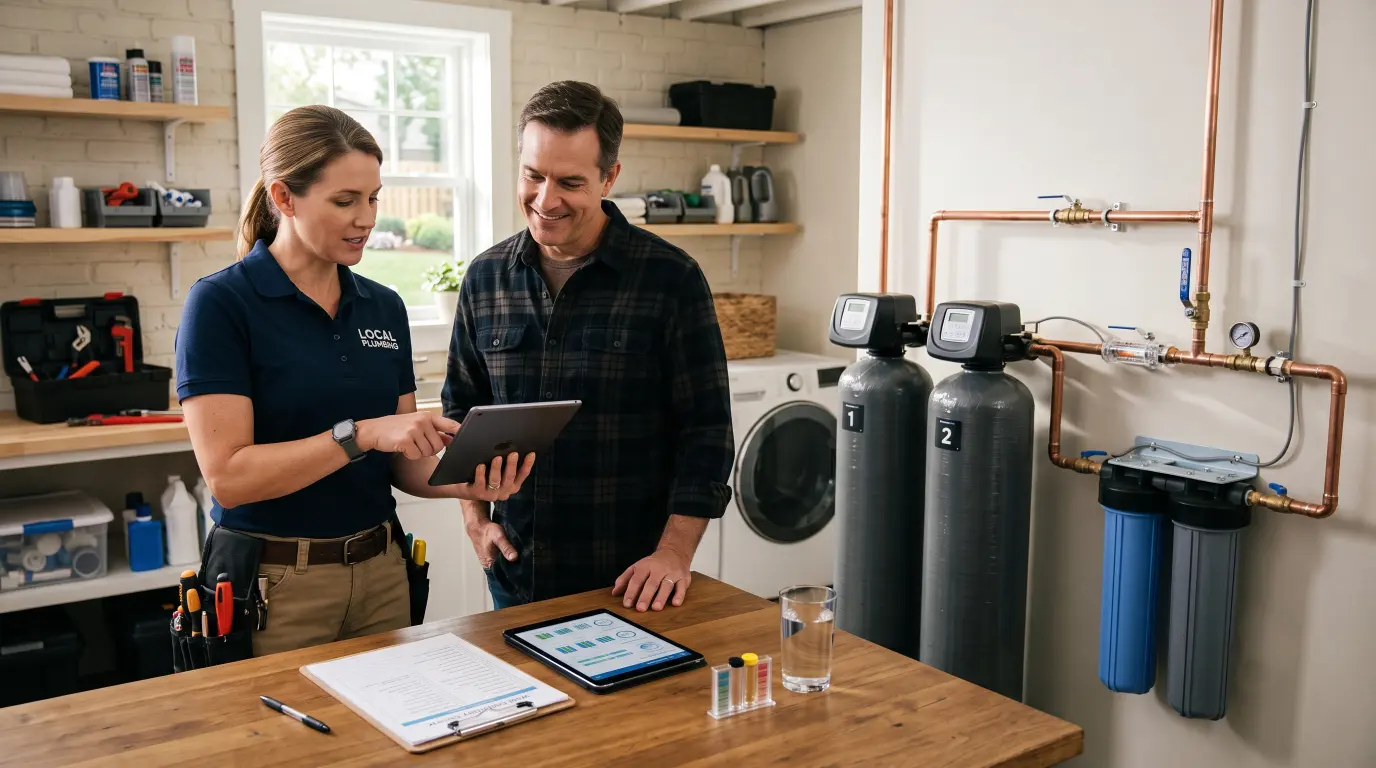
When homeowners start asking about water filtration, there is usually a reason. The water may taste like chlorine. Fixtures may show white scale. A sink aerator may collect sediment. Laundry may feel rough. A new baby may make the family more aware of what is coming out of every tap. Whatever the trigger, the real question is practical: what problems can a whole-home filtration system actually help solve?
Whole-home filtration is different from a small pitcher or under-sink filter. It is installed where water enters the home so treated water can serve multiple fixtures, appliances, showers, laundry, and plumbing lines. That broader coverage can be valuable, but it also means the system should be selected carefully based on the home’s water conditions, household needs, and maintenance expectations.
This guide explains whole house water filtration benefits in plain language, including taste and odor, sediment, scale concerns, appliance protection, maintenance realities, and the difference between whole-home filtration and point-of-use filters. It is not a medical or laboratory guide, and no system should be assumed to remove every possible contaminant. The right starting point is water testing and a professional conversation.
What Whole-Home Water Filtration Means
A whole-home water filtration system, sometimes called a point-of-entry system, treats water near the place where it enters the house. From there, the treated water travels to fixtures and appliances throughout the home. Depending on the system design, it may address chlorine taste and odor, sediment, certain minerals, staining, or other water quality concerns.
The exact solution depends on the water. City water, well water, older plumbing, high mineral content, and local conditions can all create different issues. A filter that helps with taste may not solve scale. A sediment filter may not address odor. A softening or conditioning solution may not remove the same things as a carbon-based filtration system.
That is why Daniel’s Plumbing Services recommends water testing before selecting a whole-home filtration solution. Testing helps move the conversation from guesswork to a better match between the problem and the equipment.
Benefit 1: Better Taste and Odor at More Than One Tap
One of the most common reasons homeowners ask about whole-home filtration is taste and odor. Water may smell or taste like chlorine, feel unpleasant for drinking, or make coffee, tea, ice, and cooking water less enjoyable.
An under-sink filter can help at one faucet. A refrigerator filter may help with water from the fridge. A whole-home system is different because it can improve water quality across multiple fixtures, depending on the system and the issue being treated.
For homeowners who notice the same taste or odor in several rooms, a point-of-entry solution may be worth evaluating. The goal is not to claim that every odor has the same cause. The goal is to identify what is present in the water and choose a system designed for that concern.
Benefit 2: Sediment Reduction Throughout the Home
Sediment can show up as grit in aerators, cloudy water, particles in tubs, or buildup around fixtures. It may come from supply lines, well conditions, municipal work, aging infrastructure, or internal plumbing issues. Sediment is more than a cosmetic frustration because particles can affect fixtures, appliances, valves, and everyday water use.
Homeowners often ask, do whole house filters reduce sediment? Many whole-home systems can be configured with sediment filtration, but the right type and size depend on the particles involved and the water flow needs of the home.
If sediment appears suddenly or heavily, it should be investigated. Filtration can help manage particles, but it should not be used to ignore a possible plumbing, well, or supply issue that needs professional evaluation.
Benefit 3: Help With Scale and Hard-Water Symptoms
Hard-water scale can appear as white crust on faucets, showerheads, glass, dishwashers, and water-using appliances. It can also make cleaning harder and may contribute to reduced efficiency or maintenance needs for certain equipment.
A water filter for hard water scale house concerns may involve more than a basic filter. Depending on the water test results, homeowners may need to discuss softening, conditioning, scale-reduction technology, or a broader water treatment approach.
This is an area where the language matters. Not every filtration system softens water. Not every scale-control system removes the same substances. A professional review helps clarify whether the issue is hardness, sediment, chlorine, iron, or another condition.
Benefit 4: More Consistent Water for Showers and Laundry
Water quality is not only about drinking water. Homeowners may notice dry-feeling skin, residue on shower glass, dull laundry, soap that does not lather well, or mineral buildup on fixtures. These symptoms can make everyday routines feel less comfortable.
Whole-home filtration or water treatment may help improve the water experience throughout the house when the system is matched to the actual cause. For example, taste and odor concerns may lead to one type of filtration, while hardness or scale concerns may require a different approach.
The benefit is whole-house coverage. Instead of treating only the kitchen sink, the system can support bathrooms, laundry, and other water-use areas when designed properly.
Benefit 5: Support for Plumbing Fixtures and Appliances
Water quality can affect appliances and plumbing components over time. Sediment, scale, and mineral buildup may contribute to extra wear on water heaters, dishwashers, washing machines, ice makers, faucets, valves, and showerheads.
A whole-home system may help reduce certain stressors before water reaches those fixtures and appliances. That does not mean filtration guarantees longer equipment life or eliminates maintenance. It means water treatment can be part of a broader property-protection and maintenance plan.
For homeowners already considering tankless water heaters, smart leak protection, or other plumbing upgrades, water quality deserves a place in the conversation. Scale and sediment can affect the performance and maintenance needs of modern plumbing systems.
Whole Home Water Filtration for Chlorine Taste
Chlorine taste is one of the most recognizable water complaints for homes on municipal water. Many homeowners describe the water as pool-like, sharp, or unpleasant for drinking. Whole home water filtration for chlorine taste is often evaluated when the issue is present at multiple taps.
Carbon-based filtration is commonly discussed for taste and odor concerns, but the correct system depends on water test results, flow rate, household size, and installation conditions. A system that is too small may restrict flow or underperform. A system that is not maintained may stop doing its job properly.
If chlorine taste is the main issue, tell the plumber where you notice it most, whether it changes seasonally, and whether it affects cooking, ice, coffee, showers, or laundry.
Whole House Filtration vs Under Sink Filter
A common comparison is whole house filtration vs under sink filter. An under-sink filter treats water at one specific location, usually the kitchen sink. It can be a good choice when the main concern is drinking or cooking water from that faucet.
A whole-home system treats water before it reaches the fixtures throughout the home. It may be a better fit when the homeowner wants broader coverage for showers, laundry, appliances, bathrooms, and all taps.
The choice is not always either-or. Some homes may use both: a whole-home system for broader water quality improvement and a point-of-use filter for a specific drinking water preference. The right setup depends on water testing, budget, goals, and maintenance tolerance.
What Whole-Home Filtration Does Not Automatically Solve
Whole-home filtration is useful, but it is not magic. It should not be described as a cure-all. A system should not be assumed to remove every contaminant, solve every odor, eliminate every stain, or make unsafe water safe without proper testing and system design.
Some problems require specific treatment. Others may be caused by plumbing corrosion, water heater issues, well conditions, bacterial concerns, municipal events, or pipe deterioration. A standard filter may not be the answer.
This is why testing matters. The best water treatment plan starts with the water in your home, not with a generic product promise.
Why Water Testing Comes First
Water testing helps identify what is actually present. It can help distinguish between taste and odor issues, sediment, hardness, iron, chlorine, pH concerns, or other conditions that may influence system choice.
Without testing, homeowners may buy the wrong system. They may pay for equipment that does not address the main concern or overlook a problem that needs a different approach.
Daniel’s Plumbing Services presents itself as a HALO Water Systems certified partner and recommends water testing before choosing a whole-home water filtration solution. That testing-first mindset is important because it helps match the system to the real issue.
Maintenance Realities: Filters Need Attention
One of the most important questions is whole house filter maintenance frequency. Every system has maintenance requirements. Filters, cartridges, media, tanks, valves, or other components may need service or replacement based on water quality, household usage, and manufacturer guidance.
A system that is not maintained can lose effectiveness, restrict flow, or create frustration. Before installing whole-home filtration, homeowners should understand what maintenance is required, how often it may be needed, who performs it, and what the ongoing cost may be.
A good system is not only the one that solves today’s complaint. It is the one the homeowner can realistically maintain.
Installation Considerations Homeowners Should Expect
Whole-home filtration installation is a plumbing project, not just a countertop purchase. The plumber must evaluate where water enters the home, available space, piping condition, shut-off access, drain needs where applicable, pressure, service clearance, and the best location for future maintenance.
In older homes, the installation area may need additional review. Valves may be worn. Pipes may be crowded. The main line may not be easy to access. A professional assessment helps identify whether plumbing updates are needed before or during installation.
Homeowners should also ask how installation may affect water service on the project day, where the system will be located, and how they will know when maintenance is due.
Is Whole-Home Filtration Worth It for a New Baby?
A new baby often makes families pay closer attention to water. Parents may start noticing taste, odor, sediment, or uncertainty they previously ignored. Whole-home filtration may be worth evaluating when the family wants broader confidence in the water used for bathing, laundry, cleaning, and everyday household routines.
That said, parents should avoid assuming a filter solves every safety or health question. If there are specific concerns about contaminants, lead, private wells, infant formula preparation, or medical conditions, those questions should be discussed with qualified health or water professionals and supported by appropriate testing.
For many families, the right first step is simple: test the water, understand the results, and then discuss what type of filtration or treatment makes sense.
Questions to Ask Before Choosing a Whole-Home System
Before committing to a system, ask these questions:
What does the water test show?
Which specific problems will this system address?
What will it not address?
Will it help with taste, odor, sediment, scale, or another issue?
How will it affect water pressure and flow?
Where will it be installed?
What maintenance is required and how often?
Who performs the maintenance?
What happens if the water conditions change?
Does the system fit the household’s water usage and future plans?
Warning Signs That Water Quality Needs Professional Review
Call a professional or request water testing if you notice persistent chlorine taste, rotten-egg odor, metallic taste, orange or brown staining, black particles, recurring sediment, cloudy water, sudden changes in water appearance, scale that returns quickly, or water quality complaints at multiple fixtures.
A sudden change deserves special attention. If water quality changes quickly, do not assume filtration is the only answer. The issue may involve supply conditions, water heater problems, plumbing materials, or another source.
A plumber can help evaluate whether the symptoms point toward filtration, plumbing repair, water heater service, or additional testing.
How Daniel’s Plumbing Services Can Help
Daniel’s Plumbing Services serves Atlanta, Marietta, Acworth, and surrounding Georgia communities with residential and commercial plumbing service, repair, installations, and specialty solutions. The company also presents itself as a certified partner of HALO Water Systems for whole-home water filtration installation and service.
For homeowners, that means the conversation can include more than a filter purchase. Daniel’s Plumbing Services can help review water quality concerns, discuss testing, evaluate the installation area, and explain whether whole-home filtration, plumbing maintenance, water heater support, or another solution should be considered.
No water treatment company should promise that one system solves every problem. The right next step is to schedule a professional evaluation and use water testing to guide the recommendation.
Whole-Home Water Filtration Checklist
Use this checklist before deciding whether filtration is worth it:
List the symptoms you notice: taste, odor, sediment, scale, staining, or cloudy water.
Identify where the issue appears: one faucet, several fixtures, or the whole home.
Check whether the issue is constant or seasonal.
Review whether appliances or fixtures show scale or buildup.
Ask whether water testing is needed before selecting a system.
Compare whole-home filtration with under-sink or point-of-use options.
Ask what the system will and will not address.
Confirm installation space, shut-off access, and service clearance.
Understand maintenance frequency and costs.
Plan for professional installation and future service.
Whole-home filtration can solve practical water problems when it is selected for the right reasons. It may help with taste and odor, sediment, scale-related concerns, fixture comfort, and overall water experience throughout the home.
The key is to avoid guesswork. Test the water, identify the problem, choose the right system, and understand the maintenance. For Georgia homeowners with a new baby, older plumbing, recurring scale, or water quality concerns, a professional evaluation can bring clarity.
Daniel’s Plumbing Services can help homeowners in the Atlanta area explore whole-home water filtration options and schedule a conversation about what their water actually needs.
FAQ
What are the main whole house water filtration benefits?
Whole house water filtration benefits may include improved taste and odor, reduced sediment, help with scale-related concerns, broader water quality improvement across multiple fixtures, and support for appliances and plumbing components when the system is properly matched to the water.
Does whole-home filtration help with chlorine taste?
It can, depending on the system and the water. Many homeowners evaluate whole-home filtration when chlorine taste or odor is noticeable at multiple taps. Water testing and professional sizing help determine the right approach.
Do whole house filters reduce sediment?
Many systems can include sediment filtration, but the right setup depends on particle size, water source, household flow needs, and the cause of the sediment. Sudden or heavy sediment should be professionally evaluated.
How often does a whole house filter need maintenance?
Maintenance frequency depends on the system, water quality, household water usage, and manufacturer guidance. Homeowners should ask what components need service, how often, and who will handle maintenance before installation.
Is whole-home filtration better than an under-sink filter?
It depends on the goal. An under-sink filter treats one faucet, while whole-home filtration treats water entering the home for broader fixture coverage. Some homes may benefit from one, the other, or both.
RELATED LINK: