
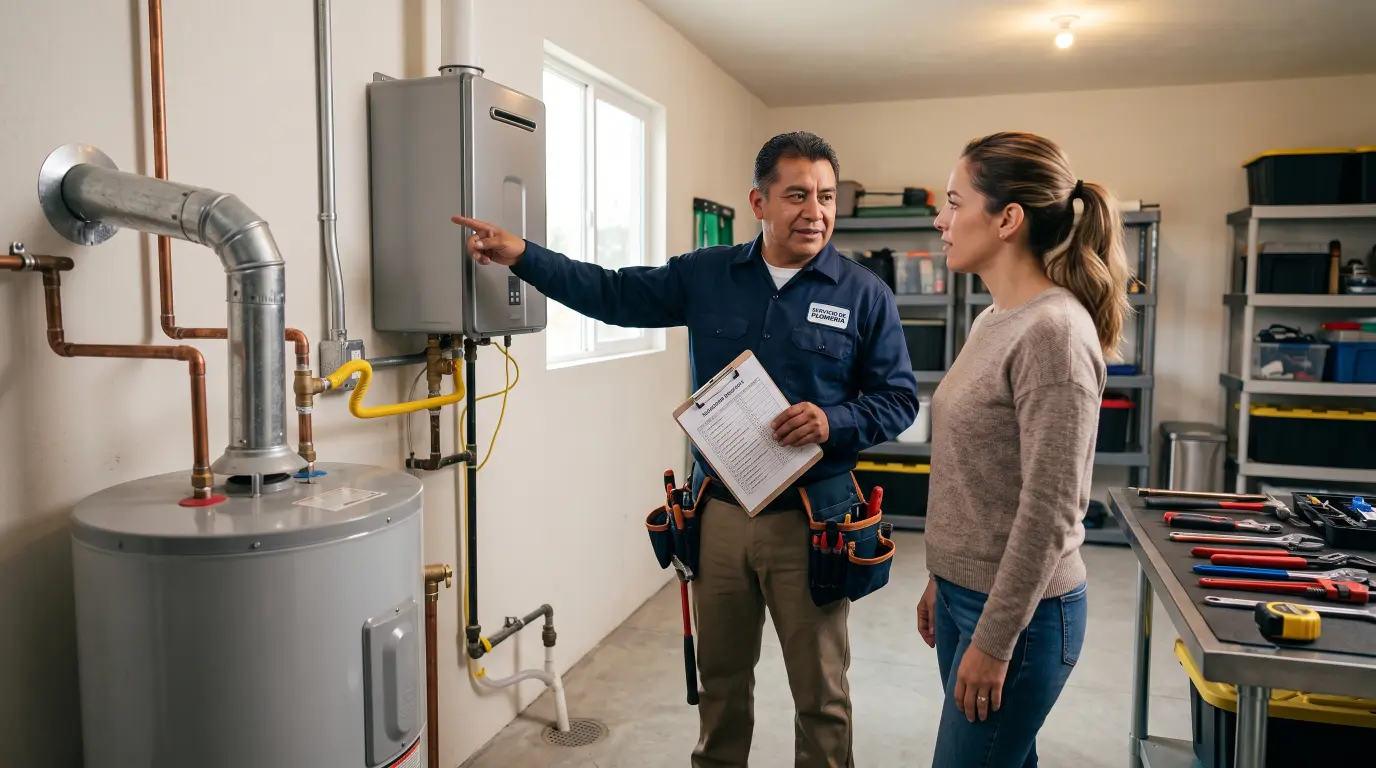
When a tank water heater fails, many homeowners start comparing two paths: replace it with another traditional tank or convert to a tankless water heater. The decision is not only about comfort, efficiency, or equipment cost. Installation can change the project dramatically.
A tank-to-tank replacement may use much of the same space and infrastructure, depending on the condition of the existing setup. A tankless conversion can involve new gas sizing, venting changes, condensate management, electrical needs, wall mounting, code review, and inspection requirements. That does not mean tankless is the wrong choice. It means the home needs to be evaluated before assuming the swap is simple.
This guide explains tank vs tankless installation differences for homeowners who are replacing a failed tank heater or planning a hot water upgrade. It is not a substitute for an on-site plumbing evaluation, but it will help you understand the questions a professional plumber should answer before work begins.
Why Installation Differences Matter
A water heater is not just an appliance sitting in a closet, basement, garage, attic, or utility room. It connects to the plumbing system, fuel source or electrical supply, venting path, drainage, safety components, and local code requirements.
That is why two homes can have very different installation needs even if the family wants the same result: dependable hot water. One home may be a straightforward tank replacement. Another may need gas line upgrades, a new vent route, condensate drainage, electrical work, or relocation to support a tankless system.
Understanding those differences early helps homeowners avoid surprises, compare options more realistically, and decide whether a tankless upgrade is worth planning now or whether a traditional replacement is the better immediate move.
Traditional Tank Water Heater Installation: What Usually Stays Familiar
A traditional tank water heater stores heated water in a reservoir so it is ready when fixtures call for hot water. When replacing an existing tank with a similar unit, the project may be more familiar because the home may already have a location, water connections, fuel source, venting, and drain setup.
That does not mean every tank replacement is automatic. The plumber still needs to check the existing connections, shut-off valves, venting, pan and drain where applicable, expansion tank requirements, pressure relief piping, code clearance, and the condition of nearby plumbing.
If the old water heater failed because of age, corrosion, leaking, sediment, venting issues, or pressure problems, simply swapping equipment without reviewing the surrounding system can leave underlying issues unresolved.
Tankless Water Heater Installation: What Changes
A tankless water heater heats water on demand instead of storing a full tank. That changes the installation conversation. The unit may be mounted on a wall, require a different venting system, need proper gas supply or electrical capacity, and require condensate handling for many high-efficiency gas models.
The plumber must evaluate whether the home can support the equipment. That includes the number of fixtures, household hot water demand, gas or electrical capacity, installation location, ventilation, freeze protection, drainage, and maintenance access.
Tankless installation is often more like a system upgrade than a simple appliance swap. The result may be worth it for the right home, but the planning should be thorough.
Tank to Tankless Conversion Requirements
A tank to tankless conversion usually starts with load and infrastructure questions. How many bathrooms does the home have? How many people live there? Do showers, laundry, dishwasher, and tubs run at the same time? Is the existing water heater gas or electric? Where is it located? What venting path is available?
The plumber also needs to evaluate the existing gas line or electrical service, cold and hot water piping, drain options, exterior wall access, and clearance around the proposed installation location. In some homes, the best location for the old tank is not the best location for a tankless unit.
A conversion may be straightforward in one home and more involved in another. The only reliable answer comes from checking the actual site conditions.
Gas Line Sizing Can Be a Major Difference
One common question is whether tankless needs a bigger gas line. Sometimes it does. Gas tankless systems often have a higher immediate fuel demand than traditional tank water heaters because they heat water quickly as it flows through the unit.
A plumber must evaluate the gas meter, pipe size, run length, connected appliances, pressure, and manufacturer requirements. If the current gas supply cannot support the selected unit, the project may require gas line modification or a different equipment choice.
This is not a guesswork item. Gas line sizing affects performance and safety, so homeowners should rely on qualified professionals rather than assuming the existing line is adequate.
Tankless Venting Changes vs Tank Systems
Venting is another major difference. A traditional atmospheric tank water heater may use an existing flue or vent path, while many tankless units require dedicated venting, sidewall venting, stainless or approved vent materials, intake air planning, or direct-vent configurations.
Tankless venting changes vs tank installations can affect equipment location and cost. The unit must be vented according to manufacturer requirements and applicable codes. Improper venting can create serious safety concerns and performance problems.
A professional evaluation should identify the proposed vent route, materials, clearances, termination location, and whether the home has space for a compliant installation.
Condensate Drain Requirements
Many high-efficiency tankless water heaters produce condensate that needs to be drained safely. That can add a new requirement if the existing tank did not need a condensate drain.
Tankless condensate drain requirements may involve routing condensate to an approved drain, adding neutralization where required, protecting the line from freezing, and ensuring the drainage path is reliable. If the installation area has no convenient drain, the project may require additional planning.
This is one of the details homeowners may not think about until a plumber points it out. It is also one reason tankless conversion planning should happen before the old tank fully fails whenever possible.
Electrical Needs for Tankless Water Heaters
Even gas tankless water heaters may require electricity for controls, ignition, sensors, freeze protection, and operation. Electric tankless systems can require significant electrical capacity, dedicated circuits, and panel review.
Electrical work should be evaluated by qualified professionals. A plumber can identify the water heater requirements and coordinate with electrical support when needed, but homeowners should not assume an existing outlet or circuit is enough.
If the home has an older electrical panel or limited capacity, the electrical side may influence whether tankless is practical, whether upgrades are needed, or whether a different solution makes more sense.
Space and Location Differences
Tankless units often save floor space because they can be wall-mounted. That can be helpful in garages, utility rooms, closets, and small mechanical areas. But wall mounting also requires proper structure, clearances, access for service, and protection from weather or freezing where relevant.
A traditional tank needs floor space and safe placement, including drain pan considerations where required. If the water heater is in an attic, crawlspace, closet, or finished area, the installation location can affect both equipment choice and risk.
Before choosing tank or tankless, ask where the unit will go, how it will be accessed for service, and what happens if there is a leak or maintenance need later.
Hot Water Demand and Sizing
Sizing is different for tank and tankless systems. A tank is sized largely around stored capacity and recovery rate. A tankless unit is sized around flow rate, temperature rise, and simultaneous fixture demand.
For example, a household that runs two showers and a washing machine at once needs a different sizing conversation than a household with one or two people and staggered hot water use. Groundwater temperature, fixture flow rates, and usage habits also matter.
A tankless system that is undersized may disappoint homeowners. A tank system that is undersized may run out of hot water. Proper sizing is one of the most important parts of the decision.
Water Quality and Maintenance Access
Water quality can affect both tank and tankless systems. Hard water, sediment, scale, and mineral buildup can reduce performance and shorten equipment life. Tankless units often have specific maintenance requirements, including flushing or descaling according to manufacturer guidance and local water conditions.
Daniel’s Plumbing Services also offers water filtration solutions and recommends testing before selecting a whole-home system. For homeowners considering tankless, water quality should be part of the conversation, especially if scale buildup has been a problem.
Maintenance access matters too. The unit should be installed where service valves, flush connections, filters, and controls can be reached safely.
Permits, Code, and Inspection
Water heater installation may involve permits, code requirements, and inspection depending on the jurisdiction and scope of work. A tankless install inspection checklist may include gas sizing, venting, combustion air, condensate drainage, electrical connection, clearances, pressure relief components, water connections, and manufacturer installation requirements.
Homeowners should ask the installer what permits or inspections apply to their specific project. The answer can vary by location, equipment type, fuel source, and project complexity.
A professional installation should not treat code compliance as an afterthought. It should be part of the planning conversation.
Cost Differences Are Not Just Equipment Price
A tankless unit may cost more than a traditional tank, but the total project cost depends on installation conditions. Gas upgrades, venting, condensate drainage, electrical work, relocation, water treatment, and permitting can all affect the final price.
A traditional tank replacement may be less complex when infrastructure is already suitable, but repairs to valves, pans, venting, expansion components, or old connections can still add work.
The right comparison is not just tank price vs tankless price. It is complete installed cost, expected performance, space, maintenance, household needs, and long-term plans for the home.
When a Tank Replacement May Make More Sense
A traditional tank replacement may make sense when the old unit failed suddenly, the home needs hot water restored quickly, the existing setup is in good condition, the budget is tight, or the homeowner does not want to modify gas, venting, electrical, or drainage systems.
It may also be the better option if household hot water needs are modest and the existing tank location works well. A professional plumber can still help choose the right size, review safety components, and correct problems found during replacement.
Choosing another tank is not settling. It can be the practical, reliable choice when it fits the home and the homeowner’s priorities.
When Tankless May Be Worth the Upgrade
Tankless may be worth considering when homeowners want on-demand hot water, more floor space, a modernized system, or a longer-term upgrade. It may also make sense during renovations, when mechanical space is being changed, or when the home is already addressing gas, venting, or water quality improvements.
Tankless is especially worth planning before the old water heater fails. When the current tank is still working, homeowners have more time to evaluate requirements, compare options, and avoid emergency decision-making.
A failed water heater does not eliminate the tankless option, but it can make the timeline more stressful if upgrades are required.
Questions to Ask Before Converting to Tankless
Before approving a tankless conversion, ask these questions:
Can the existing gas line or electrical system support the unit?
What venting changes are required?
Where will condensate drain?
Where will the unit be installed and how will it be serviced?
What size unit is needed for the household’s hot water demand?
Will permits or inspections be required?
Are any water quality or filtration steps recommended?
What maintenance will the unit require?
How does the total installed cost compare with a tank replacement?
What timeline should the homeowner expect?
Tankless Install Inspection Checklist
A professional installer may review many details before and after installation. Homeowners can use this checklist to understand the conversation:
Fuel type and equipment capacity are confirmed.
Gas line or electrical capacity is evaluated.
Venting path, materials, and clearances are reviewed.
Combustion air and manufacturer requirements are addressed.
Condensate drain and neutralization needs are planned where applicable.
Cold and hot water connections are installed properly.
Pressure relief and safety components are included as required.
Service valves and maintenance access are available.
The unit is protected from weather or freezing where relevant.
Permits and inspections are handled according to local requirements.
The homeowner understands operating basics and maintenance expectations.
How Daniel’s Plumbing Services Can Help
Daniel’s Plumbing Services serves Atlanta, Marietta, Acworth, and surrounding Georgia communities with plumbing service, repair, installations, and specialty solutions. The company promotes tankless water heater upgrades as part of its broader plumbing services, along with filtration, smart leak detection, and other property-protection solutions.
For homeowners comparing tank and tankless options, Daniel’s Plumbing Services can evaluate the existing water heater, review household hot water needs, check installation requirements, and explain whether a traditional replacement or tankless upgrade is the better fit.
No plumber should promise that tankless is automatically the right choice for every home. The smart next step is a professional assessment that reviews gas, venting, condensate, electrical needs, code requirements, water quality, and budget before the homeowner commits.
Final Thoughts
Tank vs tankless installation is not only a product comparison. It is an infrastructure comparison. A tank replacement may be faster and more familiar when the existing setup is suitable. A tankless conversion can be a smart upgrade, but it may involve gas line sizing, venting changes, condensate drainage, electrical review, and inspection planning.
The best choice depends on the home, the household, and the installation conditions. If your tank water heater has failed or you are planning an upgrade, Daniel’s Plumbing Services can help you review the options and schedule a professional evaluation.
FAQ
What changes when converting from a tank to a tankless water heater?
A tankless conversion may require changes to gas supply, venting, condensate drainage, electrical connections, mounting location, water connections, permits, inspection, and maintenance access. The exact requirements depend on the home and unit selected.
Does tankless need a bigger gas line?
Sometimes. Many gas tankless units have higher immediate fuel demand than traditional tank heaters. A plumber should evaluate the gas meter, pipe size, run length, connected appliances, and manufacturer requirements before installation.
How is tankless venting different from tank water heater venting?
Many tankless units require dedicated venting, approved materials, direct venting, sidewall termination, or specific clearance rules. Existing tank venting may not be suitable for a tankless unit.
Do tankless water heaters need a condensate drain?
Many high-efficiency gas tankless models produce condensate that must be drained properly. The installation may require an approved drain route, neutralization where required, and freeze protection for the drain line.
Should I replace my failed tank heater with another tank or go tankless?
The answer depends on your budget, timeline, hot water demand, installation location, gas or electrical capacity, venting, drainage, and long-term plans. A professional evaluation can help compare a direct replacement with a tankless upgrade.
RELATED LINK:
U.S. Department of Energy – Tankless or Demand-Type Water Heaters