
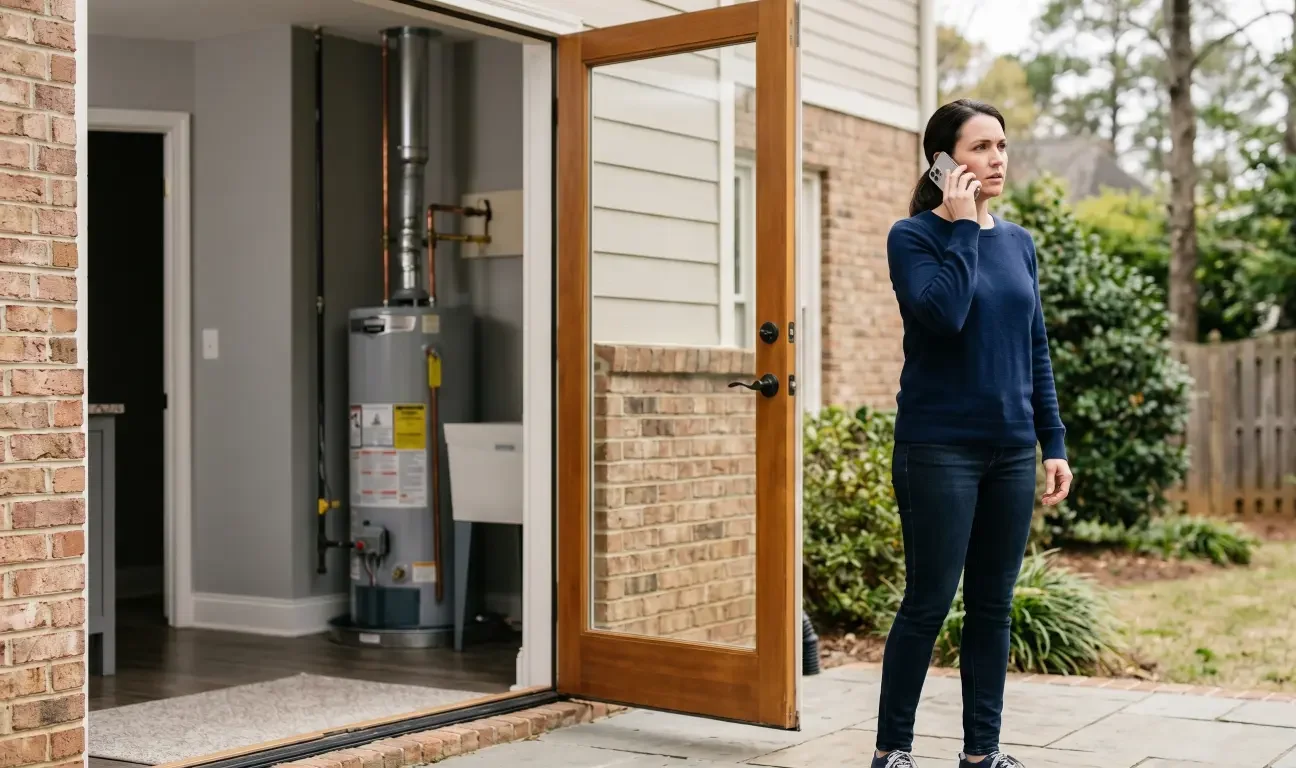
A gas smell in the house is not something to troubleshoot casually. Even if the odor seems faint, even if it only appears near the water heater, and even if you are not sure whether it is natural gas, sewer gas, or something else, the safest first step is to treat it seriously.
Natural gas is commonly odorized so people can detect a leak, often described as a rotten-egg or sulfur-like smell. That warning odor is there for a reason. A leak can create fire, explosion, and health risks, especially inside a home or near an appliance.
If you are reading this because you currently smell gas inside your home, stop investigating from inside the house. Leave first, then call for help from outside or from a safe distance.
This guide explains what to do, who to call first, what not to touch, and when a plumber should inspect or repair gas piping after the immediate safety concern has been handled.
First: Treat Any Gas Smell as a Safety Issue
The biggest mistake homeowners make is trying to prove the smell is real before taking action. They walk room to room, turn lights on, open appliance panels, relight pilot lights, or search behind the water heater. That can be dangerous.
If the odor is gas, the goal is not to find the source yourself. The goal is to get people and pets out of the home and contact the right emergency or utility response.
You do not need to know whether the issue is a loose appliance connection, a failed valve, a damaged gas line, a pilot problem, or a leak near the meter before you act. That comes later. Safety comes first.
What to Do Immediately if You Smell Gas Indoors
If you smell gas indoors or strongly suspect a leak, keep the response simple and calm.
Leave the House First
Get everyone out of the home, including children, guests, and pets. Move away from the building before making calls. Do not stop to inspect the appliance, move furniture, open equipment panels, or gather items beyond what is necessary to leave safely.
If the odor is strong, spreading, or associated with hissing, dizziness, nausea, or any sign of distress, treat it as urgent and evacuate immediately.
Do Not Use Switches, Flames, or Phones Indoors
Do not turn light switches on or off. Do not use matches, lighters, candles, or appliances. Do not start a vehicle in an attached garage. Do not use a phone inside the home if you can avoid it. Do not unplug devices or operate electrical equipment.
The reason is simple: sparks and ignition sources can be dangerous if gas has accumulated. Your job is to leave, not test the situation.
Call From Outside or a Safe Distance
Once you are outside and away from the building, call your gas utility emergency number or 911. Follow their instructions and do not re-enter the home until it has been cleared by qualified responders.
If you are in metro Atlanta, your gas utility or emergency services can direct the immediate safety response. A plumber may be part of the repair plan later, but the first call during an active suspected leak should be emergency or utility response.
Who Should You Call First for a Gas Leak?
For an active gas smell, call the gas utility or 911 first. That is the safest order.
A plumbing company can inspect, repair, replace, or pressure-test certain gas piping and appliance connections when appropriate, but a suspected active leak requires immediate safety response. Utility crews and emergency responders are equipped to evaluate the danger, secure the area, and determine whether gas service must be shut off.
After the area is safe, a licensed plumber can help with repair planning, appliance connections, gas-line replacement, pressure testing, and correcting installation issues that may have caused or contributed to the odor.
Think of it this way:
- Active odor right now: leave and call the utility or 911.
- Cleared scene or known repair need: call a qualified plumber.
- Appliance recently installed and smell persists: stop using it, leave if odor is present, and have the connection inspected before continued use.
Is a Faint Gas Smell Dangerous?
A faint gas smell can still be dangerous. The strength of the odor does not always tell you the exact size, location, or risk level of the leak.
Sometimes an odor seems faint because it is early, intermittent, or concentrated in one area. Sometimes airflow changes where the smell collects. Sometimes a homeowner gets used to an odor after being around it for a while. A faint smell near a water heater, furnace, gas stove, fireplace, garage, or utility room deserves attention.
Do not assume a faint odor is safe because it comes and goes. If you smell gas indoors, leave and call for help from outside. If responders determine there is no active gas leak, you can then investigate other possible causes with the right professionals.
Common Places Homeowners Notice Gas Odors
Homeowners often notice suspicious gas smells in predictable areas. Those clues can be useful later, but they should not delay evacuation when gas is suspected.
Near the Water Heater or Furnace
A gas smell near a water heater or furnace may involve the appliance connection, gas control valve, sediment or combustion issues, venting concerns, or nearby piping. It may also be confused with other odors from the utility area.
If you smell gas near a water heater, do not relight a pilot or open the burner compartment while standing there. Leave first and call the utility or emergency services. After the area is safe, a plumber can inspect the appliance connection, gas piping, shutoff valve, and related components.
Near the Stove, Fireplace, or Gas Logs
A brief odor when a gas burner first lights may be different from a persistent or unexplained smell. But homeowners should not ignore gas odors around cooking appliances, fireplaces, or gas logs.
If the smell continues after the appliance is off, appears when no one is using the appliance, or seems stronger than normal, stop using the appliance and treat the situation as a possible leak. Leave the home if the odor is indoors, then call from outside.
Near a Utility Room, Garage, or Exterior Meter Area
Utility rooms and garages often contain gas appliances, water heaters, furnaces, gas piping, or appliance connections. Exterior meter areas and buried service lines can also be involved in gas safety concerns.
If you smell gas outside near a meter or along a wall, do not ignore it because it is outdoors. Move away from the area and contact the utility. Outdoor gas odors can still indicate a serious issue.
Should You Shut Off the Gas Yourself?
Many homeowners ask how to shut off gas to the house, but the safest answer depends on the situation and local utility guidance.
If there is a strong gas smell inside the home, do not delay evacuation to search for a shutoff valve. Leave first. Call the gas utility or 911 from outside. Emergency responders or the utility can decide how and where the gas should be shut off.
If you have been trained by your utility on where your shutoff is and how to use it, that knowledge can be useful in some emergencies. But turning gas service back on should not be treated as a DIY task. Gas service and appliance relighting should be handled by qualified professionals according to utility and code requirements.
For everyday planning, it is smart to know where your gas meter and appliance shutoff valves are located. But during an active odor event, do not let that knowledge tempt you to stay inside and troubleshoot.
What Happens After the Emergency Response?
Once the utility or emergency responders evaluate the situation, they may clear the home, shut off service, tag an appliance, identify a suspected leak area, or tell you that a qualified contractor is needed before service can be restored.
At that stage, the problem shifts from emergency response to repair planning. You may need a plumber to inspect the gas line, repair or replace a section of piping, correct an appliance connection, pressure-test the system, or coordinate next steps before gas is restored.
This is where documentation matters. Write down what the utility or responder told you. Ask whether a specific appliance, line, connection, or area was identified. Keep any tag, notice, or service instruction. That information helps the plumber understand the required scope and avoid guesswork.
When to Call a Plumber for Gas Line Inspection or Repair
Call a plumber after the immediate safety issue has been handled if you need gas-line inspection, repair, replacement, appliance hookup, or pressure testing.
A plumber may be needed when:
- The utility shuts off gas and requires repairs before restoration.
- A gas smell appears near a water heater, furnace, stove, fireplace, or appliance connection.
- A new appliance was installed and you notice odor afterward.
- You are remodeling and gas lines need to be moved or extended.
- A shutoff valve is corroded, damaged, or difficult to operate.
- You need a gas line inspected before using an appliance again.
- You want a professional to evaluate old gas piping during a plumbing inspection.
Daniel’s Plumbing Services works with gas lines as part of its broader residential and commercial plumbing services. For homeowners in metro Atlanta, that means the team can help with the repair and planning side once emergency safety steps are complete.
Gas Line Smell After an Appliance Install
A gas smell after an appliance install should be taken seriously. Do not assume it is just leftover odor from installation.
A new water heater, stove, furnace, dryer, fireplace, or outdoor appliance may involve new connections, fittings, shutoff valves, or flexible connectors. If something was not tightened, sealed, tested, or configured correctly, the smell may be a sign that the connection needs immediate attention.
If you smell gas, leave and call the utility or 911 from outside. After the situation is cleared, have the appliance connection and nearby gas piping inspected before continued use. Do not keep testing the appliance to see whether the smell goes away.
How to Reduce Future Gas-Line Risk
You cannot eliminate every risk, but you can reduce avoidable problems with good habits and professional work.
Have gas appliances installed by qualified professionals. Keep appliance areas accessible instead of burying shutoff valves behind storage. Do not ignore corrosion, loose piping, damaged connectors, or recurring odors. Know where gas shutoffs are located, but do not treat that as a substitute for emergency response.
If your home is older, or if you are already scheduling plumbing work, ask whether visible gas piping and appliance connections should be included in the inspection. A quick look at accessible lines, valves, and appliance connections can help identify concerns before they become urgent.
It is also wise to make sure everyone in the home knows the basic rule: if you smell gas, get out first and call from outside.
Final Takeaway
A gas smell in the house is not a wait-and-see issue. If you smell gas indoors, leave the home, avoid switches and flames, call the gas utility or 911 from outside, and do not re-enter until the home has been cleared.
After the immediate safety response, a qualified plumber can help with inspection, repair, appliance connection issues, and gas-line planning. That is the right time to call Daniel’s Plumbing Services for help evaluating what needs to be fixed and how to move forward safely.
The safest response is simple: evacuate first, call the right emergency contact, then plan repairs after the area is safe.
FAQs
What should I do if I smell gas in my house?
Leave the house immediately, avoid using switches, flames, appliances, or phones indoors, and call your gas utility or 911 from outside or a safe distance. Do not re-enter until qualified responders say it is safe.
Who should I call first for a gas leak?
For an active gas smell, call the gas utility or 911 first. A plumber can help with repair planning, inspection, gas piping, or appliance connection work after the immediate safety concern has been addressed.
Is a faint gas smell dangerous?
Yes, a faint gas smell can still indicate a serious issue. Odor strength does not reliably tell you how dangerous the situation is. Treat any unexplained indoor gas smell as a safety concern and leave before calling for help.
What if I smell gas near my water heater?
Do not try to relight the pilot, open the appliance, or inspect the burner area while you are inside. Leave the home if the odor is indoors, call the utility or 911 from outside, and then arrange inspection or repair after the scene is safe.
Should I shut off the gas to my house myself?
Do not delay evacuation to look for a shutoff during an active gas odor event. Leave first and call the utility or 911. If gas service is shut off, do not turn it back on yourself. Follow utility and professional guidance.
When should I call a plumber for a gas line issue?
Call a plumber after the emergency or utility response if you need gas-line repair, pressure testing, appliance connection inspection, shutoff valve replacement, or help correcting a problem before gas service is restored.
RELATED LINK: