
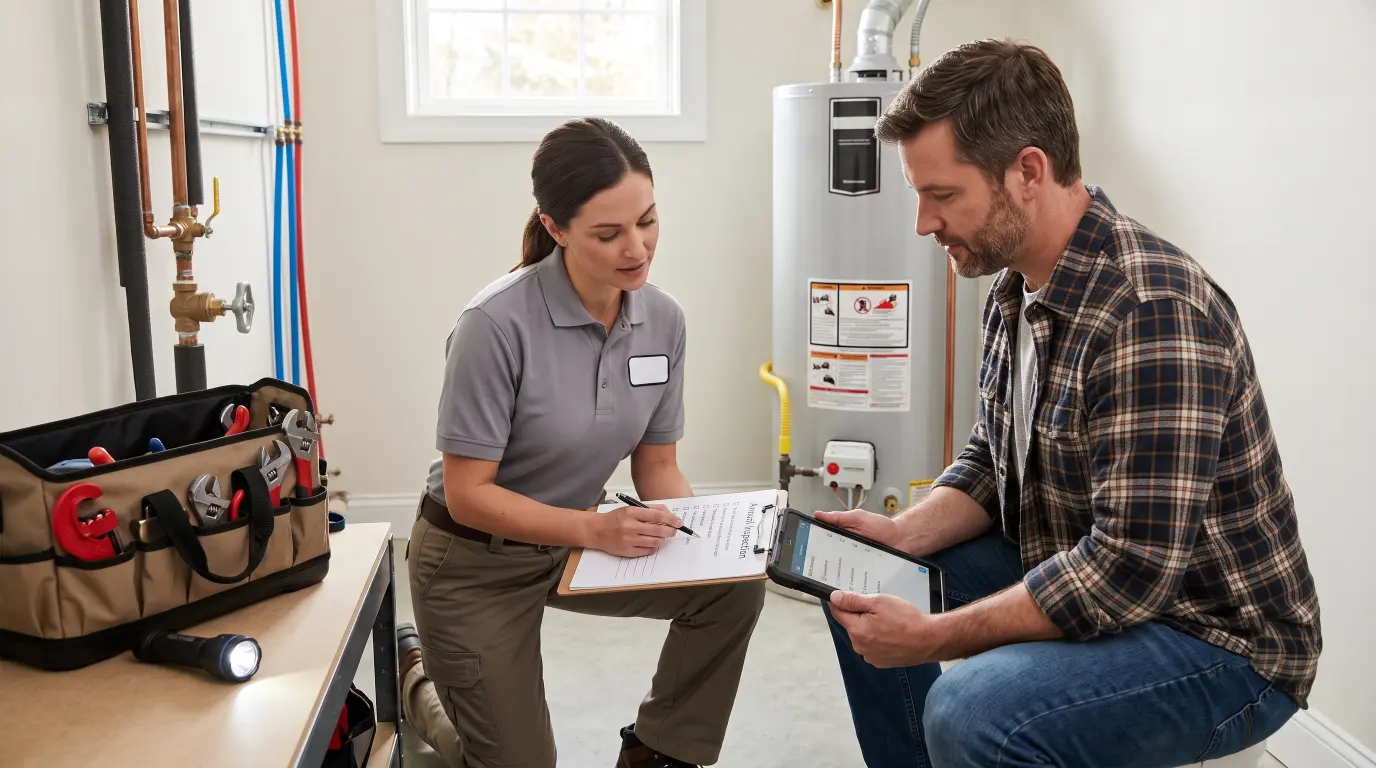
Most homeowners think about plumbing only when something goes wrong. A pipe leaks, a drain backs up, a water heater stops working, or a strange stain appears on the ceiling. By that point, the issue may already be more expensive and disruptive than it needed to be.
An annual plumbing inspection checklist helps homeowners catch early warning signs before they become urgent repairs. It is especially useful for older homes, homes preparing for sale, homes with recurring clogs, and properties in Georgia where seasonal temperature swings, heavy rain, tree roots, and aging piping can all create plumbing stress.
This guide explains what to check each year, what you can safely notice on your own, and when it is time to call a professional plumber. It is not a substitute for a licensed inspection or repair diagnosis, but it can help you prioritize issues and make better maintenance decisions.
Why an Annual Plumbing Inspection Matters
Plumbing problems often start quietly. A slow drip under a sink, a small toilet leak, a little corrosion on a shut-off valve, a drain that gurgles, or a water heater that makes new noises may not feel urgent. Over time, those small signs can point to waste, water damage, sewer trouble, fixture failure, or equipment nearing the end of its useful life.
A yearly plumbing inspection checklist for home maintenance gives you a repeatable way to look for patterns. Instead of waiting for a surprise, you review the systems that move water into the home, carry waste away, heat water, protect against leaks, and support everyday comfort.
For homeowners in the Atlanta and Marietta area, an annual check can also help plan ahead for seasonal changes. Winter preparation, spring storm drainage, summer water usage, and older-home maintenance all benefit from a proactive look.
How to Use This Checklist
Start with the areas you can safely observe without taking anything apart: sinks, toilets, exposed pipes, drains, the water heater area, outdoor hose bibbs, and visible shut-off valves. Take photos if something looks different from last year. Write down recurring symptoms such as slow drains, low pressure, water spots, odors, or rising water bills.
Do not open walls, remove major equipment, work on gas lines, alter electrical connections, or attempt repairs that require professional tools or licensing. The homeowner portion of the checklist is for observation and early detection, not risky DIY work.
If you find an active leak, sewer odor, wet flooring, water heater discharge, gas smell, recurring backup, or unexplained pressure issue, treat it as a priority and contact a professional.
Check Visible Water Supply Lines
Walk through kitchens, bathrooms, laundry areas, basements, crawlspace access points, utility rooms, and mechanical areas where plumbing is visible. Look for moisture, corrosion, mineral buildup, rust, staining, sagging pipes, dripping valves, or damp cabinet floors.
Pay close attention to supply lines under sinks and behind toilets. Flexible supply lines can wear over time, and shut-off valves can become stiff or unreliable. If a valve is corroded, leaking, or difficult to turn, it should be evaluated before an emergency requires it.
For older homes, visible pipe material and condition matter. Aging galvanized, copper, PVC, CPVC, or other materials can show different failure patterns. If you are unsure what you are seeing, a plumber can help assess the condition and explain whether repair, monitoring, or replacement planning makes sense.
Inspect Faucets, Sinks, and Fixtures
Turn on each faucet and watch how the water flows. Look for sputtering, unusual noises, low flow, discoloration, leaks around the base, and dripping after the handle is turned off. Check under the sink while water is running and again after it drains.
Look at the trap, drain connections, shut-off valves, and cabinet floor. A small leak under a sink can damage cabinet material, attract pests, and create hidden moisture problems if ignored.
Also check showers, tubs, and shower valves. Slow temperature response, poor flow, persistent dripping, or water escaping around trim may require professional review.
Test Toilets for Leaks and Running Water
Toilets can waste water quietly. Listen for running, refilling, hissing, or cycling when no one has flushed. Check around the base for moisture, movement, staining, or sewer odor. A toilet that rocks may have a floor, flange, or seal issue that should be evaluated.
You can also place a few drops of food coloring in the tank and wait without flushing. If color appears in the bowl, water may be leaking from the tank into the bowl. That type of leak may not flood the room, but it can waste water and should be repaired.
If multiple toilets clog regularly or flush poorly, the issue may be larger than a single fixture. It could involve venting, drain slope, sewer line condition, or other system-level concerns.
Watch for Drain and Sewer Warning Signs
Drains are one of the best places to spot early plumbing trouble. Make note of slow drains, recurring clogs, gurgling sounds, sewer odors, water backing up into tubs or showers, or multiple fixtures draining poorly at the same time.
A single slow sink may be a localized clog. Multiple slow fixtures may point to a main drain or sewer line issue. In Georgia, older sewer lines may also face root intrusion, shifting soil, corrosion, or damage from age and use.
Daniel’s Plumbing Services offers trenchless pipe repair and pipe lining solutions for certain drain, sewer, storm, and roof drain situations. Not every pipe is a fit for lining, and not every drain problem requires it, but recurring line issues are a reason to schedule a professional inspection before damage worsens.
Review the Water Heater
Your water heater should be part of every annual plumbing inspection checklist. Look for rust, moisture, leaks, unusual noises, inconsistent hot water, temperature swings, or water pooling near the base. Check the area around the unit for corrosion, discharge, or signs that the tank or connections may be deteriorating.
Traditional tank water heaters and tankless systems have different maintenance needs. Sediment, scale, venting, pressure relief components, gas connections, and age can all affect performance and safety. Homeowners should not attempt repairs on gas, electrical, venting, or pressure components without qualified help.
If your water heater is older, undersized, noisy, leaking, or unable to keep up with household demand, it may be time to discuss service, repair, or upgrade options. Daniel’s Plumbing Services also promotes tankless water heater upgrades for homeowners who want to evaluate modern hot water solutions.
Check Water Pressure and Flow
Water pressure that is too low can be frustrating. Pressure that is too high can stress pipes, fixtures, appliances, and water heater components. If pressure changes suddenly, that is a sign worth investigating.
During your yearly check, compare water flow at different fixtures. Does one bathroom have low pressure? Does pressure drop when multiple fixtures run? Do pipes bang when water turns off? Do faucets sputter? These symptoms may point to fixture issues, supply restrictions, pressure regulator problems, water heater concerns, or other plumbing conditions.
A plumber can test pressure, evaluate the pressure reducing valve where applicable, and identify whether the issue is isolated or system-wide.
Look for Hidden Leak Clues
Not every leak is visible. Look for water stains on ceilings, bubbling paint, soft drywall, warped floors, musty smells, mildew, unexplained insects, damp crawlspaces, or higher-than-normal water bills. A leak can hide behind walls, under slabs, under cabinets, or near appliances.
If you have a smart leak detection or automatic shut-off system, test that it is connected, powered, and working according to the manufacturer’s instructions. If you do not have one, consider whether leak protection makes sense for your home, especially if you travel, own an older property, or have had previous water damage.
Daniel’s Plumbing Services promotes smart leak detection and automatic shut-off solutions that monitor water use and help protect homes and businesses. These tools do not replace plumbing maintenance, but they can add another layer of protection.
Review Water Quality and Filtration Needs
Annual plumbing maintenance is also a good time to think about water quality. Notice taste, odor, staining, cloudy water, sediment, mineral buildup, or scale around fixtures. These clues may point to issues with local water conditions, plumbing materials, or filtration needs.
Do not make health claims or treatment decisions based only on appearance. If water quality is a concern, testing is the right starting point. A professional can help determine whether filtration, maintenance, or further evaluation is appropriate.
Daniel’s Plumbing Services presents itself as a HALO Water Systems certified partner and recommends water testing before choosing a whole-home filtration solution. For homeowners concerned about water quality, that makes testing and professional guidance a practical next step.
Inspect Outdoor Plumbing and Hose Bibbs
Outdoor plumbing is easy to forget until it fails. Check hose bibbs, irrigation connections, exterior shut-offs, outdoor kitchens, pool fill lines, and visible piping. Look for leaks, poor drainage, cracking, corrosion, or loose fixtures.
Disconnect hoses before freezing weather, and confirm that exterior fixtures are protected when temperatures drop. Even in Georgia, winter cold snaps can cause problems when outdoor plumbing is exposed.
After heavy rain, look for slow yard drainage, standing water near foundation areas, or storm drain concerns. If you notice recurring drainage problems, a plumber can help determine whether the issue is related to plumbing, stormwater systems, grading, or another property condition.
Seasonal Plumbing Checklist for Winter in Georgia
A seasonal plumbing checklist winter Georgia homeowners can use should include outdoor fixtures, exposed pipes, crawlspaces, water heater performance, and shut-off readiness. Know where your main water shut-off is located and make sure household members know how to use it in an emergency.
Before colder months, insulate vulnerable pipes where appropriate, disconnect hoses, cover exterior spigots, and check unheated spaces. During travel or severe weather, follow safe winterization guidance and consider whether smart leak protection or automatic shut-off technology would help reduce risk.
After a freeze, inspect for new leaks, low pressure, water stains, or unusual sounds. A small crack may not show itself until temperatures rise and water begins moving normally again.
Plumbing Inspection for Older Homes
A plumbing inspection for older home maintenance should be more detailed than a quick visual walk-through. Older homes may have aging pipes, older water heaters, outdated shut-off valves, recurring drain issues, root intrusion, or prior repairs that were completed at different times by different contractors.
If your home is 20 or more years old, annual documentation becomes more valuable. Track repairs, pipe materials, fixture replacements, water heater age, sewer issues, water pressure, and any recurring symptoms.
A professional plumber can help prioritize what is urgent, what should be monitored, and what may become a future upgrade. This can help homeowners plan rather than react.
Plumbing Maintenance Checklist Before Selling a House
If you plan to sell your home, plumbing deserves attention before listing. Buyers and inspectors may notice slow drains, leaks, loose toilets, old water heaters, stains, weak pressure, or visible corrosion. Addressing obvious issues early can reduce negotiation stress later.
Before selling, check under every sink, test toilets, inspect the water heater, confirm fixtures work, look for leaks, and make sure outdoor spigots operate properly. If the home is older or has a history of plumbing issues, consider a professional plumbing inspection before the buyer’s inspection.
A proactive review can help you understand likely repair items and decide which issues to address before the home goes on the market.
DIY Checks vs. Professional Inspection
Homeowners can safely observe many things: leaks, stains, slow drains, running toilets, weak flow, visible corrosion, water heater age, outdoor spigot condition, and unusual smells or sounds. These observations are useful and can help you explain the issue when calling a plumber.
A professional inspection goes further. A plumber can test pressure, evaluate water heater components, inspect valves, diagnose recurring drain problems, assess pipe condition, investigate hidden leaks, review water quality concerns, and recommend repair or replacement options.
The best approach is not DIY versus professional. It is DIY observation plus professional support when the signs suggest deeper risk.
What Does a Plumber Check in an Inspection?
A plumber may check visible piping, fixtures, drains, toilets, shut-off valves, water heater condition, water pressure, supply lines, exterior fixtures, leak signs, sewer or drain symptoms, and specialty systems such as filtration or leak detection. The exact scope depends on the home, the reason for the visit, and the concerns you report.
If the inspection is tied to selling a home, an older property, recurring clogs, or suspected sewer issues, the plumber may recommend additional evaluation. That could include camera inspection, pressure testing, leak detection, or review of repair options.
Ask what is included before the appointment so you know what to expect.
Priority List: What to Address First
Not every checklist item has the same urgency. Active leaks, sewer backups, gas concerns, water heater leaks, wet walls or ceilings, mold-like odors, and major pressure changes should be treated as high priority.
Moderate-priority items include slow drains, running toilets, corroded valves, dripping faucets, aging supply lines, recurring clogs, and water heater performance issues. These may not be emergencies, but they should not be ignored.
Planning-priority items include filtration upgrades, smart leak protection, tankless water heater evaluation, pipe lining consultation, and replacement of aging fixtures before failure.
How Daniel’s Plumbing Services Can Help
Daniel’s Plumbing Services serves Atlanta, Marietta, Acworth, and surrounding Georgia communities with residential and commercial plumbing service, repair, installations, and specialty solutions. The company combines full-service plumbing with advanced options such as trenchless pipe lining, whole-home water filtration, smart leak detection, and tankless water heater upgrades.
For homeowners, that means a plumbing inspection can do more than identify immediate repairs. It can also help prioritize prevention, property protection, water quality concerns, hot water performance, and aging pipe issues.
If your home is older, you are preparing to sell, you have recurring plumbing symptoms, or you simply want a clearer maintenance plan, scheduling an appointment with a professional plumber is a practical next step.
Annual Plumbing Inspection Checklist
Use this checklist once a year and after major seasonal changes:
- Look under sinks for leaks, stains, moisture, and corrosion.
- Test faucets for drips, low flow, and unusual sounds.
- Listen for running toilets or tanks that refill on their own.
- Check around toilet bases for moisture, movement, or odor.
- Watch for slow drains, gurgling, sewer smells, or recurring clogs.
- Inspect visible pipes and shut-off valves.
- Review water heater age, noise, leaks, rust, and performance.
- Compare water pressure throughout the home.
- Look for hidden leak signs such as stains, warped flooring, or musty smells.
- Review water quality concerns such as odor, staining, or sediment.
- Check outdoor spigots, hoses, and exposed pipes.
- Prepare exterior plumbing before winter cold snaps.
- Document recurring issues and repairs.
- Call a professional for active leaks, sewer symptoms, water heater issues, or older-home concerns.
An annual plumbing inspection checklist helps homeowners move from reactive repairs to proactive maintenance. It will not prevent every problem, but it can help you spot early warning signs, prioritize repairs, and plan upgrades before a small issue becomes a larger disruption.
For Georgia homeowners, the checklist is especially useful for older homes, seasonal changes, pre-sale preparation, and homes with recurring drain, pressure, water heater, or leak symptoms.
Daniel’s Plumbing Services can help homeowners evaluate concerns, schedule service, and explore practical solutions that protect comfort, property, and peace of mind.
FAQ
What is included in an annual plumbing inspection checklist?
An annual plumbing inspection checklist should include visible pipes, sinks, faucets, toilets, drains, water heater condition, water pressure, outdoor fixtures, shut-off valves, leak signs, water quality concerns, and seasonal plumbing risks.
What does a plumber check in an inspection?
A plumber may check fixtures, valves, visible piping, drains, toilets, water heater components, pressure, leak signs, exterior plumbing, and symptoms that suggest sewer or hidden pipe issues. The exact scope depends on the home and the reason for the visit.
How often should homeowners inspect plumbing?
Homeowners should do a basic visual check several times a year and complete a more thorough checklist annually. Older homes, homes with recurring issues, and homes preparing for sale may benefit from professional review.
What plumbing issues should be handled immediately?
Active leaks, sewer backups, gas concerns, water heater leaks, wet ceilings or walls, sudden pressure changes, and recurring drain backups should be treated as priority issues and evaluated by a professional.
Why choose Daniel’s Plumbing Services for plumbing maintenance?
Daniel’s Plumbing Services serves metro Atlanta homeowners with full-service plumbing repair, maintenance, installations, and specialty solutions such as pipe lining, water filtration, leak detection, and tankless water heater upgrades.
RELATED LINK:
U.S. Environmental Protection Agency – WaterSense: Start Saving