
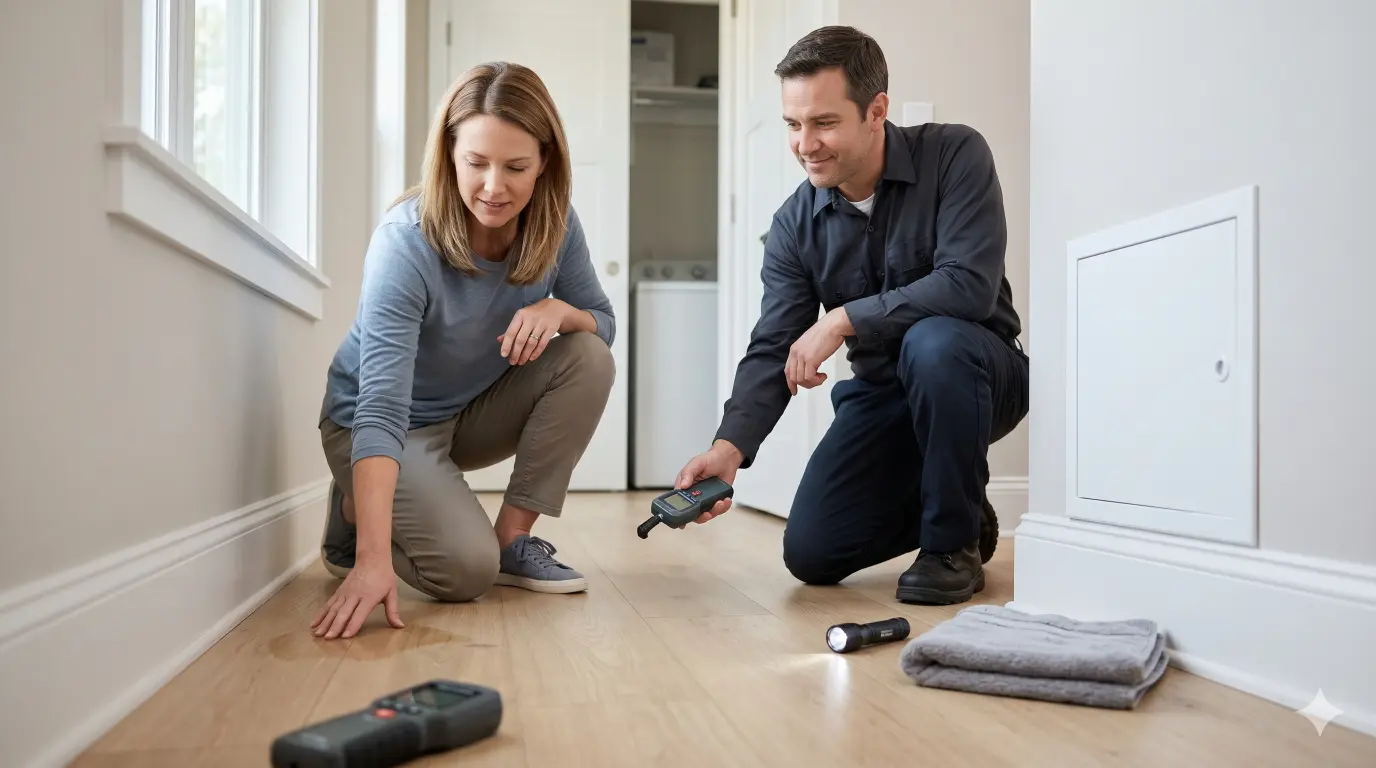
A warm spot on the floor can make any homeowner uneasy. So can damp carpet, moisture near a wall, a musty smell, or the sound of water when nothing is running. Once you notice something strange, it is easy to jump to the worst-case scenario: is this a slab leak?
Sometimes the concern is valid. A water line leaking beneath a concrete slab can create damage if it is ignored. But not every damp patch, warm floor area, or wet spot means there is a pipe leaking under the foundation. Condensation, humidity, appliance leaks, HVAC drain issues, roof or wall leaks, and plumbing above the slab can all create symptoms that feel similar at first.
The goal is not to diagnose the problem by guessing. The goal is to understand the most common slab leak signs, compare them with moisture patterns that may point to condensation or another source, and know when it is time to call a plumber for proper leak detection.
Why the Difference Matters
A slab leak is a leak in a water line located below or within the concrete slab foundation of a home. Because the pipe is hidden, the signs often show up indirectly: temperature changes in the floor, unexplained water use, damp flooring, pressure changes, or sounds that do not match normal fixture use.
Condensation is different. Condensation happens when moist air contacts a cooler surface and water forms on that surface. In a home, condensation may appear on cold pipes, ductwork, windows, concrete, or other surfaces when humidity and temperature conditions line up.
The two issues call for different responses. A slab leak needs plumbing diagnosis and repair planning. Condensation may require ventilation, insulation, humidity control, or addressing a nearby cold surface. Treating one like the other can waste time and money.
That is why homeowners should look for patterns instead of focusing on one clue by itself.
The Most Common Slab Leak Signs Homeowners Notice First
Slab leak signs are usually strongest when several clues appear together. One clue can raise suspicion. A pattern deserves attention.
A warm spot on the floor
A warm spot can happen when a hot water line under the slab is leaking or running continuously. The floor may feel noticeably warmer than surrounding areas, especially on tile, hardwood, or concrete. If the warm area stays in the same location and does not match sunlight, HVAC airflow, radiant heat, or appliance heat, it is worth investigating.
A warm spot alone does not prove a slab leak. But a persistent warm spot paired with higher water use, the sound of running water, or damp flooring is more concerning.
Wet carpet, damp flooring, or moisture with no clear spill
If carpet, flooring, baseboards, or a specific room area keeps getting damp without a known spill, cleaning issue, pet accident, or appliance leak, the source should be checked. Moisture may travel from the leak location to a lower or more absorbent area, so the wet spot may not sit directly above the pipe.
Pay attention to recurrence. A one-time wet spot may have an ordinary explanation. A wet area that dries and returns is more suspicious.
Sound of running water when fixtures are off
If you hear water moving when faucets, showers, appliances, irrigation, and toilets are off, that can be a warning sign. The sound may be faint, steady, or easier to hear at night when the house is quiet.
This can come from several sources, but it is one of the clues plumbers take seriously when evaluating possible hidden leaks.
Rising water bills or meter movement
A water bill that climbs without a clear change in usage can suggest a hidden leak. Another clue is a water meter that continues to move when all fixtures and water-using appliances are shut off.
Meter checks can be useful, but they should be done carefully. Toilets, irrigation, water softeners, humidifiers, ice makers, and other fixtures can create confusing results if they are not considered.
Low water pressure or hot water problems
Some slab leaks affect pressure, hot water delivery, or the performance of plumbing fixtures. You may notice weaker flow, slower hot water recovery, or a water heater that seems to work harder than normal. These symptoms can have other causes, but they belong in the overall pattern.
When Condensation Can Look Like a Leak
Condensation can be surprisingly convincing. It may leave droplets, damp areas, staining, or puddles near pipes, ducts, windows, or concrete surfaces. In humid Georgia weather, indoor moisture conditions can make the issue more noticeable.
Condensation is more likely when the moisture appears on or near cold surfaces, changes with humidity, improves when air circulation improves, or appears during certain weather patterns. For example, a cold water line in a humid crawlspace or utility area may sweat. A metal duct or poorly insulated pipe may collect moisture. A concrete floor may feel damp if humid air contacts a cooler slab surface.
Condensation often has a surface pattern. You may see droplets on the outside of a pipe or on a cold surface rather than water coming from below the flooring. It may be worse during humid days, after air conditioning runs heavily, or in areas with poor ventilation.
That said, condensation should not become the automatic explanation for every damp area. If moisture is persistent, localized, worsening, or connected with plumbing use, have it checked.
Moisture Patterns That Point Toward a Plumbing Leak
The pattern matters more than a single moment. A plumbing leak becomes more likely when moisture returns to the same place repeatedly, spreads over time, appears even when humidity is low, or is accompanied by water-use clues.
A slab leak may also create floor damage, loose flooring, baseboard swelling, mildew-like odors, or a warm area that stays warm even when the room temperature changes. In some homes, the first clue is not visible water but a utility bill, a sound, or a change in hot water performance.
By contrast, condensation is more likely to appear on exposed cold surfaces, follow humidity and temperature changes, or improve when insulation, ventilation, or dehumidification improves.
Here is the simple homeowner rule: if the moisture has no clear source and keeps coming back, treat it as real until a professional inspection proves otherwise.
Simple Checks You Can Do Before Calling a Plumber
You do not need to tear up flooring to gather useful information. A few simple checks can help you explain the situation clearly when you call.
Check whether the spot changes over time
Mark the edge of the damp area with painter’s tape or take a photo. Check it again later. Is it expanding, shrinking, or staying the same? Does it return after drying?
Turn off water-using fixtures and listen
When the house is quiet, make sure faucets, showers, washing machines, dishwashers, irrigation, and toilets are not running. Listen for water movement. If you hear a steady sound, note where it is loudest.
Look for nearby non-slab sources
Check sinks, toilets, tubs, showers, washing machines, refrigerators, water heaters, HVAC drain lines, exterior walls, and nearby doors or windows. Water can travel, so a wet floor does not always mean the pipe beneath it is leaking.
Compare the moisture with weather and HVAC use
Does the dampness appear during humid weather? Does it appear after heavy air conditioning use? Is it near a cold pipe, duct, or exterior wall? Those details may point toward condensation or another moisture source.
Check the water meter if you know how to do so safely
If you are comfortable with it, check whether the water meter indicates flow when all water use is off. Do not force valves, remove covers unsafely, or do anything you are not comfortable doing. If you are unsure, leave this step to a plumber.
What Not to Do When You Suspect a Slab Leak
Do not start cutting into floors, walls, cabinets, or concrete just to confirm a suspicion. Hidden leak diagnosis should start with non-destructive methods whenever possible.
Do not ignore the issue for weeks because the area seems small. A small leak can still create moisture damage over time.
Do not assume bleach, fans, towels, or a dehumidifier solve the problem if the source is active. Drying the surface does not repair a leak.
Do not rely only on internet symptoms. Slab leak signs overlap with other household moisture problems. A professional inspection is the safer path when the signs are persistent or unclear.
How Plumbers Confirm a Slab Leak Without Tearing Up the House First
A professional plumber will usually start by narrowing the source. That may include checking fixtures, valves, water pressure, meter activity, hot and cold lines, nearby appliances, and visible plumbing. The goal is to separate a true under-slab leak from a fixture leak, drain problem, appliance issue, condensation pattern, or exterior water source.
Depending on the situation, leak detection may involve specialized tools such as acoustic listening equipment, thermal imaging, pressure testing, or other diagnostic methods. These tools help identify likely leak areas without immediately opening the floor.
No method should be presented as magic. Leak detection is a process of gathering evidence and narrowing possibilities. The value of calling a plumber is that the inspection can move from fear to facts before repair options are discussed.
Why Fast Action Matters
A suspected slab leak should not be treated casually. Water under or near flooring can affect finishes, baseboards, cabinets, and indoor moisture conditions. A leak on a hot water line may also waste energy as the water heater works harder than it should.
The faster the source is identified, the easier it is to choose a repair path. In some cases, the issue is not a slab leak at all. In others, early detection can help limit disruption.
Daniel’s Plumbing Services also works with advanced plumbing solutions such as leak detection, smart leak protection, trenchless pipe lining, water heaters, water filtration, and general residential and commercial plumbing. That broader view matters because the right answer depends on what is actually leaking, where it is located, and what the home needs next.
When to Call Daniel’s Plumbing Services
Call a plumber if you notice a warm spot on the floor that does not go away, wet carpet with no spill, recurring damp flooring, a sound of running water when fixtures are off, rising water use, low pressure, or moisture that keeps returning after you dry it.
You should also call if you cannot tell whether the issue is condensation or a hidden leak. A professional inspection can help identify the source before you approve any repair.
Daniel’s Plumbing Services serves homeowners across the metro Atlanta area with practical plumbing help, repair work, water heater support, leak-focused solutions, and specialty plumbing services. If a possible slab leak is making you uneasy, schedule an appointment and get the problem checked before it becomes a bigger disruption.
FAQs
What are the most common slab leak signs?
Common slab leak signs include a warm spot on the floor, unexplained wet carpet or flooring, sound of running water when fixtures are off, rising water bills, lower water pressure, or recurring moisture with no obvious source. One sign alone may not prove a slab leak, but a pattern should be inspected.
Can condensation look like a slab leak?
Yes. Condensation can create damp surfaces, droplets, or moisture that looks like a leak. It often appears near cold pipes, ductwork, windows, or cool concrete surfaces and may change with humidity and temperature. Persistent or localized moisture should still be checked.
Does a warm spot on the floor always mean a slab leak?
No. A warm spot can have several explanations, including sunlight, HVAC airflow, radiant heat, nearby appliances, or plumbing conditions. However, a persistent warm spot combined with other slab leak signs deserves professional evaluation.
How can a plumber confirm a slab leak without tearing up the floor?
A plumber may use a combination of fixture checks, water meter observations, pressure testing, acoustic leak detection, thermal imaging, and other diagnostic methods to narrow the source before any invasive repair is considered.
Should I turn off my water if I suspect a slab leak?
If water is actively spreading, damaging flooring, or creating an urgent situation, shutting off the water may help limit damage until a plumber arrives. If you are unsure where the shutoff is or whether it is safe to operate, call a plumber for guidance.
Is a slab leak an emergency?
It can be. If water is spreading, flooring is soaked, the water heater is running constantly, or you hear ongoing water flow, treat it as urgent. Even less dramatic signs should be inspected promptly because hidden water can create
damage over time.
RELATED LINK:
EPA WaterSense – Fix a Leak Week