
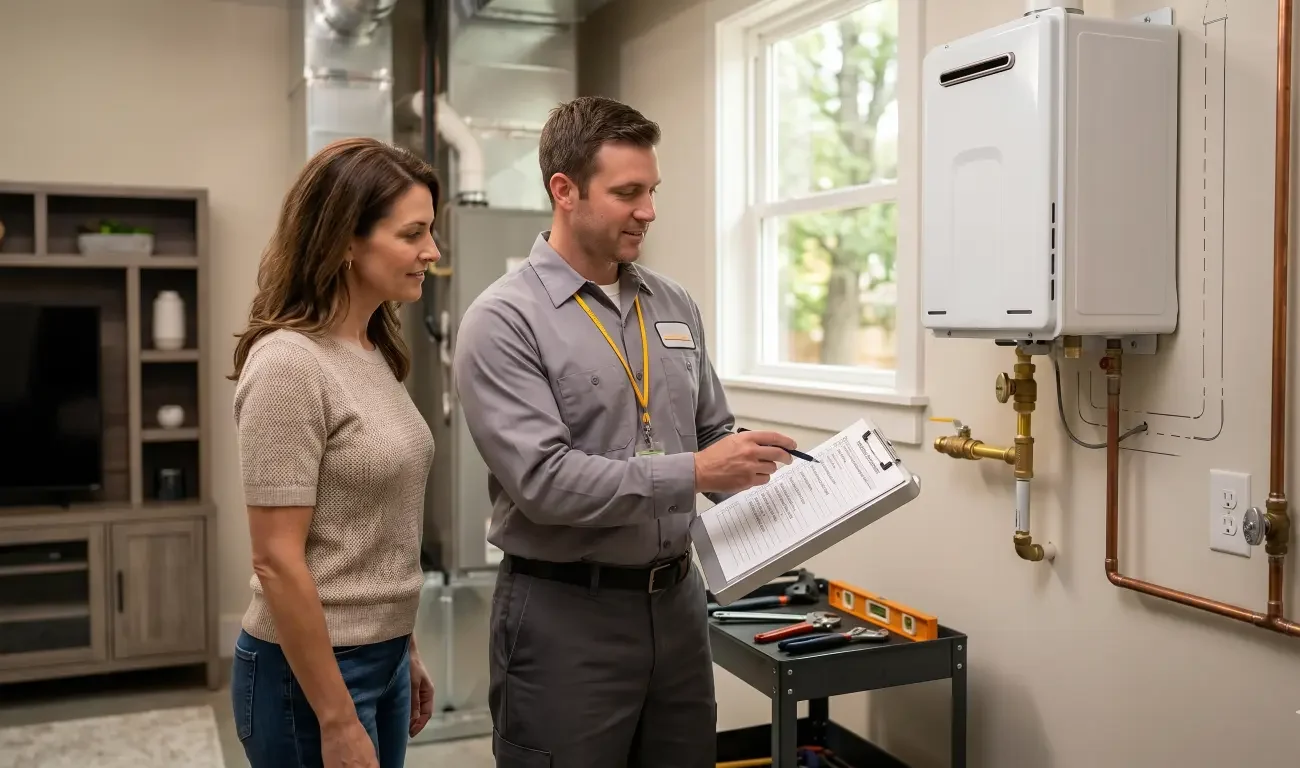
A tankless water heater can sound like the obvious answer when your home keeps running out of hot water. The idea is appealing: no large storage tank, hot water produced on demand, and a system that may fit better with a modern home’s comfort expectations.
But tankless is not a plug-and-play swap in every house. Before you approve the upgrade, your home needs to be checked for fuel capacity, venting, water quality, location, drainage, electrical needs, usage patterns, and local code requirements. Skipping those checks can turn a promising upgrade into an expensive surprise.
This tankless water heater readiness checklist is designed to help homeowners understand what a plumber is looking for before recommending a tankless installation. It is not a substitute for an onsite evaluation, but it will help you ask better questions and avoid the most common assumptions.
Why Tankless Readiness Matters
Tankless water heaters heat water as it moves through the unit. Instead of keeping a tank full of hot water available, the system fires when there is demand. That design can be efficient and space-saving, but it also means the unit must be sized and installed for the home’s actual usage.
A tank-style water heater stores hot water and releases it until the tank is depleted. A tankless unit has to raise the water temperature fast enough while fixtures are running. That requires the right fuel supply, the right venting, the right flow rate, and the right installation conditions.
For homeowners, the key takeaway is simple: tankless feasibility is not just about buying the unit. It is about whether the house is ready to support the unit safely and reliably.
Checklist Item 1: Your Home’s Hot-Water Demand
The first question is not which tankless unit looks best. The first question is how your household actually uses hot water.
Think about the number of bathrooms, showers, tubs, sinks, laundry appliances, dishwashers, and people in the home. Then think about overlap. Do two showers run at the same time? Does laundry run while someone bathes a child? Does the dishwasher run during the evening routine? A tankless system must be selected around realistic peak demand, not average demand on a quiet day.
A large family may need a different approach than a couple in a smaller home. A home with a soaking tub, multiple shower heads, or frequent simultaneous use may need a higher-capacity unit or a more detailed design conversation.
This is where a professional evaluation helps. A plumber can review fixture demand, incoming water temperature, desired temperature rise, and manufacturer specifications to decide what size and type of system makes sense.
Checklist Item 2: Gas Line and Meter Capacity
One of the biggest tankless readiness issues is gas capacity. Many gas tankless water heaters require a higher input rate than a traditional tank water heater. That does not automatically mean your home is not a candidate, but it does mean the gas line and meter must be checked.
If the existing gas piping is undersized, the tankless unit may not receive enough fuel during high-demand operation. That can lead to performance problems, error codes, or an installation that cannot be completed as planned without additional gas work.
The plumber may need to look at the gas meter, pipe size, pipe length, existing appliances, furnace load, range load, fireplace load, and the planned water heater location. In some homes, a gas line upgrade may be required. In others, the existing setup may be sufficient.
Do not assume that because you already have a gas water heater, you automatically have enough gas capacity for tankless. That is one of the most common upgrade mistakes.
Checklist Item 3: Venting Requirements
Venting is another major readiness factor. Tankless units do not always use the same venting as a traditional tank water heater. Many models require specific vent materials, termination clearances, intake/exhaust layouts, slope requirements, and manufacturer-approved configurations.
The vent path matters because it affects safety, performance, and installation cost. A short, direct vent route may be easier to work with. A complicated route through finished walls, tight mechanical spaces, or long distances can add difficulty.
If the water heater is currently in a garage, basement, closet, attic, or utility room, the venting conversation may be different for each location. Condensing and non-condensing units can also have different requirements.
Before approving a tankless upgrade, ask where the unit will vent, what material will be used, where the vent will terminate, and whether the path meets manufacturer and local requirements.
Checklist Item 4: Water Quality and Scale Risk
Water quality has a direct impact on tankless performance and maintenance. Hard water can contribute to scale buildup inside the heat exchanger. Over time, that buildup can reduce efficiency, trigger service issues, and shorten equipment life if maintenance is ignored.
This does not mean every home with hard water is automatically disqualified from tankless. It means the water should be evaluated and a maintenance plan should be part of the discussion.
A plumber may recommend water testing, flushing intervals, isolation valves for service, or a water treatment solution depending on the home’s conditions. Because Daniel’s Plumbing Services also works with whole-home water filtration and water-quality solutions, this is a natural place to evaluate the full system rather than only the heater.
Ask whether your water conditions create scale risk, how the unit should be flushed, and whether any treatment or filtration option should be considered before installation.
Checklist Item 5: Electrical, Condensate, and Drainage Needs
Even gas tankless water heaters usually need electricity for controls, ignition, fans, and safety systems. That means the installation location must have appropriate electrical access. If power is not available nearby, additional electrical work may be needed.
Condensing tankless units may also produce condensate that must be drained properly. Depending on the location, that may involve routing condensate to a suitable drain and sometimes using neutralization components as required by the unit and local conditions.
These details are easy to overlook when the conversation focuses only on hot water. But they can affect installation scope and cost. A readiness evaluation should identify the electrical and drainage plan before work begins.
Checklist Item 6: Location, Clearances, and Service Access
Tankless units save space compared with large tanks, but they still need the right location. The unit must be accessible for installation, inspection, and future maintenance. It also needs proper clearances based on manufacturer instructions.
A tight closet, cramped attic, or crowded mechanical room may create challenges. Outdoor installations may require weather-appropriate equipment and placement. Indoor installations may require venting, condensate handling, and combustion air considerations.
Service access matters because tankless units need periodic maintenance. If the unit is difficult to reach, future flushing and troubleshooting become harder. A good installation plan thinks beyond day one and makes the system serviceable for years.
Checklist Item 7: Permits, Codes, and Manufacturer Instructions
Water heater replacement and installation requirements can vary by location, fuel type, installation conditions, and local authority. Tankless upgrades may involve plumbing, gas, venting, electrical, and code considerations. That is why homeowners should not treat a tankless installation as a simple appliance swap.
The plumber should install the system according to local code and manufacturer instructions. That can include proper venting, fuel supply, relief valve requirements, clearances, condensate handling, and other safety details.
Before moving forward, ask whether a permit is needed, who handles it, what inspection steps may apply, and what parts of the installation could affect the timeline.
Checklist Item 8: Budget, Payback, and Expectations
Tankless water heaters often cost more upfront than standard tank replacements. The final cost can depend on the unit, gas line work, venting changes, electrical needs, condensate routing, water treatment, permit requirements, and location challenges.
That does not mean tankless is a bad choice. It means the decision should be based on comfort goals, long-term plans for the home, hot-water needs, space considerations, and the real installation scope.
Avoid judging the upgrade by the equipment price alone. A complete estimate should explain what is included, what assumptions were made, and whether any hidden readiness issues could change the scope.
Questions to Ask Before Approving a Tankless Installation
Before you move forward, ask a few direct questions. A clear conversation upfront can prevent confusion later.
- Is my current gas line and meter capacity enough for this unit?
- What size tankless water heater fits my household’s peak hot-water demand?
- Where will the unit vent, and what venting material is required?
- Does my water quality create scale risk or maintenance concerns?
- Will I need a water treatment or filtration solution?
- Does the installation location have proper power, drainage, and service access?
- Will this project require a permit or inspection?
- What is included in the estimate, and what could change the final cost?
- What maintenance does the unit need after installation?
The answers should make the decision easier, not more confusing. If the conversation feels vague, ask for the installation assumptions to be explained in plain English.
When Tankless May Be a Strong Fit
Tankless may be a strong option when the home has enough fuel capacity, a reasonable vent path, manageable water quality, and a household that values on-demand hot water and space savings. It can also make sense when a homeowner is already replacing an aging water heater and wants to evaluate a longer-term upgrade.
It may be especially appealing for families that routinely run out of hot water, homeowners remodeling a utility area, or property owners who want a modern system with a service plan.
The best candidates are not just people who want tankless. They are homes where the plumbing, gas, venting, water quality, and usage patterns support the choice.
When a Traditional Tank May Still Make Sense
Tankless is not always the right answer. A traditional tank water heater may still make sense when the budget is tight, the existing setup is simple, gas upgrades would be extensive, venting would be complicated, or household demand does not justify the added scope.
A good plumber should help you compare options honestly. The goal is not to force every homeowner into tankless. The goal is to choose the water-heating solution that fits the home, the budget, and the way the household actually uses hot water.
How Daniel’s Plumbing Services Can Help
Daniel’s Plumbing Services serves homeowners and businesses across the metro Atlanta area with plumbing repairs, installations, water heaters, water filtration, smart leak protection, and specialty plumbing solutions. For homeowners considering tankless, that broad view matters.
A tankless decision is not only a water heater decision. It may touch gas sizing, venting, water quality, service access, and the rest of the plumbing system. Daniel’s Plumbing Services can help evaluate those readiness factors, explain the tradeoffs, and recommend a path that makes sense for the home.
If you are considering a tankless water heater because your current system is aging, undersized, or unable to keep up, schedule an appointment before choosing equipment. A readiness check can help you avoid assumptions and move forward with a clearer plan.
FAQs
Do I Have Enough Gas for a Tankless Water Heater?
Maybe, but it has to be checked. A gas tankless water heater may require more fuel capacity than a standard tank unit. A plumber should evaluate the gas meter, pipe size, pipe length, existing appliances, and the selected unit’s requirements before confirming feasibility.
What Venting Does a Tankless Water Heater Need?
Venting depends on the specific unit, fuel type, location, and manufacturer instructions. Some tankless units require special vent materials and specific intake/exhaust clearances. The vent path should be reviewed before the installation is approved.
Can Hard Water Damage a Tankless Water Heater?
Hard water can contribute to scale buildup inside a tankless system. That can affect performance and maintenance needs. Water testing, routine flushing, and possibly water treatment may be recommended depending on local water conditions.
Is a Tankless Water Heater Good for a Large Family?
It can be, but sizing is critical. A large family may have multiple showers, laundry, and dishwashing demands that overlap. The system should be selected based on peak hot-water use, not just the number of people in the home.
Do I Need a Permit to Install a Tankless Water Heater?
Permit requirements can vary by jurisdiction and installation scope. Because tankless installations can involve plumbing, gas, venting, and electrical considerations, ask your plumber whether a permit or inspection is required for your location.
Is Tankless Always Better Than a Tank Water Heater?
No. Tankless can be a strong upgrade when the home is ready for it, but a traditional tank may still be the better fit for some budgets, layouts, and usage patterns. The best choice depends on the home and the installation requirements.
RELATED LINK:
U.S. Department of Energy — Tankless or Demand-Type Water Heaters