
A hidden plumbing leak can cause expensive damage before a homeowner even knows there is a problem. A burst washing machine hose, failed water heater, supply line leak, or pipe leak behind a wall can keep running until someone sees water, smells moisture, or notices damage. That is why many homeowners are now looking at smart water shutoff systems as part of a larger home protection plan.
A smart water shutoff system is designed to monitor water use, alert you when unusual activity is detected, and in some cases automatically shut off the home’s water supply. It is not a magic device that prevents every plumbing problem. It is a protection tool that can help reduce the amount of water released when certain leaks happen and help homeowners respond faster.
For homeowners comparing smart home upgrades, the most important thing is understanding what these systems actually do, what they do not do, where they are installed, and why professional installation matters. This guide explains the difference between leak sensors and whole-house shutoff devices, how app alerts work, what automatic shutoff can and cannot prevent, and when to call a plumber.
What Is a Smart Water Shutoff System?
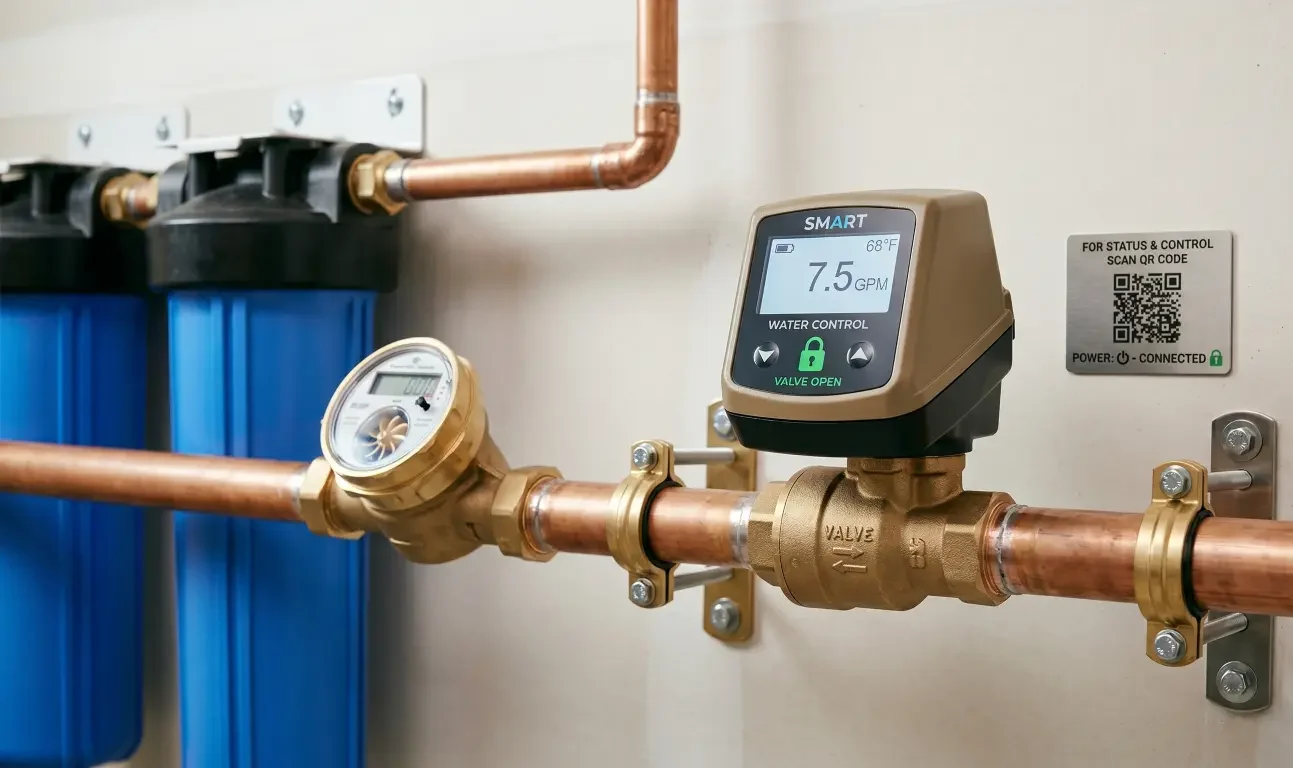
A smart water shutoff system is a device installed on the home’s main water line to monitor water flow and, depending on the model and setup, shut off water automatically or through an app. It is usually installed near the main water entry point, after the meter or where the water line enters the home.
The system watches how water moves through the plumbing. If it detects unusual flow, continuous use, a suspected leak, or another abnormal pattern, it can send an alert to the homeowner’s phone. Some systems can also close a valve to stop water from continuing into the home.
The value is simple: water damage often gets worse because water keeps running. If a system can notify you quickly or close the valve when a major issue is detected, it may limit the spread of damage while you arrange professional help.
Smart Shutoff vs. Leak Sensors
Many homeowners confuse smart shutoff systems with small leak sensors. Both can be useful, but they are not the same.
Leak sensors are usually placed near risk areas such as water heaters, washing machines, dishwashers, under sinks, or basement floors. They typically detect water only when moisture reaches the sensor. They may send an alert, sound an alarm, or connect to a smart home platform. They are good for targeted warning, but they usually do not shut off the whole home unless connected to a separate valve system.
A whole-house smart water shutoff system monitors water flow at the main line. Instead of waiting for water to reach a sensor, it looks for abnormal usage patterns. Depending on the product, it may also provide app control and automatic shutoff.
The best setup for some homes may include both: point sensors in high-risk areas and a smart shutoff device on the main water line. The sensors can provide location-specific alerts, while the main shutoff can help stop water supply to the home.
How Smart Water Shutoff Works
Smart shutoff systems typically use flow monitoring, pressure monitoring, or a combination of detection methods to understand normal water behavior. Over time, the system may learn patterns such as short faucet use, showers, irrigation, laundry cycles, and overnight inactivity.
When water use looks unusual, the system may send a notification. For example, it may flag continuous flow that lasts too long, unusually high water use, or water activity during a time when the home is normally quiet. Some systems can be set to shut off automatically when certain thresholds are reached.
From the homeowner’s perspective, the experience may look simple: an app sends an alert, shows water usage, and offers the option to shut off water remotely. Behind the scenes, the device is installed into the plumbing and connected to power and the home’s network.
Because these systems become part of the water line, installation is not the same as plugging in a smart speaker. A licensed plumbing professional should evaluate the main line, valve location, pipe material, clearance, and system requirements before installation.
What a Smart Shutoff Can Help With
A smart water shutoff system can help with several common water-damage scenarios. If a supply line fails while you are away, the system may detect continuous water flow and close the valve. If a pipe begins leaking behind a wall, abnormal water use may trigger an alert. If a toilet runs continuously, the system may notify you that water has been flowing too long. If a water heater or appliance connection starts leaking, the shutoff may reduce the amount of water available to feed the problem.
The biggest advantage is speed. A leak discovered after ten minutes is very different from a leak discovered after ten hours. Smart shutoff is about earlier awareness and faster control.
It can also be helpful for travel, second homes, rental properties, aging plumbing systems, and homeowners who simply want more visibility into water use. Being able to shut off water from a phone can provide peace of mind when you are not home.
What It Does Not Do
A smart water shutoff system does not repair plumbing. It does not replace inspections, maintenance, or professional diagnosis. It does not make old pipes new. It does not prevent every pipe burst or guarantee that damage will not occur.
It may not catch every small leak immediately, especially if the water use looks similar to normal activity or if the leak is on a line that the device does not monitor. It also may not stop water already stored inside fixtures, water heaters, or appliances from draining after the main line is closed.
Smart shutoff systems are also dependent on correct installation, proper settings, power, connectivity, and user response. If alerts are ignored or thresholds are not configured well, the system may not provide the protection the homeowner expects.
The right expectation is this: smart shutoff can reduce risk and improve response time, but it is one part of a broader plumbing protection strategy.
Does Smart Shutoff Prevent Pipe Bursts?
A smart shutoff system generally does not prevent a pipe from physically bursting. If a pipe freezes, corrodes, splits, or fails because of pressure, age, or damage, the system does not stop that pipe from failing in the first place.
What it can do is help reduce how long water continues flowing after the failure is detected. That difference can matter. A burst pipe with water running for hours can create much more damage than a burst pipe where water is shut off quickly.
For freeze-related concerns, homeowners still need normal prevention steps such as insulating vulnerable pipes, maintaining heat, sealing drafts, disconnecting hoses, and addressing known plumbing weaknesses. Smart shutoff adds monitoring and control, but it does not replace winterization or repairs.
Where Smart Water Shutoff Is Installed
Most whole-house smart water shutoff systems are installed on the main water line where water enters the home. The exact location depends on the plumbing layout, available space, pipe type, access, power, Wi-Fi or network reach, and local code considerations.
A plumber may look for a location that allows the device to monitor most or all of the home’s water supply. The installation may require cutting into the pipe, adding fittings, securing the device, testing for leaks, connecting the system, and confirming valve operation.
Homes with irrigation, wells, pressure regulators, filtration systems, recirculation loops, or complex plumbing layouts may need extra planning. The device should be placed where it makes sense for how the home is actually plumbed, not just where it is easiest to reach.
App Alerts and Remote Shutoff
App alerts are one of the most practical benefits of a smart water shutoff system. If the system detects unusual water activity, it can notify you whether you are upstairs, at work, or out of town.
Some alerts may be informational, such as water running longer than expected. Others may be more urgent, such as suspected leak activity. Depending on the system, you may be able to close the main valve from the app, reopen it when appropriate, view usage history, and change settings.
Notification settings should be tuned carefully. If alerts are too sensitive, homeowners may start ignoring them. If they are too relaxed, the system may not flag problems quickly enough. A professional installer can help explain the settings and test the system after installation.
Who Benefits Most From Smart Water Shutoff?
Many homeowners can benefit from leak detection, but some situations make smart shutoff especially useful. If you travel often, own a second home, have finished basements, have older plumbing, manage a rental property, or have experienced water damage before, the added protection may be worth considering.
Smart shutoff can also make sense when homeowners are already upgrading plumbing systems. If you are adding a whole-home water filtration system, replacing a water heater, remodeling, or addressing aging pipes, it may be a good time to evaluate main-line protection.
For homeowners who want smart home upgrades that protect the property rather than just add convenience, water monitoring is one of the more practical categories.
How Professional Installation Helps
Professional installation matters because the device interacts with the plumbing system directly. A proper installation should account for pipe condition, sizing, placement, pressure, access, shutoff behavior, network connection, and future serviceability.
A plumber can also help identify whether the home has existing issues that should be addressed first. Installing smart protection on a plumbing system with a failing valve, corroded piping, pressure problems, or visible leaks may not be enough. The underlying system still needs to be sound.
Daniels Plumbing Services serves homeowners and businesses across the Atlanta, Marietta, Acworth, Kennesaw, Woodstock, Roswell, Sandy Springs, Smyrna, Alpharetta, Canton, and surrounding Georgia areas. The company offers residential and commercial plumbing services along with specialty solutions such as smart leak detection and automatic shut-off, pipe lining, water filtration, and tankless water heater upgrades.
Questions to Ask Before Buying
Before installing a smart water shutoff system, ask a few practical questions:
- Where is my main water shutoff located?
- Can the device monitor the whole home from that location?
- Does the installation require pipe modifications?
- Will the system work with my water pressure and pipe material?
- Does the area have power and reliable connectivity?
- Can it send app alerts and close the valve automatically?
- How are false alerts or normal high-use events handled?
- What maintenance or testing does the system require?
- Who should I call if the system detects a leak?
These questions help homeowners compare options with realistic expectations.
Smart Shutoff Is Not a Substitute for Plumbing Maintenance
A smart system can provide useful monitoring, but it should not make homeowners ignore plumbing maintenance. Supply hoses, shutoff valves, toilets, water heaters, pressure regulators, drains, and visible piping still need attention.
Homeowners should continue to inspect under sinks, test shutoff valves, replace aging appliance hoses, address running toilets, watch for water bill changes, and call a plumber when signs of leaks appear. Smart shutoff works best when paired with proactive care.
Think of it like a smoke alarm for water risk. It can warn you and help reduce damage, but it does not remove the need to prevent hazards where possible.
When to Call a Plumber
Call a plumber if you are considering a whole-house smart water shutoff system, if you are unsure where your main shutoff is, if your existing valve is hard to operate, or if you have already seen signs of a hidden leak. You should also call if you receive repeated app alerts, see unexplained water use, or notice moisture around appliances, walls, floors, or the water heater.
A professional can determine whether the issue is a device setting, a real leak, a fixture problem, irrigation use, or a plumbing repair need. If the system shuts off water automatically, do not simply reopen the valve without checking why the shutoff occurred.
Daniels Plumbing Services can help metro Atlanta homeowners evaluate smart leak detection and shutoff options, install the system correctly, and respond if the device flags a possible leak.
A smart water shutoff system gives homeowners earlier warning and better control when water use becomes abnormal. It can send app alerts, track usage, and in some cases shut off the main water supply automatically or remotely. That can help limit damage from certain leaks and give homeowners more peace of mind.
But it is not a cure-all. It does not repair pipes, prevent every burst, or replace professional plumbing maintenance. The best results come from choosing the right system, installing it in the right location, tuning the alerts, and understanding what to do when it detects a problem.
If you are considering smart water shutoff installation near you, Daniels Plumbing Services can help you understand the options and protect your home with a professionally installed solution.
FAQ
What does a smart water shutoff system do?
A smart water shutoff system monitors water flow in the home, sends alerts when unusual activity is detected, and may shut off the main water supply automatically or through an app to help reduce water damage.
Is a smart shutoff system different from leak sensors?
Yes. Leak sensors detect water where the sensor is placed, such as under a sink or near a water heater. A smart shutoff system is installed on the main water line and can monitor broader water use, with some models able to close the main valve.
Does smart shutoff prevent pipe bursts?
It does not usually prevent a pipe from bursting. It can help reduce damage by detecting abnormal water flow and shutting off the water sooner after a leak or burst occurs.
Where is a smart water shutoff installed?
Most whole-house smart shutoff systems are installed on the main water line where water enters the home. The best location depends on the plumbing layout, access, pipe type, power, and connectivity.
Who should install a smart water shutoff system?
A licensed plumbing professional should install the system because it connects directly to the home’s water line. Professional installation helps ensure correct placement, leak-free fittings, valve operation, and proper setup.
RELATED LINK: