
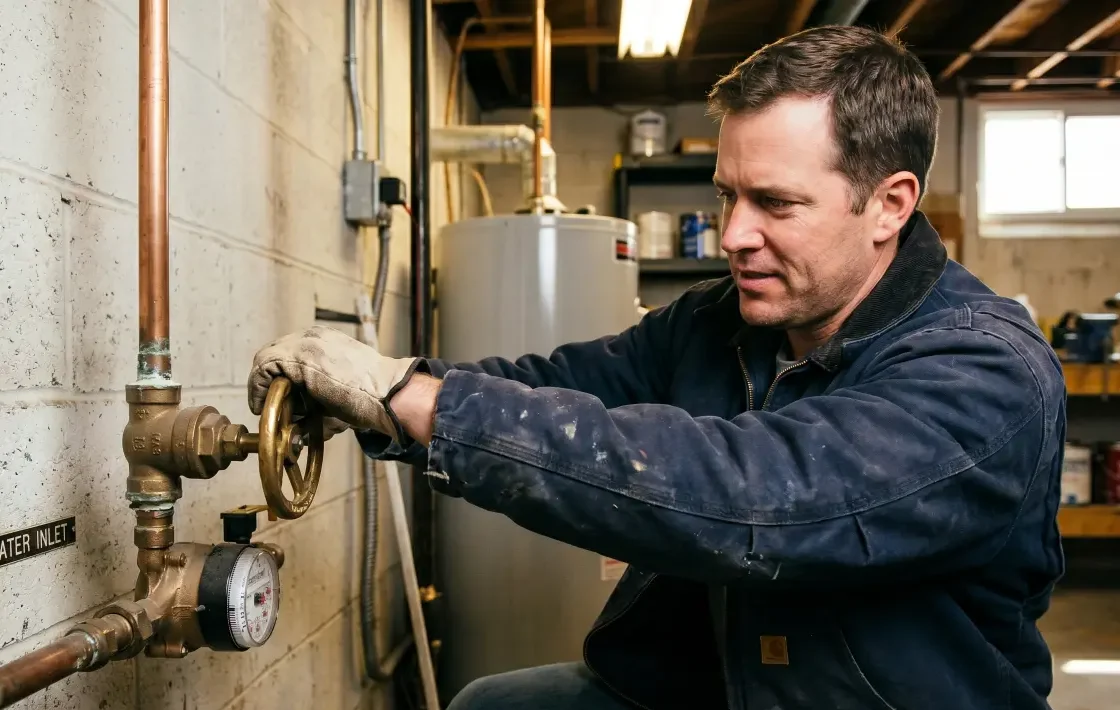
You usually do not think much about your main water shutoff valve until you need it.
Then one day you try to turn it during a small plumbing issue, a fixture swap, or a quick test—and it barely moves. Or it turns, but the water does not fully stop. In that moment, a small component that has been sitting quietly for years suddenly becomes one of the most important parts of the house.
If you are wondering whether to replace main water shutoff valve components before they fail completely, you are asking the right question at the right time.
A shutoff valve that will not fully close is not just inconvenient. It can limit how effectively you control water during a leak, repair, or emergency.
This is why homeowners often end up dealing with shutoff valve replacement under pressure instead of on their own timeline. The valve “mostly works,” so it gets ignored. Then the day comes when control matters, and the valve is stuck, leaking, or unreliable.
The goal here is not to make the issue sound more dramatic than it is. It is to help you tell the difference between a valve that is simply old and one that is no longer dependable enough to trust when you really need it.
Why a Main Shutoff Valve Problem Matters More Than It Seems
Your main shutoff valve is one of the few points in the plumbing system that gives you broad control over the house.
If a supply line bursts, a fixture fails, a water heater starts leaking, or a repair needs to happen safely, that valve is supposed to help you stop water flow quickly. It is not a decorative part of the system. It is your control point.
That is why a problem with the valve matters more than it may seem at first. A dripping faucet is visible. A clogged drain announces itself. A shutoff valve issue can sit quietly in the background until the day you rely on it. And when that day comes, even a partial failure becomes a bigger problem than homeowners expect.
A valve that does not fully close may still seem usable in normal conditions. But during an active leak, “almost off” is not the same as off. Water may keep feeding the problem. Cleanup becomes harder. Repairs become more stressful. In some cases, the homeowner has to figure out how to shut water off somewhere outside the home instead of using the valve that should already be doing that job.
This is also why shutoff valve problems often go unnoticed until they matter. Most people do not operate the main valve often. It can sit untouched for years. That is exactly what allows stiffness, wear, or hidden issues to build up quietly.
The Quick Check: Is Your Shutoff Valve Still Reliable?
A lot of homeowners ask the same question: how do I know whether the valve is actually failing, or just a little hard to turn?
A good starting point is to think in terms of reliability, not just movement.
A reliable shutoff valve should operate without excessive force and should be able to stop water flow effectively. If the valve is difficult to turn, only moves partway, feels unstable, or does not seem to shut the water down fully, that is worth paying attention to.
What “fully closing” looks like in practical terms is simple: when the valve is shut, water flow should stop the way it is supposed to. If fixtures still have sustained flow, or if the house seems to retain more pressure than expected beyond what would normally remain briefly in the lines, the valve may not be doing its job completely.
Other warning signs are more tactile than dramatic. The handle may feel stiff. The valve may resist movement. It may seem like it has not been turned in years because, in fact, it probably has not. Or you may notice visible wear, corrosion, or a minor leak around the valve body or handle area.
This is where the phrase “it still kind of works” becomes dangerous. For a main shutoff valve, kind of working is not the same thing as being dependable.
Common Reasons Homeowners End Up Replacing the Main Shutoff Valve
Shutoff valves are usually replaced because the homeowner has already lost confidence in them.
Sometimes that comes from a specific incident. Other times it builds gradually over time.
The valve won’t fully close
This is one of the clearest reasons to consider replacement.
If the valve turns but does not shut off water effectively, you no longer have dependable control over the system. That may not create a problem every day, but it changes how protected you are when something goes wrong. A partially closing valve can limit how effectively you stop water flow, which matters most during the moments when time matters most.
Homeowners often discover this during a repair attempt. They shut the valve, expect the line to stop feeding water, and realize the shutoff is incomplete. That is usually when the situation shifts from inconvenience to clear warning sign.
The handle is stuck or difficult to turn
A main shutoff valve stuck won’t turn is another common trigger for replacement.
Sometimes the valve is technically still functional, but it has become so stiff that the average homeowner cannot operate it confidently. In practice, that means the valve may fail you when you need quick action.
Difficulty turning the valve may be related to age, wear, buildup, or an older-style design that has simply become less dependable over time. The exact reason matters less to the homeowner than the practical reality: if you cannot operate it when needed, it is not giving you the control it is supposed to provide.
The valve leaks or shows visible wear
Even a small leak around the valve deserves attention.
A minor drip may seem manageable for the moment, but it is a sign the valve assembly is not in perfect condition. Visible wear, corrosion, seepage, or evidence of past repairs can all suggest the valve is no longer something you want to rely on during an emergency.
In many cases, replacement becomes worth considering not because the leak is catastrophic, but because the combination of age, wear, and unreliable operation points in the same direction.
Understanding the Difference: Gate Valves vs Ball Valves
Not every main shutoff valve operates the same way, and that difference helps explain why some older valves become frustrating over time.
Why older gate valves often fail over time
Many homeowners dealing with this issue are really dealing with an old gate valve replace ball valve decision, even if they do not know the valve type by name.
Older-style valves may become harder to operate over time. They may feel stiff, fail to close fully, or give the homeowner less confidence when used after sitting untouched for years. That is one reason older main shutoff valves often become a problem only after long periods of inactivity.
The key point for the homeowner is not memorizing parts. It is recognizing that an older valve design may be more likely to feel unreliable simply because of age, wear, and how it has handled years of limited use.
Why ball valves are commonly used for upgrades
Many replacements use newer valve designs intended for easier operation.
From a practical standpoint, homeowners often like the idea of a shutoff valve that is simpler to understand and easier to operate quickly. In an emergency, clarity matters. You do not want to wonder whether the valve has fully turned or whether you are forcing an aging mechanism that may not respond well.
This is why ball valves are commonly associated with modern replacements. They are often part of the conversation when a homeowner wants more confidence, easier operation, and a more straightforward shutoff experience.
What changes when you switch valve types
The biggest change is usually not visual. It is functional confidence.
When homeowners upgrade from an aging, unreliable valve to a newer one, what they are really buying is control. They want to know the valve can be operated without a struggle and that it will do its job when needed.
This is especially relevant when the old valve has already shown signs of weakness. At that point, the question is less about whether the valve can limp along a little longer and more about whether it deserves a place in the system as a trusted control point.
The Contrarian Reality: Most Replacements Happen Too Late
Most homeowners do not replace the main shutoff valve because they want an upgrade.
They replace it because the valve has already become a problem.
That is the contrarian reality with this issue. Replacement rarely happens proactively. It usually happens after the homeowner has already discovered the valve does not fully close, is too hard to turn, or is no longer something they trust. In other words, many replacements happen after the valve has already failed its most important test.
This makes sense emotionally. The valve is not visible, stylish, or exciting. It does not feel urgent if it is not actively leaking. So the homeowner waits.
But “it still kind of works” can be risky. A shutoff valve is not like a cabinet hinge or a cosmetic flaw. Its value shows up at the exact moment something goes wrong elsewhere in the plumbing system. If that is the first moment you learn the valve is unreliable, your options become narrower and your stress level jumps quickly.
Waiting until failure does not always create disaster. But it does reduce your control over when and how the problem gets solved. That is what makes replacement worth considering before total failure, not after.
Additional Upgrades That Often Make Sense at the Same Time
Sometimes replacing the main valve is the right step by itself. Other times it is a good opportunity to improve how the home handles shutoff access more generally.
One example is adding a second shutoff valve for safety or convenience. In some homes, an additional shutoff point can make water control more convenient. That can be helpful when the original location is awkward, difficult to reach, or not ideal for fast action.
Another upgrade area is accessibility. Shutoff valve location upgrade ideas matter more than most homeowners expect. A valve that technically works but is hard to reach, buried behind stored items, placed in an inconvenient corner, or located where quick access is difficult is not as useful as it should be. If replacement work is already happening, it may make sense to think about whether accessibility can be improved at the same time.
This is also a natural moment to think about broader planning. If you are already doing plumbing work, water line work, or a remodel, it may be more efficient to address valve reliability now instead of treating it as a separate project later.
The right add-on upgrade depends on the house. The important point is that valve replacement can be more than a one-for-one swap if there is a better long-term way to improve control.
Common Mistakes When Dealing With a Failing Shutoff Valve
One common mistake is forcing a stuck valve.
That reaction is understandable. The homeowner is trying to test or use the valve, it resists movement, and the temptation is to apply more force until something gives. But a failing valve is not the place for trial-and-error strength. Forcing it can make the situation worse, especially if the valve is already worn or compromised.
Another mistake is assuming partial shutoff is good enough. It is not unusual for a homeowner to think, “At least it slows the water down.” But the job of the main shutoff valve is not to reduce flow during an emergency. It is to give you dependable control over the supply. Partial performance does not really solve the problem.
A third mistake is simply never testing the valve. Many homeowners only learn about shutoff problems when a repair or emergency is already happening. Periodic awareness matters because it is much easier to address a questionable valve on your timeline than during a burst pipe or active leak.
Finally, homeowners often ignore location and accessibility issues. Even a decent valve becomes less helpful if it is hard to reach quickly. A shutoff point that is blocked, hidden, or difficult to operate comfortably may not serve you well when fast action matters.
What Actually Affects the Scope of Replacing a Main Shutoff Valve
Homeowners often want to know why one shutoff valve replacement seems straightforward while another sounds more involved.
The answer usually comes down to location, connection type, and access.
Valve location is a major factor. The work involved can vary depending on where the valve is located and how it connects to the system. A valve inside the home, one outside, or one near the meter may present different levels of access, coordination, and planning.
Pipe material and connection type also matter. The plumber is not only replacing a handle or small component. The work has to be done in a way that fits the existing plumbing system cleanly and safely. That is why the scope may differ from one home to another even when the homeowner describes the problem the same way.
Access is another cost driver replacing main shutoff valve projects often depend on. If the valve is easy to reach and work around, the job may stay more contained. If access is tight, awkward, or involves coordination with other shutoff points, that can change the scope.
In some homes, shutoff coordination during the replacement matters too. The house water supply still has to be managed while the old valve is removed and the new one is installed. That planning is part of what makes the replacement more than a simple hardware swap.
When It Makes Sense to Replace the Valve Before It Fails Completely
The best time to replace a failing shutoff valve is usually before you are depending on it during a plumbing emergency.
If the valve already will not fully close, feels unreliable, or is difficult to operate, that is already a strong reason to consider replacement. Reliability uncertainty alone matters here because the main value of the valve is emergency control.
It can also make sense to replace the valve during other plumbing work or upgrades. If the home is already having water line work done, if a remodel is in progress, or if other plumbing changes are happening, it may be more efficient to address the shutoff valve at the same time.
This is also worth thinking about before a larger system change. A homeowner planning future work usually benefits from having a dependable control point already in place. The valve does not have to be actively leaking to deserve attention.
What matters is not whether the valve has failed in the most dramatic way possible. What matters is whether you trust it to do its job when you need it most. If the answer is uncertain, that is often enough to justify a closer look.
If your main shutoff valve isn’t fully closing or is hard to turn, it’s worth addressing before it becomes an emergency.
Daniel’s Plumbing Services helps homeowners in the Atlanta area evaluate shutoff valve condition, recommend upgrades, and restore reliable water control.
Call to discuss your situation or make an appointment to have your system checked.
FAQ
When should you replace a main water shutoff valve?
It makes sense to replace a main water shutoff valve when it no longer closes reliably, becomes difficult to turn, leaks, or shows signs that you cannot depend on it during a plumbing emergency. The key issue is reliability, not just whether it still moves.
What happens if a shutoff valve won’t fully close?
A valve that will not fully close can limit how effectively you stop water flow during a leak, repair, or emergency. That means you may have less control over damage and may need to rely on a different shutoff point.
Is it worth replacing an old gate valve with a ball valve?
For many homeowners, it is worth considering when the older valve has become stiff, unreliable, or difficult to trust. Many replacements use newer valve designs intended for easier operation and more straightforward shutoff control.
Can you add a second main shutoff valve inside your home?
In some homes, yes. An additional shutoff point can make water control more convenient, especially if the existing valve is hard to reach or poorly located. Whether that makes sense depends on the home’s layout and plumbing setup.
Why does a shutoff valve become hard to turn?
Older-style valves may become harder to operate over time. Age, wear, limited use, and general deterioration can all contribute to stiffness or unreliable operation.
Does replacing a main shutoff valve require shutting water off at the street?
Sometimes it can involve coordination beyond the valve itself, depending on where the shutoff is located and how it connects to the system. The exact process can vary with the home’s setup and the replacement approach.
If your main shutoff valve isn’t fully closing or is hard to turn, it’s worth addressing before it becomes an emergency.
Daniel’s Plumbing Services helps homeowners in the Atlanta area evaluate shutoff valve condition, recommend upgrades, and restore reliable water control.
Call to discuss your situation or make an appointment to have your system checked.
RELATED LINK:
International Association of Plumbing and Mechanical Officials (IAPMO)