
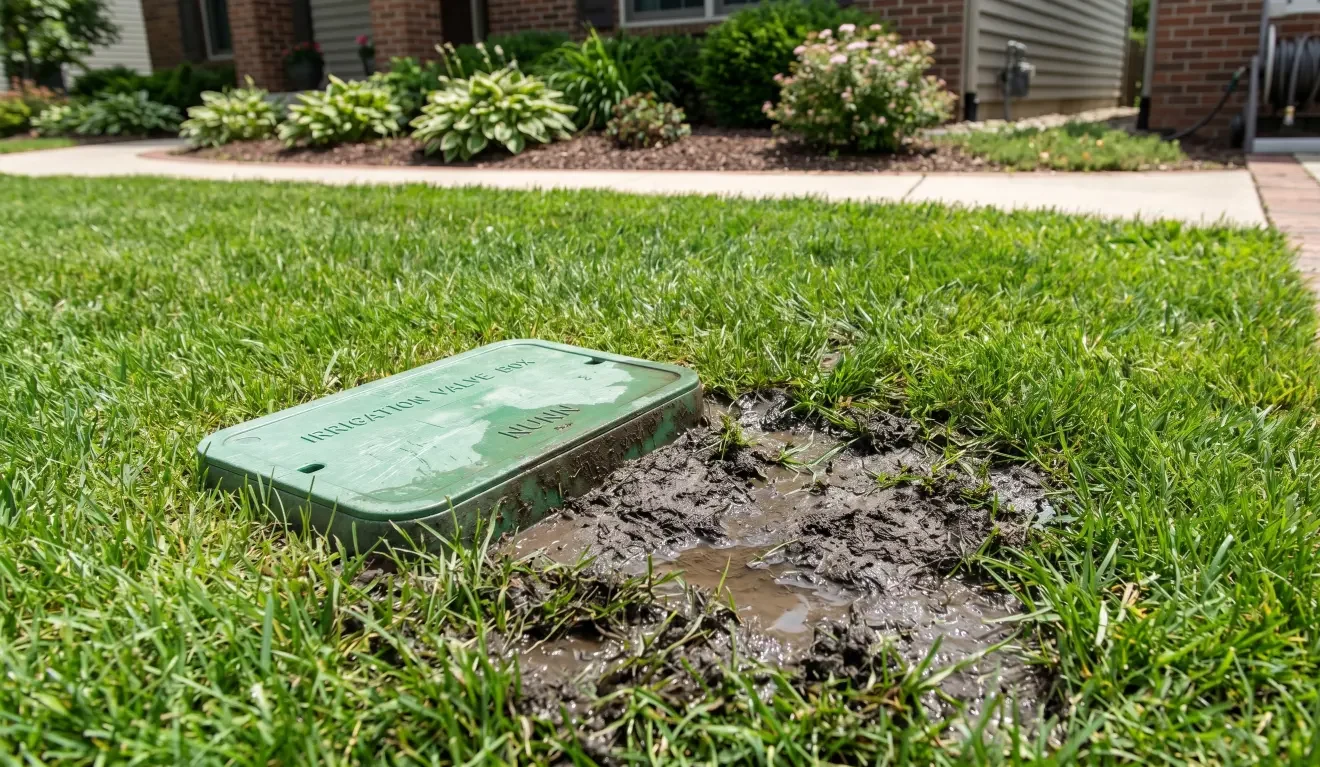
You notice a patch of grass that stays wet long after everything else dries. Maybe it is right beside the irrigation valve box. Maybe the soil feels soft underfoot even though it has not rained. Maybe the grass in that one area looks greener and grows faster than the rest of the yard. It does not seem dramatic, but then your water bill shows up higher than expected.
That is how an outdoor plumbing leak begins: quietly, off to the side, easy to dismiss for a little too long.
An outdoor plumbing leak does not always announce itself with a burst pipe or obvious spray. Often, it looks like a wet spot near a valve box, a muddy patch near the meter, a sprinkler zone that suddenly behaves strangely, or water showing up where no water should be. The challenge for homeowners is figuring out whether they are dealing with overwatering, poor drainage, an irrigation problem, or something more serious involving the main supply line.
The good news is that there are clues. If you know what to look for, you can narrow down the likely cause, avoid unnecessary digging, and decide when it is time to get professional help.
A Wet Spot in the Yard Is Not Always “Just Overwatering”
A wet patch in the yard is easy to explain away at first. Maybe the sprinkler schedule ran longer than usual. Maybe runoff collected there after the last watering cycle. Maybe that part of the lawn just drains poorly.
Sometimes that is true. But when the same spot stays wet day after day, especially near a valve box or along the line between the meter and the house, it is worth paying closer attention.
That is because outdoor leaks often mimic normal yard conditions. They can look like overwatering. They can feel like soggy soil from a recent storm. They can even seem harmless because they are “only outside.” Meanwhile, water may still be moving underground, slowly wasting water and softening the soil around the pipe.
The trigger matters here. A persistent wet area near a valve box is not random. Valve boxes exist because there are important irrigation connections below. If one of those fittings, valves, or nearby lines starts leaking, the first visible sign may be nothing more than ground that never quite dries out.
The same goes for a wet area near the meter box. That may point to a different part of the plumbing system entirely. Instead of a sprinkler problem, you may be dealing with an outdoor water leak near the meter box or a supply line issue between the meter and the house.
The real problem is not simply moisture in the yard. It is moisture that does not make sense based on your watering schedule, recent weather, or what that part of the property usually looks like.
Start Here: What That Wet Area Is Telling You
A wet spot by itself does not confirm the exact source of the leak. But it can tell you a lot if you know how to read it.
Constant wetness vs watering schedule patterns
Start by asking a simple question: does the wet area match when your irrigation system runs?
If the ground is wet only right after a sprinkler cycle and dries normally after, that points more toward ordinary irrigation behavior or runoff. If the area stays damp all day, remains muddy even when sprinklers are off, or comes back repeatedly without any clear schedule pattern, that is more suspicious.
This is one of the easiest ways to separate “yard conditions” from a possible leak. A sprinkler line leak may show itself during or shortly after a zone runs. A main water line issue may stay wet even when the irrigation system is completely off.
It helps to think in terms of timing:
- Wet only during watering may suggest an irrigation-related issue.
- Wet long after watering may suggest a leak.
- Wet regardless of watering schedule raises more concern.
The pattern is often more useful than the size of the wet area. A small spot that never dries can matter more than a larger patch that appears only after heavy watering.
Location clues: near meter, valve box, or random yard spot
Where the wet spot shows up matters almost as much as when it appears.
A soggy area near a valve box may point to:
- A leaking valve connection
- A damaged irrigation line
- A problem in the control manifold inside the box
A wet area near the water meter or along the path where the supply line runs toward the home may point to something broader than irrigation. If that is happening, the issue may be tied to the line supplying water to the house rather than to a single sprinkler zone.
A random wet spot in the middle of the yard can still be an irrigation leak, especially if it lines up with a buried sprinkler lateral line. But random does not always mean minor. Underground outdoor leak detection is often most helpful when the wet area does not obviously match a visible fixture or accessible connection.
Location will not give you a final answer by itself, but it narrows the list of likely causes.
Changes in grass color, soil softness, or pooling
Outdoor leaks rarely stay limited to “wet dirt.” Over time, the yard often starts giving more visual clues.
Look for:
- Grass that is greener, taller, or thicker in one area
- Soil that feels soft or spongy underfoot
- Muddy patches where the rest of the yard is dry
- Small pooling or bubbling in the ground
- Erosion around a box, pipe path, or low spot
These are especially telling when they appear in a consistent location.
One common homeowner mistake is waiting for the yard to look dramatic before taking it seriously. But outdoor plumbing leaks are often hidden and continuous, not dramatic. They can quietly feed one patch of ground for days or weeks before the problem becomes obvious enough to force action.
The Most Common Outdoor Plumbing Leak Sources
Once you know the wet spot looks suspicious, the next step is understanding what part of the outdoor plumbing system is most likely involved.
Irrigation lines and sprinkler system connections
This is one of the most common places for outdoor leaks to start. Sprinkler systems have multiple buried lines, fittings, connections, and heads that can develop problems over time.
Sprinkler line leak signs may include:
- One zone losing pressure
- Water surfacing in the same spot during watering
- A soggy patch that seems tied to irrigation timing
- A sprinkler head that no longer pops up or sprays correctly
- One section of lawn getting much wetter than the rest
These leaks often stay out of sight because they happen below grade. The only visible clue may be a soft patch or unusually lush grass.
Because irrigation systems are spread out across the yard, it is easy to treat them as landscaping rather than plumbing. But they are still water-carrying lines under pressure, and small failures can waste a surprising amount of water over time.
Valve boxes and control manifolds
If the wet spot is near a yard valve box, the box itself deserves attention. Inside, you may have a manifold where multiple irrigation valves connect, along with fittings that direct water to different zones.
Problems here may include:
- Loose or worn fittings
- Leaks around valve bodies
- Cracks in connections
- Standing water inside the box even when irrigation is off
Valve boxes are one of the better places to inspect visually because they give you access to real system components without digging. But they can also be misleading. A box may collect water from a nearby underground leak, making it look like the box is the source when the actual problem is just outside it.
Still, if you have a wet spot in yard near valve box conditions, the box is one of the first places worth checking.
Hose bibs leaking back into walls or foundations
Not all outdoor leaks stay outdoors.
An exterior hose bib, also called an outdoor faucet, can leak in a way that sends water backward into a wall cavity or near the foundation rather than visibly dripping outside. That is one reason an outdoor hose bib leaking inside wall problem can be easy to miss at first.
Possible clues include:
- Dampness or staining on the interior side of an exterior wall
- Water around the foundation near the faucet location
- A hose bib that drips after use or leaks when turned on
- Soft drywall or trim inside a room adjacent to the hose connection
Homeowners often focus on underground yard leaks and forget that exterior plumbing fixtures can create hidden interior damage too.
Underground supply lines between meter and home
This is the category homeowners usually worry about most, and for good reason. A leak in the underground supply line between the meter and the house may continue running whether or not the irrigation system is active.
Signs may include:
- Persistent wet ground when sprinklers are off
- Water near the meter box
- Reduced water pressure indoors
- A higher water bill from outdoor leak conditions that do not match irrigation use
- Meter movement when all known water is turned off
This is where the distinction between “sprinkler issue” and “main line issue” becomes important. One is often limited to outdoor watering infrastructure. The other may affect the whole property’s water use and pressure.
That is also why a service page related to water line repair would be a strong internal link in this section.
The Misconception: “It’s Outside, So It’s Not Urgent”
A lot of homeowners give outdoor leaks more time than they would ever give an indoor one.
That makes sense on the surface. If the leak is not soaking your kitchen floor or dripping through a ceiling, it is easy to treat it as less urgent. The problem is that outdoor leaks can keep running for a long time before they cause a dramatic failure, and all that time, they may still be costing you money and weakening the surrounding area.
A leak outside may not ruin a cabinet overnight, but it can:
- Push up water usage over time
- Create a persistently high water bill from outdoor leak activity
- Soften the ground around buried lines
- Erode soil around connections or foundations
- Lead to bigger repairs if a small failure turns into a larger break
That is the misconception worth correcting: outside does not mean harmless. It usually just means slower, harder to see, and easier to postpone.
In some cases, the cost of delay is not the leak itself but the uncertainty it creates. Homeowners keep adjusting irrigation timers, replacing sprinkler heads, or watching the yard for changes instead of confirming what is really happening. That delay can stretch a small diagnostic problem into a larger repair problem.
This is a natural place to link to an article about the cost of delaying a plumbing repair, because that mindset applies here too. Outdoor leaks often stay on the “I’ll deal with it later” list longer than they should.
Signs It’s More Than a Sprinkler Issue
Not every wet patch in the yard comes from irrigation. Some signs suggest the problem may be tied to the home’s main water supply or another line beyond the sprinkler system.
Uneven water pressure inside the home is one clue. If showers, sinks, or fixtures suddenly feel weaker and you also have unexplained wet ground outside, it is worth paying attention. That combination may point to something larger than a single sprinkler lateral line.
Wet areas when irrigation is off are another major clue. If the yard is still soft or muddy even after the system has been off long enough for the ground to dry under normal conditions, it becomes harder to blame overwatering alone.
Water near the meter box or along the apparent path from the meter to the home should also raise suspicion. That does not confirm a supply line leak by itself, but it changes the diagnosis. At that point, the question becomes whether the leak is part of the home’s pressurized water line rather than the irrigation system.
Then there is the meter itself. Continuous water meter movement when no water is being used inside or outside may indicate ongoing water flow somewhere in the system. It is not a complete diagnosis, but it is a strong clue that something is using water when it should not be.
These signs matter because they change your next move. If the evidence points away from a sprinkler zone and toward a broader supply issue, random sprinkler repairs are unlikely to solve it.
Common Mistakes Homeowners Make
Outdoor leaks waste more time and money when homeowners follow the wrong assumptions.
One common mistake is turning off the sprinklers and assuming the problem is solved. That only works if irrigation is truly the source. If the yard stays wet after the system is off, the issue may be somewhere else entirely.
Another mistake is digging randomly. It is understandable. You see the wet patch, you want answers, and digging feels like action. But without a clearer idea of where the leak is coming from, you can disturb landscaping, miss the actual line path, or make the work messier without getting closer to the answer.
A third mistake is ignoring small wet spots that persist. Outdoor leaks do not need to be dramatic to be expensive. A slow underground leak can stay out of sight while still wasting water every day.
Another common one is fixing the obvious sprinkler head without checking the underground line that feeds it. A damaged head is visible, so it gets the blame. But the real leak may be below ground, upstream, or closer to the valve box.
Homeowners also sometimes focus on one system only. If they think “sprinkler,” they stop checking anything related to the meter, hose bibs, or main line. If they think “water line,” they ignore the irrigation schedule patterns that might have narrowed things down faster.
The best approach is not panic or guesswork. It is careful narrowing.
How to Narrow It Down Before Calling for Help
You do not need to perform a full diagnosis yourself. But a few smart observations can make the problem easier to understand before you call.
Turn irrigation zones on and off and observe changes
If you have access to your irrigation controller, use it to test the pattern.
Watch what happens when specific zones run:
- Does the wet area appear or worsen during one zone?
- Does a certain zone lose pressure or behave oddly?
- Does the ground bubble or surface in the same spot when water is on?
Then compare that to what happens when the irrigation system is off for a while. If the wetness continues without any irrigation activity, that points away from a simple sprinkler-only issue.
This is not about advanced troubleshooting. It is just pattern checking.
Check the meter for movement when water is off
If practical for your property, turn off all intentional water use in the house and yard for a short period and see whether the meter appears to keep moving.
Again, this does not tell you exactly where the leak is. But it may indicate ongoing water use somewhere in the system. That is useful information, especially if the yard is already showing visible signs.
If you are dealing with an outdoor water leak near meter box conditions, this step becomes even more relevant.
Inspect valve boxes for standing water or visible leaks
Open the valve box carefully and look inside.
You are not trying to repair anything in the dark or start taking connections apart. You are simply checking for:
- Standing water in the box
- Muddy conditions around the valves
- Obvious dripping or spraying
- Cracked or disconnected visible fittings
If the box is dry and the yard around it is wet, that tells one story. If the box is full of water even when irrigation is off, that tells another.
This kind of observation is usually more helpful than digging a trench based on a guess.
When Leak Detection Becomes Necessary
There is a point where observation stops being enough.
If the wet spot persists, the meter suggests ongoing water use, or the cause is still unclear after basic checks, leak detection becomes the next logical step. This is especially true when the issue appears underground and you do not want to start digging up the yard without confidence.
Underground outdoor leak detection typically involves methods that help narrow down where water is escaping below the surface. The goal is not just to confirm that a leak exists, but to identify the likely location, the type of line involved, and how extensive the problem may be.
A professional may be able to help confirm:
- Whether the leak is tied to irrigation or the main water supply
- Where along the buried line the issue appears to be
- Whether the problem seems isolated or more widespread
- What kind of repair access may be needed
This matters because the repair path depends on the type of line. A sprinkler lateral issue in one part of the yard is a different job than a leaking supply line between the meter and the house.
If you are noticing a wet spot that does not go away or a higher-than-normal water bill, it is worth taking a closer look before the problem gets worse.
Daniel’s Plumbing Services can help identify outdoor plumbing leaks and recommend the next step based on what is actually happening underground.
Call or make an appointment to have your outdoor plumbing system checked.
Preventing Outdoor Leaks From Coming Back
The best prevention plan is not just “check for leaks more often.” It is knowing where your outdoor plumbing is most vulnerable and watching for changes before they become obvious damage.
Seasonal checks help, especially before heavy irrigation use. If you know your yard gets more water in warmer months, that is a good time to look at valve boxes, observe sprinkler performance, and pay attention to any parts of the lawn that stay damp longer than the rest.
Utility bills are useful too. A sudden increase does not prove an outdoor leak, but it can prompt a closer look, especially when combined with wet soil or odd irrigation behavior.
It also helps to pay attention to the areas homeowners often ignore:
- Around the meter box
- Around irrigation valve boxes
- Along the path from the street toward the home
- Around hose bibs and the walls behind them
- In any part of the yard that repeatedly feels soft
For some higher-risk properties, homeowners may also want to consider leak monitoring or automatic shutoff solutions. That is not necessary for every yard issue, and it should not be treated as the first answer to every outdoor leak. But for homes with repeated leak history, buried line concerns, or hard-to-monitor plumbing, smart leak shutoff options may be worth discussing.
This is a strong place to connect readers to leak detection systems or other relevant solution pages without making the article feel like an upsell. The core message stays the same: prevention starts with noticing patterns early and responding before a hidden leak becomes a bigger repair.
A wet patch near a valve box is not always a crisis. But it is usually a signal. The sooner you understand what it is signaling, the better your chances of fixing the real problem without wasting more water, time, or landscaping than necessary.
FAQ Content
What causes a wet spot in the yard near a valve box?
A wet spot near a valve box may be caused by a leaking irrigation valve, a damaged sprinkler line, a loose connection, or water collecting from a nearby underground leak. If the area stays wet long after watering or rain, it is worth investigating further.
How can I tell if I have an outdoor plumbing leak?
Common signs include ground that stays wet without a clear reason, soft or muddy soil, unusually green grass in one area, odd sprinkler behavior, and a higher-than-normal water bill. If the wetness does not match your watering schedule, a leak becomes more likely.
Can a sprinkler system leak increase my water bill?
Yes, it can. Even a hidden sprinkler line leak may keep wasting water over time, especially if it happens underground and goes unnoticed for a while.
What is underground outdoor leak detection?
Underground outdoor leak detection is the process of narrowing down where a buried outdoor leak is happening without relying only on guesswork. It can help identify whether the issue is tied to irrigation, a valve box connection, or a larger buried water line.
Should I dig up a wet area in my yard myself?
Usually, it is better to narrow the issue down first before digging. Random excavation can disturb landscaping and still miss the actual leak path. Simple observations, irrigation testing, and meter checks are often a better starting point.
How can I prevent outdoor plumbing leaks in the future?
Pay attention to persistent wet spots, unusual water bills, and changes in sprinkler performance. Seasonal checks around valve boxes, hose bibs, and known line paths can help you catch problems earlier. For some homes, leak monitoring may also be worth considering.
If you are noticing a wet spot that does not go away or a higher-than-normal water bill, it is worth taking a closer look before the problem gets worse.
Daniel’s Plumbing Services can help identify outdoor plumbing leaks and recommend the next step based on what is actually happening underground.
Call or make an appointment to have your outdoor plumbing system checked.
RELATED LINK: