
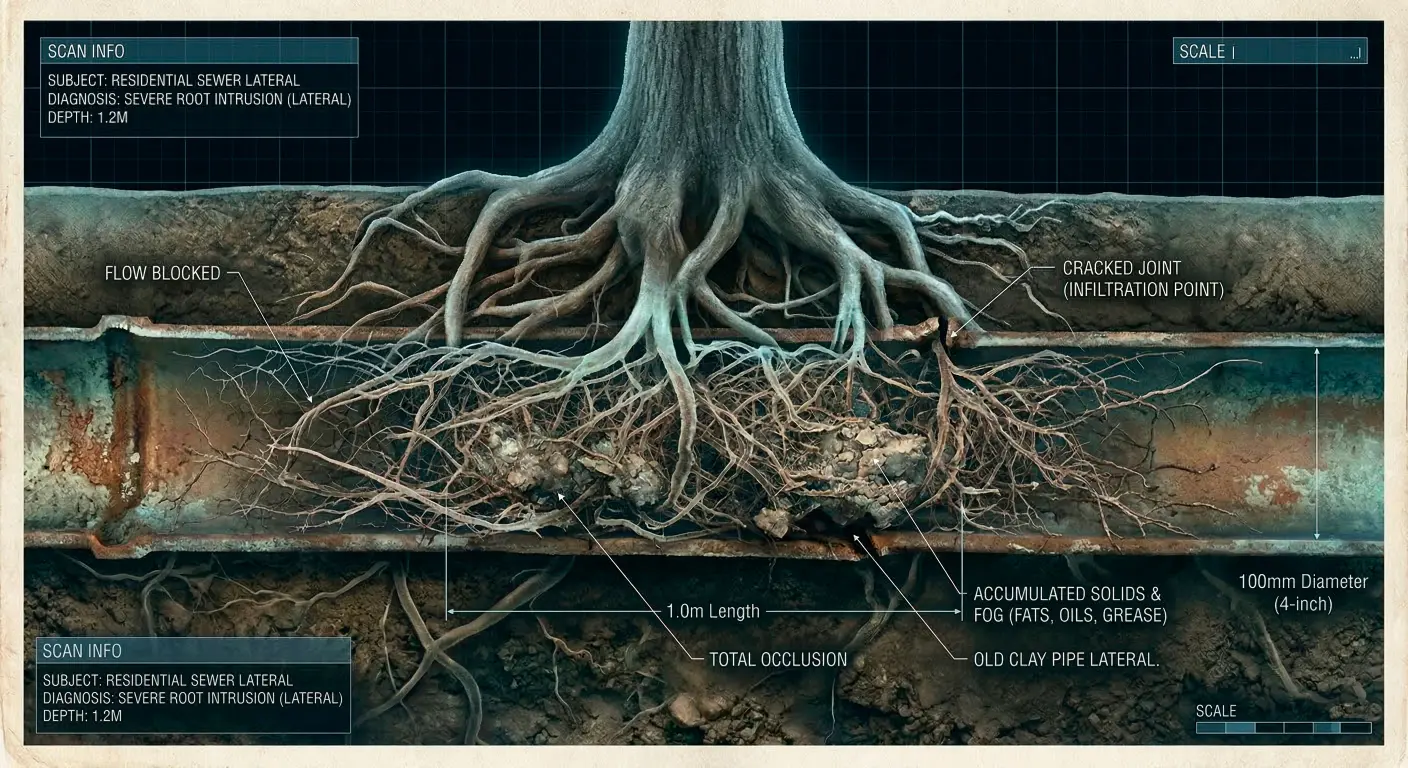
If you have a large tree in your yard and your drains seem to clog every year or two, it is easy to assume the problem is just buildup somewhere in the line. Sometimes that is true. But when a home has mature trees near the path of the sewer line—especially in an older neighborhood—the bigger issue may be root intrusion.
This is one of those problems that often starts quietly. A toilet bubbles once. A tub drains more slowly than usual. A clog gets cleared, and everything seems fine for a while. Then the same issue comes back. For many homeowners, that repeat cycle is the first sign that roots may be finding their way into the sewer pipe.
The good news is that tree roots do not usually appear in a sewer line out of nowhere. They tend to follow a pattern, and that means there are ways to catch the issue early, reduce repeat clogs, and choose a practical next step before the problem turns into a major excavation.
Roots in Sewer Line Prevention: Stop Roots Clogging Pipes.
Why Tree Roots Are One of the Most Common Sewer Line Problems
Tree roots are always looking for what helps them grow. Underground, that often means moisture, oxygen, and nutrients. If a sewer pipe has even a small gap, loose joint, crack, or weak connection, roots may be drawn toward that area over time.
That does not mean roots are crushing perfectly sound pipes from the outside. More often, they take advantage of a pipe that already has a vulnerable point. Once inside, they can continue growing and begin catching paper, waste, and other debris. What starts as a small intrusion can become a recurring blockage.
Older homes are often more exposed to this kind of problem. In many established Atlanta-area neighborhoods, mature trees and older underground piping exist side by side. If a sewer line has aging joints or sections that have shifted over time, roots may have an easier path in than they would in a newer, more tightly sealed system.
That is why root-related sewer issues can feel confusing to homeowners. The tree has probably been there for years. The drains may have worked fine for a long time. Then one day, the system begins showing signs of trouble—not because the tree suddenly changed, but because the pipe became vulnerable enough for roots to exploit it.
Early Signs Roots May Be Entering Your Sewer Line
The earlier you catch root intrusion, the more options you may have. One isolated slow drain does not always point to a sewer line problem. But when several symptoms start showing up together, it becomes harder to dismiss.
One common sign is recurring clogs, especially in the lowest fixtures or in multiple drains across the home. If a toilet backs up and a shower or tub also seems sluggish, that can suggest a problem deeper in the main line rather than in a single branch drain.
Another clue is a pattern of slow drainage that seems to improve temporarily after cleaning, then gradually returns. That repeat cycle matters. A clog caused by a simple blockage may clear and stay gone. A clog tied to root intrusion often comes back because the underlying entry point has not been addressed.
Some homeowners also notice gurgling sounds. A toilet may bubble when the sink drains. A tub may make odd noises after flushing. Those sounds can point to restricted flow or trapped air in the system.
Odors can be another warning sign. If sewage smells appear around drains or outside near the sewer route, that can indicate trouble in the line. In more advanced cases, backups may begin during heavy water use, when the system cannot move waste past the obstruction fast enough.
On their own, these signs do not prove roots are the cause. But together—especially in an older home with large trees near the sewer route—they are worth taking seriously.
Why Roots Keep Coming Back After Snaking
This is one of the most frustrating parts of the problem for homeowners. You call for help, the line gets cleared, and for a while everything seems normal. Then months later, the same slow drains or backups come back again.
The reason is simple: clearing a blockage is not always the same thing as solving the condition that caused it.
Snaking can break through roots or punch an opening in the blockage so wastewater can flow again. That can restore function and provide relief. But if roots entered through a crack, offset joint, or weakened section of pipe, that opening may still be there after the line is cleared.
In other words, the roots may be cut back without removing the reason they were able to enter. Over time, new growth can return to the same area. Debris can catch there again. The homeowner experiences another “mystery” clog, even though the line was serviced not that long ago.
This is why recurring clogs matter so much in diagnosis. A one-time blockage may be maintenance. A repeat pattern often points to a deeper issue. When roots keep coming back after snaking, the question is no longer just how to clear the line. It is how to reduce the chance of reintrusion.
That is where inspection becomes important. If the problem keeps repeating, it helps to know whether the pipe is basically sound with limited intrusion, or whether the line has structural issues that need a more durable repair path.
How Tree Roots Get Into Sewer Pipes in the First Place
Roots usually enter where a sewer line is already vulnerable. That vulnerable point may be small enough that the homeowner has no idea it exists.
Older sewer systems often have joints where separate pipe sections meet. Over time, those joints can loosen, shift, or wear. Soil movement, settling, corrosion, and normal aging can all contribute. Once a tiny opening forms, roots may begin to work their way in.
Certain pipe materials may be more susceptible than others, particularly in older systems. A home that has never had its sewer line evaluated may still be relying on older materials or connections that have been underground for decades. Even if the line is still functioning, it may no longer be as sealed as it once was.
Cracks can also develop from ground movement or stress over time. A root does not need a huge opening to start creating trouble. Once it finds moisture, it can grow into the pipe and expand the problem gradually.
This is why homeowners sometimes feel blindsided. The issue is underground, invisible, and slow-moving. The tree above ground looks healthy. The yard looks fine. But below the surface, a pipe joint or cracked section may be inviting the problem year after year.
Understanding this part is important because it changes the mindset. The real issue is not just “tree roots are aggressive.” It is often that the sewer line has a condition that makes root entry possible.
Prevention Strategy #1: Smart Tree Placement and Landscaping
The best time to think about root prevention is before planting, not after a clog has already started. If you know where the sewer route runs across your property, that information can help guide landscaping decisions.
Large trees with extensive root systems are usually the biggest concern near sewer lines. Planting them too close to the line can increase the chance that roots eventually reach vulnerable sections of pipe. Even when a sewer line is in decent condition, giving roots less reason to interact with it is usually the safer choice.
For homeowners with established landscapes, the decision is more complicated. You may already have a mature tree near the house, the sidewalk, or the yard where the sewer line likely runs. In that case, the goal is not panic or automatic removal. It is awareness.
A large tree near the sewer route does not always mean the line is damaged. But it does mean the property deserves a more thoughtful approach. If you have recurring slow drains, an older home, or previous sewer cleaning history, it may make sense to treat that tree-and-pipe combination as a real maintenance consideration.
Tree species can matter too, though the practical question for a homeowner is often less about memorizing which species are “worst” and more about understanding risk in context. A mature, thirsty tree near an aging sewer line is a different situation than a small ornamental tree planted well away from the route.
In some cases, a homeowner may eventually need guidance on whether a tree should remain, be managed differently, or be removed. That decision is usually best made with the actual sewer line condition in mind, not based on fear alone. If the pipe is in good shape, the answer may be one thing. If inspection shows repeated intrusion at the same point, the answer may be another.
Prevention Strategy #2: Root Barriers and Preventive Treatments
Once roots have become part of the conversation, many homeowners start looking for a product or quick fix that will stop the issue permanently. It is understandable. The problem is underground, messy, and potentially expensive. A simple solution sounds appealing.
In reality, preventive measures tend to work best when they are matched to the actual condition of the property.
Root barriers are one example. In some situations, barriers may help redirect root growth away from underground infrastructure. They are more of a planning and landscaping tool than a cure for an existing damaged sewer line. If roots are already entering through cracks or failed joints, a barrier alone may not solve the problem.
Preventive root treatments are another area homeowners often ask about. These treatments may be used in some situations to help manage regrowth, but they should be thought of as part of a broader plan rather than a guaranteed standalone answer. If the pipe has a recurring entry point, treatment may reduce the pace of regrowth without fully eliminating the risk of future intrusion.
That is an important distinction. Homeowners often get frustrated when a product or treatment helps temporarily but does not “fix” the issue forever. The reason is that root pressure and pipe condition are two different variables. Managing one does not always resolve the other.
The best time to think about preventive treatment is often before a small problem becomes a major one. A homeowner with a known risk factor—such as a large tree near the sewer route and a history of repeat clogs—may benefit from a proactive maintenance conversation rather than waiting for the next backup.
The key is not to rely on vague prevention language. The real question is: what are you trying to prevent? First-time intrusion, repeat regrowth, or structural failure? The answer changes which preventive measures make sense.
Prevention Strategy #3: Sewer Line Repair or Rehabilitation Options
When roots have already entered the line, prevention often overlaps with repair. At that point, the focus shifts from “How do I avoid this someday?” to “How do I stop this from becoming a repeating cycle?”
One option is professional cleaning. If roots are causing a blockage, clearing the line can restore function and relieve immediate symptoms. This may be the right first step when a homeowner is dealing with active slow drains or backups and needs the system working again. But cleaning alone may not be enough if the roots are returning through the same opening.
Another path is sewer line rehabilitation. In some cases, trenchless pipe lining can rehabilitate the inside of an existing pipe. Homeowners often hear this described as a pipe-within-a-pipe approach. The appeal is easy to understand: the work may be done with less disruption than a full dig-and-replace project, depending on the condition of the line and the layout of the property.
This is also where many homeowners ask a very specific question: can pipe lining stop roots from entering a sewer line? In some situations, internal rehabilitation may help address the pathway roots have been using, but it is not something that should be treated as a blanket promise for every property. The condition of the pipe, the severity of damage, and the suitability of the line for lining all matter.
Traditional replacement is the more extensive option. When a line is severely damaged, collapsed, badly offset, or otherwise beyond repair, replacement may be the more realistic long-term solution. It is usually the option homeowners hope to avoid, especially when landscaping, hardscaping, or access challenges are involved. Still, there are situations where replacement is the clearest answer.
What matters most is that homeowners understand the decision is not always all-or-nothing. Sometimes the right path is clear the line, inspect it, and then choose based on what the pipe actually looks like. That is a much more reliable process than guessing from symptoms alone.
If your property has experienced repeat blockages, it may help to ask about both immediate relief and longer-term repair paths, including professional drain cleaning and trenchless pipe lining options where appropriate.
When Homeowners Should Consider Sewer Line Inspection
A sewer line camera inspection is often the turning point between guessing and knowing.
If you have had one clog in ten years, inspection may not be the first thing on your mind. But if the problem repeats, if multiple fixtures are affected, or if a large tree sits right near the sewer route, inspection becomes much more useful.
A camera inspection can help show whether there is root intrusion, where it is happening, and how severe it appears to be. It can also reveal whether the issue is mostly a blockage problem, a structural pipe problem, or both. That distinction matters because it affects what kind of prevention or repair strategy makes sense next.
This can be especially valuable for homeowners in older properties. If you are planning a renovation, adding plumbing fixtures, or purchasing a home with mature landscaping, understanding the condition of the sewer line can reduce uncertainty. It is much easier to plan around a known issue than to be surprised by one later.
Inspection is also helpful after repeated cleaning. If the same section of line keeps causing trouble, continuing to clear it without understanding why may only prolong the cycle. A camera sewer inspection can give the homeowner and plumber a more grounded basis for choosing the next step.
In many cases, the inspection itself is not the final answer. It is the tool that makes a better answer possible.
Preventing Future Sewer Root Problems
Preventing future root problems usually comes down to a mix of awareness, timing, and follow-through.
Awareness means knowing whether your property has the kind of setup that increases risk: older piping, mature trees, recurring clogs, or previous sewer service history. If those factors are present, it helps to stop treating each clog like a completely separate event.
Timing matters because root intrusion is easier to manage early than after a severe backup or major pipe failure. A homeowner who acts at the stage of slow drains or repeat cleaning may have more options than one who waits for a full blockage or yard excavation.
Follow-through means not stopping at temporary relief if the signs point to something deeper. If the line was recently cleared but the history suggests recurring intrusion, that is the time to think beyond the next week or month. It may be worth discussing maintenance timing, inspection intervals, or repair planning before the issue becomes disruptive again.
For a homeowner with a large tree near the sewer route, prevention may look like paying closer attention to warning signs, scheduling maintenance before peak problems return, and acting early if the same symptoms repeat. It may also mean being more deliberate with future landscaping decisions so the risk does not increase over time.
The goal is not perfection. It is reducing the chance that a manageable issue turns into a bigger one.
If recurring clogs are already part of your home’s story, schedule a plumbing inspection before the problem gets worse. A professional can help determine whether you are dealing with routine buildup, early root intrusion, or a sewer line condition that needs a more durable fix.
If You Suspect Roots in Your Sewer Line
If you are noticing slow drains, repeat clogs, or signs that roots may be affecting your sewer line, it may be worth getting the line evaluated before the next blockage forces the issue. That is especially true if your home has mature trees and older underground piping.
A professional inspection can help identify whether roots are entering the line, whether cleaning is likely to provide only short-term relief, and whether a repair option may make more sense. Instead of guessing, you can make decisions based on what is actually happening underground.
Daniel’s Plumbing Services helps homeowners with drain cleaning, sewer line inspection, and repair-oriented solutions for ongoing plumbing issues. If you want a clearer picture of what is causing recurring clogs, schedule a plumbing inspection and get practical guidance on the next step.
FAQ Content
What are the signs that tree roots are in your sewer line?
Common signs may include recurring clogs, slow drains in more than one fixture, gurgling toilets, sewage odors, and backups that return after the line has already been cleared. These symptoms do not confirm roots on their own, but they can suggest root intrusion is worth investigating.
Why do roots keep coming back after snaking the pipe?
Snaking may clear a path through the blockage, but it does not always remove the reason roots were able to enter the sewer line in the first place. If the pipe has a crack, joint gap, or weakened section, roots may return to the same area over time.
How do tree roots get inside sewer pipes?
Roots usually enter through small openings such as loose joints, cracks, or aging sections of pipe. They are drawn toward moisture and can gradually grow inside the line once they find a vulnerable point.
Can pipe lining stop roots from entering a sewer line?
In some cases, pipe lining may help rehabilitate the inside of a damaged sewer line and reduce pathways for root intrusion. Whether it is a suitable option depends on the condition of the pipe and the type of damage present, so it is best evaluated after inspection.
What is the best time of year to treat sewer roots?
There is not one universal answer for every property. In many cases, the better timing question is whether the home is already showing a pattern of recurring clogs or known root intrusion. If so, it may be better to address the issue before it escalates into a backup rather than waiting for a seasonal problem to return.
Can large trees near a house damage underground plumbing?
Large trees near a sewer route can increase the likelihood of root-related problems, especially when the underground pipe already has weak points. The tree itself is not always the sole cause; the condition of the sewer line matters too.
If you’re noticing recurring drain clogs or you have large trees near your sewer line, it may be worth having the line inspected before the problem gets worse. A professional sewer inspection can help identify early root intrusion and show whether cleaning, repair, or another solution makes sense. Contact Daniel’s Plumbing Services to schedule an inspection and get clear answers about your sewer line.
RELATED LINK:
U.S. Environmental Protection Agency (EPA) – Sanitary Sewer Overflow FAQ