
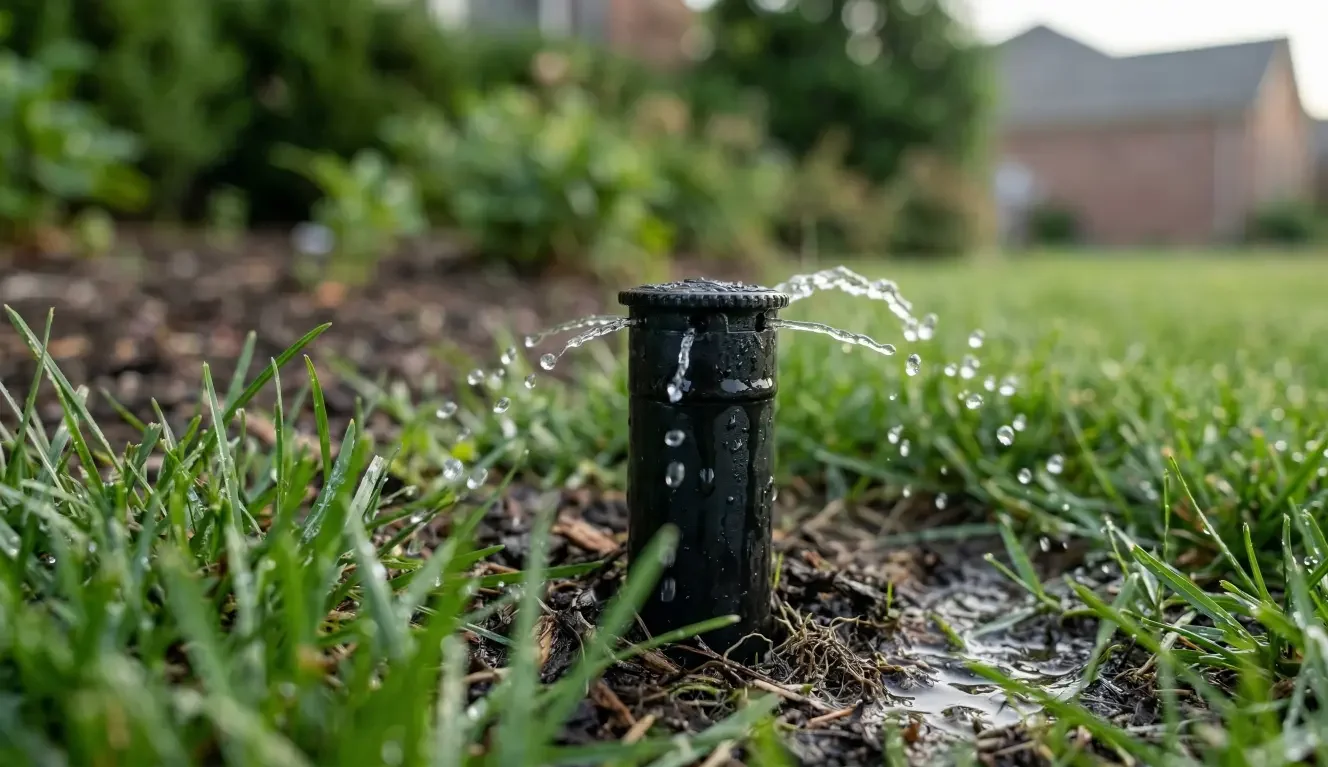
A sprinkler system that suddenly loses pressure can be frustrating. Some zones may barely spray, others may stop working altogether, and the yard that normally waters evenly starts looking patchy. When pressure drops across multiple zones, many homeowners start asking the same question: is this an irrigation problem, or is something wrong with the plumbing supply feeding the system?
That uncertainty is understandable. Sprinkler systems sit right at the intersection of two trades. Some problems live inside the irrigation system itself—zone valves, heads, controllers, or clogged components. Others start upstream, where the water supply enters the irrigation line, passes through a backflow device, or moves through an underground main line. From the homeowner’s point of view, both can look the same at first: weak spray, poor coverage, and a system that no longer performs the way it used to.
The good news is that the pattern of the pressure loss often gives useful clues. If one area of the yard is affected, the issue may point in one direction. If pressure drops across several zones at once, the likely sprinkler system low pressure cause can shift toward supply-side problems, seasonal startup issues, or a component affecting the whole system rather than just one section.
The goal is not to turn you into an irrigation technician or plumber overnight. It is to help you narrow the problem down, avoid guessing, and call the right professional sooner.
Why Sprinkler Systems Suddenly Lose Pressure
When homeowners describe low sprinkler pressure, they are usually noticing a few practical symptoms. Sprinkler heads may not pop up fully. Water may spray only a short distance instead of covering the usual area. Rotors may move sluggishly or stop turning. Some zones may appear weaker than normal, and in more noticeable cases, the whole yard may seem under-watered even though the controller is running as scheduled.
One of the most useful distinctions is whether the issue affects just one zone or several. That difference matters because it often points to where the problem begins.
If one zone has weak pressure while the rest of the system looks normal, the cause is more likely to be inside that specific zone. That might include clogged heads, valve problems, line restrictions, or a zoning issue tied to that section of the yard.
If multiple zones lose pressure at the same time, the situation often feels different. The whole system may still run, but everything looks weaker than it used to. In that case, homeowners start noticing a broader pattern: several areas are underperforming, seasonal startup did not go smoothly, or the system never regained normal pressure after winterization. That kind of system-wide change can suggest a supply problem rather than a single-zone defect.
Another reason low pressure feels confusing is that outdoor watering systems are not always checked closely every week. A homeowner may notice the lawn looking dry before they notice the spray pattern changed. Or they may only discover the problem during the first major use of the season. By then, it can be hard to tell whether the issue started recently or has been developing gradually.
That is why symptoms alone are only the starting point. The pressure pattern—where it happens and how consistently it shows up—usually tells a more useful story.
The Most Common Sprinkler System Low Pressure Causes
Low pressure can originate from more than one place, and that is what makes this issue easy to misdiagnose. In general, the most common causes fall into three categories: irrigation component problems, plumbing supply limitations, and seasonal startup or winterization-related issues.
Irrigation component problems are the first category most homeowners think of. These include clogged heads, stuck valves, controller problems, and zone-specific flow issues. They are common, and many of them stay confined to one part of the yard.
Plumbing supply limitations are different. These issues affect the water reaching the irrigation system in the first place. That may involve a partially restricted supply, a malfunctioning backflow device, an underground supply line leak, or another condition reducing available flow before the sprinkler zones even begin distributing water.
Seasonal startup issues create their own category because many homeowners first notice pressure problems right after the system is turned back on for the season. Low pressure after winterization can sometimes be linked to valves not fully reopened, debris in the line, air in the system, or a component that did not return to normal operation after seasonal shutdown.
This is where the homeowner’s observations become especially valuable. If the issue appeared suddenly in one zone, that points one way. If the issue showed up after seasonal startup and affects most of the yard, that points another. If pressure loss seems to extend beyond the sprinkler system and affects other outdoor water use, the plumbing supply deserves closer attention.
A useful mindset here is this: the sprinkler system may be showing the symptom, but the cause may not always be inside the sprinkler heads themselves.
When the Problem Is Likely Inside the Irrigation System
If the pressure problem is limited to one area, the irrigation system itself is often the first place to look.
Sprinkler low pressure in one zone
A sprinkler low pressure in one zone problem usually points toward something local to that zone rather than a property-wide plumbing issue. If the front yard runs normally but one side yard or backyard zone seems weak, the root cause may involve a valve issue, partial blockage, line damage in that branch, or a control problem affecting only that zone.
This kind of pattern matters because it helps rule out broader supply issues. When the water feeding the whole system is the problem, you would usually expect more than one zone to show the same weakness.
Clogged sprinkler heads or valves
Clogged sprinkler heads are one of the most familiar irrigation-related causes of poor performance. Dirt, debris, and mineral buildup can interfere with spray patterns, reduce distance, or keep a head from rising properly. A valve that is not opening fully can create a similar result, especially if it restricts flow to a section of the system.
These issues are often more visible than plumbing-supply problems because the poor performance stays localized. One group of heads may look weak while the rest of the yard still waters normally. That is why many homeowners begin by checking heads, cleaning visible debris, and comparing zones one by one.
Irrigation zoning and controller issues
Sometimes the pressure problem is not true pressure loss at all. It is a zoning or control issue that causes the wrong components to run, too many areas to run at once, or a sequence problem that affects system performance. That can make the yard appear under-watered even when the water supply itself is fine.
This is where irrigation specialists often have the advantage. If the problem appears tied to zone behavior, head coverage, controller logic, or valve timing, the irrigation system is usually the more relevant place to focus.
A homeowner does not need to solve all of that alone. The practical takeaway is simpler: if one zone is weak while others are fine, the irrigation system is usually the better first suspect.
Signs the Problem May Be in the Plumbing Supply
When pressure drops across several zones, the diagnosis starts to change. Multi-zone issues often suggest that the problem is happening before the water gets distributed through individual irrigation branches.
One of the clearest clues is reduced performance across most or all of the sprinkler system. Instead of one bad area, the whole system seems tired. Heads do not throw water as far. Rotors struggle. Coverage becomes inconsistent across the property. The homeowner may not see one obvious failure point because the weakness is spread out.
Another clue is whether other outdoor fixtures seem affected. If a hose bib, outdoor faucet, or another water-use point also feels weaker than normal, that can support the idea that the issue may involve supply rather than just irrigation hardware. It does not prove it, but it makes the plumbing side harder to ignore.
Water supply limitations can also show up in systems that previously performed well and then changed noticeably without an obvious adjustment to the controller or zone layout. A homeowner may say, “Nothing in the settings changed, but the whole system feels weaker.” That kind of pattern often pushes the diagnosis upstream.
This is one of the most important handoff points between irrigation and plumbing. If several zones are underperforming at once, and the symptoms feel system-wide instead of localized, the water path feeding the irrigation system deserves closer inspection.
How Backflow Devices Can Affect Sprinkler Pressure
Many homeowners are aware they have some kind of device on the irrigation supply line, but they may not think about it until a problem arises. That device is often a backflow preventer, and its job is to help protect the home’s water supply from contamination flowing backward from the irrigation system.
That protective function is important, but it also means the backflow assembly sits in a critical point in the system. If it is not operating correctly, if a valve associated with it is partially closed, or if something about the assembly is restricting flow, it may influence how much water reaches the sprinkler zones.
A backflow preventer affecting sprinkler pressure is not always obvious to the homeowner because the unit may not look “broken.” There may be no dramatic leak, no controller error, and no obvious zone failure. Instead, the symptom is simply reduced pressure across multiple zones.
This is one of those areas where guesswork can waste time. A homeowner may clean heads, recheck schedules, and adjust zones without solving anything because the restriction is occurring before the water even reaches those components.
Professional inspection is often useful here because backflow devices are part of the plumbing-to-irrigation handoff. If pressure loss appears system-wide and the backflow assembly has not been evaluated recently, it becomes a reasonable suspect—especially if the issue appeared after seasonal startup, maintenance activity, or any shutoff/restart event.
The practical point is not that every pressure problem is a backflow problem. It is that the backflow assembly is one of the first shared components to consider when the whole irrigation system feels weak.
Underground Supply Line Issues That Reduce Pressure
An underground supply line issue is another reason a sprinkler system may lose strength across multiple zones.
If the line feeding the irrigation system develops a leak, pressure may be lost before the water ever reaches the zone valves and sprinkler heads. In that situation, the irrigation system may still run, but it runs with less force than expected. From the homeowner’s point of view, the system seems weaker everywhere without any obvious broken head or controller problem.
Leaking sprinkler main line signs are not always dramatic. Sometimes there is visible soggy ground, unusually green patches, pooling water, or erosion in a section of the yard. But in other cases, the clues are subtler. The property may simply require more watering to achieve the same result, or the system may appear weaker than normal for no clear reason.
Pressure loss between the house and irrigation system can be especially confusing because the damage is often underground. Homeowners may inspect visible sprinkler heads and find nothing unusual. That is when the possibility of a hidden line problem becomes more relevant.
This is also one of the clearest situations where a plumber may be needed. If the issue involves the water supply line, buried feed piping, or the plumbing side of the outdoor system, the problem is no longer just about sprinkler coverage. It becomes an outdoor plumbing diagnosis.
In practical terms, a homeowner should start thinking about plumbing involvement when the system-wide pressure loss is accompanied by signs of underground leakage, unexplained wet areas, or evidence that the supply side is not delivering normal water volume.
Low Pressure After Winterization or Seasonal Startup
Seasonal startup is one of the most common times for homeowners to notice pressure irregularities. The system worked last season, winterization happened, and now the first few runs of spring feel weak or uneven.
Low pressure after winterization can happen for a few different reasons. In some cases, valves may not be fully reopened. In others, debris or sediment may affect flow during startup. Air in the lines or a component that did not return to its normal operating position can also make the system feel unstable early in the season.
This does not automatically mean something is seriously damaged. Seasonal restart issues can be relatively simple. But they can also reveal a problem that developed over time and only became obvious once the system was expected to perform again.
A useful homeowner example is this: several sprinkler zones worked normally the previous season, but now all of them seem weaker right after startup. That pattern is different from one isolated broken head. It suggests the homeowner should think about what changed during shutdown and restart, including valves, backflow devices, and supply-side components.
Seasonal startup is also a good reminder that not every apparent pressure issue is a controller issue. If the timer is working and the zones are activating, but the water output is poor across much of the yard, the real issue may sit in the water path rather than in the scheduling system.
In other words, the timing of the problem matters. When pressure issues begin right after winterization or seasonal reactivation, that timing itself becomes part of the diagnosis.
When a Plumber Is Needed for Sprinkler Issues
Homeowners often hesitate to call a plumber for sprinkler problems because sprinklers feel like landscaping equipment. Sometimes that instinct is correct. But sometimes the sprinkler system is simply the first visible place where an outdoor plumbing issue shows up.
A plumber is usually the better fit when the problem appears tied to water supply and pressure rather than zone layout or head performance. If multiple zones are weak, the backflow assembly seems involved, or there are signs of supply line leakage between the house and the irrigation system, the plumbing side becomes more relevant.
This is also true when underground pipe damage is suspected. If the issue may involve buried water lines, outdoor pressure delivery, or a component connected directly to the home’s water system, an irrigation specialist may not be the only professional needed.
When a plumber is needed for sprinkler issues, it is usually because the diagnosis has moved upstream. The question is no longer “Which head is clogged?” It becomes “Why is this system not getting normal water in the first place?”
That distinction is what helps homeowners avoid the wrong service call. If the system’s coverage problem is really being caused by a supply-side restriction or leak, solving it may require plumbing inspection rather than just irrigation adjustment.
If your sprinkler system is losing pressure across several zones, the issue may be connected to the plumbing supply feeding your irrigation system. Daniel’s Plumbing Services helps homeowners in the Atlanta area diagnose outdoor plumbing issues such as backflow device problems, water supply restrictions, and underground line leaks. Contact our team to schedule an inspection and determine the most effective solution.
When an Irrigation Specialist Is the Better Choice
Not every low-pressure problem belongs to a plumber. An irrigation specialist is often the better choice when the issue stays inside the sprinkler system’s layout, controls, or distribution components.
Zone control problems are a good example. If the system activates incorrectly, certain valves fail to open properly, or one section behaves differently from the rest without affecting the whole supply, that points more toward irrigation than plumbing.
Head placement and adjustment problems also fall into this category. Sometimes what looks like pressure loss is really poor head alignment, damaged spray components, or coverage changes that became more obvious over time. The water may be present, but it is not being distributed effectively.
Controller or scheduling issues are another strong reason to start with irrigation. If too many zones are running in a way the system was not designed for, or if a control problem is affecting valve sequencing, an irrigation technician is usually better positioned to diagnose it.
This matters because homeowners do not need a one-size-fits-all answer. The smartest next step depends on where the problem is showing up. If the issue is localized, mechanical, and tied to zone behavior, irrigation is often the right first call.
What to Do When Multiple Zones Lose Pressure
When several zones lose pressure, the best next step is usually a short diagnostic pause rather than immediate guesswork.
Start with simple checks. Compare multiple zones and confirm whether the pressure loss is truly widespread. Notice whether outdoor faucets or other water-use points feel weaker too. Think about timing: did the issue begin right after winterization, startup, recent maintenance, or a known valve change? Look for visible clues in the yard such as soggy ground, unusual pooling, or persistent wet spots that may suggest leakage.
Then narrow the likely cause by pattern. If one zone is bad, irrigation becomes more likely. If the whole system feels weak, the supply side deserves more attention. If the system changed after seasonal startup, restart-related causes move higher on the list. If backflow, buried piping, or broader pressure loss seems possible, plumbing involvement becomes more likely.
The real goal is not to solve everything from the yard. It is to avoid spending time and money in the wrong direction.
When the pressure drop affects multiple zones and does not improve with basic visible checks, that is usually the point where professional inspection becomes worthwhile. The right inspection can help determine whether the problem is living in the sprinkler system, the plumbing supply, or the handoff point between the two.
FAQ Content
What causes low pressure in a sprinkler system?
Low pressure can come from more than one source. Sometimes the cause is inside the irrigation system, such as clogged heads, valve issues, or zone-related problems. In other cases, the issue may involve the plumbing supply feeding the system, including backflow devices or underground supply line problems.
Why is my sprinkler system low pressure in multiple zones?
When multiple zones lose pressure at the same time, that can suggest the issue is broader than one sprinkler head or valve. It may indicate a supply-side problem, a backflow-related restriction, an underground line issue, or a seasonal startup problem affecting the whole system.
Can a backflow preventer reduce sprinkler pressure?
It may. If a backflow device is not operating correctly or something around that assembly is restricting flow, water pressure reaching the sprinkler system can be affected. That type of issue often requires professional inspection rather than guesswork.
Why does my sprinkler system have low pressure after winterization?
Low pressure after winterization may happen if valves are not fully reopened, debris affects flow during startup, or a component does not return to normal operation. Seasonal restart can also reveal a broader issue that was not obvious before the system was turned back on.
How can you tell if a sprinkler main line is leaking?
Possible signs may include soggy areas, unusual pooling, persistent wet patches, erosion, or system-wide pressure loss without an obvious broken head. Some underground leaks are harder to spot, which is why broader pressure loss across multiple zones can be an important clue.
When should you call a plumber for sprinkler system problems?
A plumber is often the better choice when the problem appears tied to the water supply, backflow device, underground feed line, or system-wide pressure loss across several zones. If the issue seems localized to one zone or one group of heads, an irrigation specialist may be the better first call.
If your sprinkler system is losing pressure across several zones, the issue may be connected to the plumbing supply feeding your irrigation system. Daniel’s Plumbing Services helps homeowners in the Atlanta area diagnose outdoor plumbing issues such as backflow device problems, water supply restrictions, and underground line leaks.
Contact our team to schedule an inspection and determine the most effective solution.
RELATED LINK:
U.S. Environmental Protection Agency – Outdoor Water Use & Irrigation Systems