
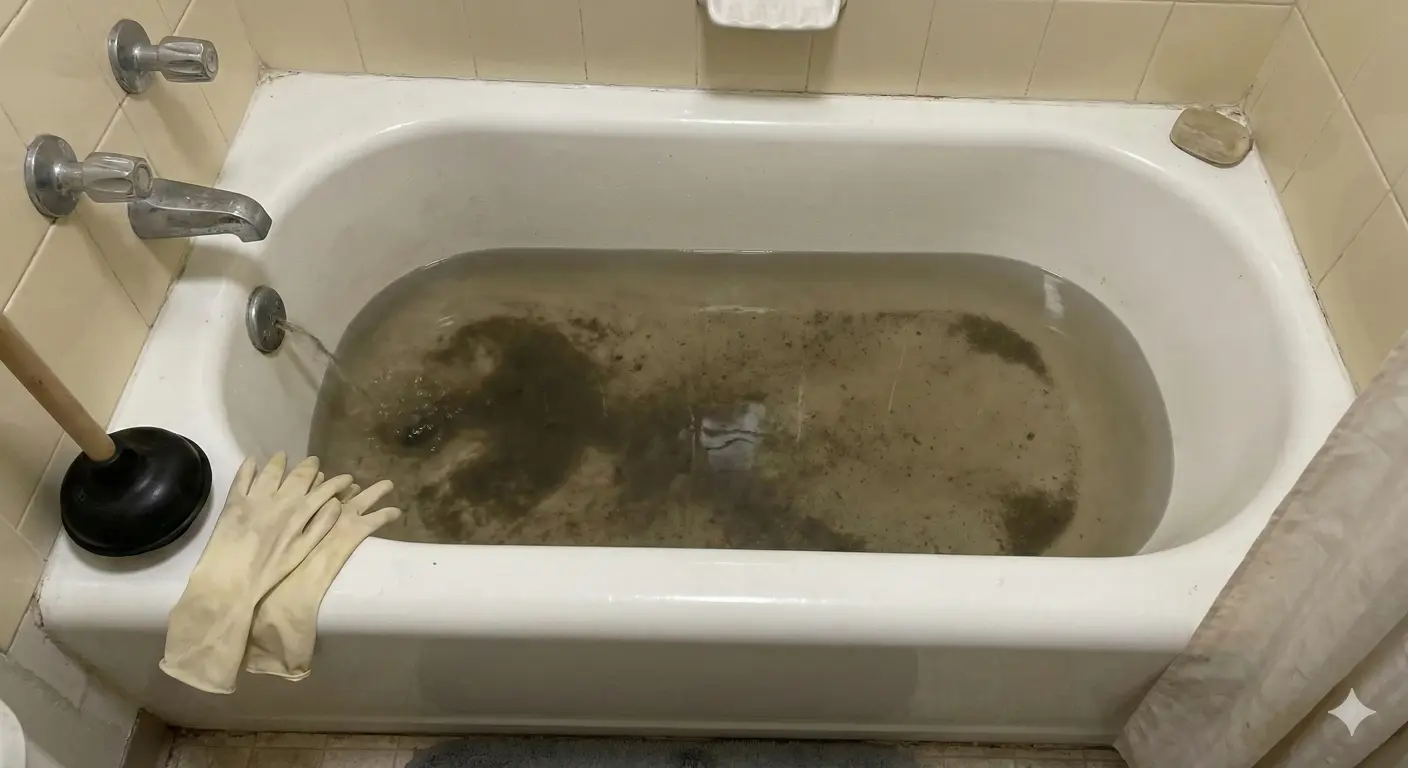
Sewer backup cleanup needed in your tub?
Your brain goes straight to “clean it up”—but the first steps aren’t about cleaning. They’re about safety, stopping more contamination, and protecting your home (and your claim) from avoidable mistakes. This is a calm, step-by-step plan for what to do first, what not to do, and who to call.
If you’re a homeowner in the Atlanta area and you’re seeing sewage in a tub or shower, treat it as a system problem until proven otherwise. The right order of operations can reduce exposure, limit damage, and keep the situation from escalating while you wait for help.
What this is (and why the first steps aren’t “cleaning”)
A sewer backup happens when wastewater can’t flow out the way it’s supposed to—and instead reverses direction and comes back up through a low point in the home. A tub, shower, floor drain, or basement fixture often becomes that low point.
The uncomfortable truth is this: the first minutes are about containment, not cleanup. The goal is to reduce contact, keep contamination from spreading to clean areas, and stop anything that could add more water to an already stressed system. You can worry about deodorizing and deep cleaning later—after the source is under control and you’re not risking spreading the problem.
Think of it like this:
- Plumbing fixes the cause.
- Cleanup/restoration fixes the damage.
- Your job, right now, is to keep things from getting worse and to gather information that helps both.
First 10 minutes: the safety-first checklist
You don’t need special tools for these steps. You need calm, sequence, and a focus on preventing spread.
Keep people and pets out (and block access fast)
Start by making the area off-limits.
- Close the bathroom door if you can.
- Keep children and pets away from the room and any nearby hallways.
- If sewage is in a bathroom that’s normally used by the family, put a quick note on the door so no one “accidentally checks” and tracks it through the house.
If the backup is in a basement or laundry room, set a boundary at the top of the stairs or doorway. The goal is simple: limit foot traffic so you don’t spread contamination onto carpets, rugs, or hardwood floors.
Stop using water in the home (even sinks and laundry)
This is one of the most important steps, and it’s the one people often skip.
If the issue is a main line blockage or a backup in the sewer system, any water you run inside the home has to go somewhere. That includes:
- flushing toilets
- washing hands at sinks
- running a dishwasher
- starting a washing machine
- taking a shower in another bathroom “just to be safe”
Even “small” water use adds up when drains can’t move wastewater out. Until you know the source is cleared, treat the home like it has limited drain capacity.
Practical move: tell everyone in the house, clearly:
“Don’t flush. Don’t run water. We’re stopping all water use until it’s cleared.”
Ventilate carefully and avoid creating a stronger spread
Yes, sewer odors are unpleasant. And yes, you may want air moving. The key is not to turn your house into a distribution system.
- If you can safely open a window in or near the affected area, do so.
- Avoid setting up fans that blow air from the contaminated space into the rest of the home.
- If you run HVAC aggressively, be mindful that air movement can carry odors and potentially spread fine particles; it’s often better to isolate and ventilate locally if possible.
If you’re unsure, default to containment: close doors, limit traffic, and focus on stopping the source.
If any electrical outlets/appliances are near wet areas, don’t touch (basic safety)
If sewage water is near:
- outlets
- extension cords
- power strips
- appliances (especially in a basement or laundry area)
Do not wade in, and do not touch electrical items. Electricity and standing liquid is a risk combination. If you need the power off and you’re not sure how to do that safely, it’s better to wait for professional help.
Put on basic protection if you must enter briefly (minimal, non-medical)
If you need to enter the area briefly (for a photo, to close a door, to place a towel barrier), keep it simple:
- closed-toe shoes you can clean or dispose of
- gloves if you have them
- avoid kneeling or touching surfaces
- wash up immediately afterward
This is not about “doing a full cleanup.” It’s about minimizing contact while you secure the space.
Stop the source: quick triage to prevent more backup
Once the area is isolated and water use has stopped, you can do a quick triage to help you decide what kind of help you need—without making the situation worse.
One fixture vs. multiple fixtures
This check is a big clue.
- If sewage is backing up into the tub and you also have issues with a toilet gurgling, a sink draining slowly, or multiple fixtures acting up, that strongly suggests a main line or broader drainage issue.
- If it’s truly isolated to one fixture, it may be a localized blockage—but with sewage in a tub, it’s still wise to treat it seriously until a plumber confirms.
What you should not do: run water in other fixtures “to see what happens.” That can add volume to a system that may already be blocked.
Basement involvement vs upstairs only
If you have a basement and there’s any sign of backup near:
- basement floor drains
- basement bathroom fixtures
- laundry standpipes
That usually signals a broader drainage problem rather than a simple one-fixture clog. The basement is often the lowest point, which means it can show symptoms first or worst.
Again, resist the urge to test. Look and observe, but don’t add water to the system.
When not to run more water “to test”
If you’re thinking:
“I’ll run the sink for 10 seconds to see if it drains,”
or
“I’ll flush once to see if it clears,”
Pause. If the main line is blocked, those tests can become the reason sewage spreads further into the home. The safer approach is to stop water use completely and let a plumber assess and clear the line.
Drain chemicals and repeated flushing can make outcomes worse
In a stressful moment, homeowners reach for what’s under the sink: drain opener, chemical cleaners, or repeated plunging/flushing. In a sewer backup scenario, these often create more problems than they solve.
- Chemical drain cleaners aren’t designed for main line backups, and they can introduce hazards during repairs.
- Repeated flushing adds volume and can push more wastewater into the home.
- Aggressive DIY attempts can delay the real fix while the damage spreads.
The calm rule: contain, stop water use, document, then call.
What not to do (common mistakes that spread contamination)
This is the section that protects your floors, your belongings, and your sanity later.
Don’t shop-vac sewage or use household mops across clean areas
A shop vac can aerosolize liquids and spread contamination in ways you can’t see. Household mops and buckets can turn a contained event into a whole-house problem if you move water from the bathroom into hallways, carpets, or other rooms.
If you’re going to do anything at all before professionals arrive, focus on barriers and isolation—not broad cleaning.
Don’t send sewage water down other drains
It’s tempting to “move it to the drain” because that feels logical. But if the drain system is part of the problem, you’re simply cycling contaminated water back into the same system—or pushing it toward other fixtures.
Don’t use your toilet, dishwasher, washing machine until cleared
Even if the toilet seems to flush or the sink seems to drain, the underlying restriction may still exist. One “normal” drain event doesn’t mean the system is safe. Wait until a plumber has cleared the source and confirmed normal flow.
Don’t assume it’s solved because the water “went down” once
Sometimes backup water recedes temporarily. That can happen if pressure changes, if the blockage shifts, or if the system briefly drains. It does not mean the issue is resolved.
If your trigger was sewage in the tub, treat it as unresolved until a professional confirms the line is clear and functioning normally.
Document it like you’ll need it later (because you might)
You don’t need to be an insurance expert to document well. You need clear, simple records before cleanup changes the scene.
Take photos and video before cleanup begins
Use your phone and capture:
- the tub/shower showing the backup level and any solids
- nearby floor area, baseboards, cabinets, rugs, or items that got wet
- any overflow points (floor drains, toilets, other fixtures)
- wide shots that show the room and how far spread reached
If odor is the main symptom now (after receding), capture visible clues like staining, moisture, or affected materials.
Note times, affected areas, and what fixtures were involved
Write down:
- when you first noticed it
- what was running at the time (shower, laundry, dishwasher)
- which fixtures were affected (tub, toilet, sinks, basement drain)
- whether it happened more than once
These details help your plumber diagnose the cause and help restoration teams understand scope.
Keep receipts/logs for any emergency services
If you purchase supplies, pay for emergency calls, or hire a cleanup service, keep:
- invoices
- receipts
- written notes of what was done and when
What insurers/adjusters typically want to see (general guidance)
Without getting into legal advice: clear documentation helps everyone understand the extent of damage. Photos before cleanup, a simple timeline, and a list of affected areas are a strong start.
Even if you never file a claim, these records are still useful for restoration planning and for preventing repeat incidents.
Who to call: cleanup vs plumbing (and why order matters)
A lot of homeowners lose time here because they call the wrong first step. The best sequence is usually: stop the cause first, then remediate the damage.
Call a plumber to stop the cause
A plumber is the right call when the priority is:
- clearing a main line blockage
- diagnosing whether the issue is localized or system-wide
- inspecting the sewer line (often with a camera inspection if needed)
- identifying whether the cause is blockage, root intrusion, a damaged line, or another defect
If sewage backed up into the tub, you want a diagnosis-first approach. The outcome you should expect from a plumbing visit is clarity:
- what caused the backup
- whether it’s likely to recur
- what repair paths exist (clearing only vs inspection vs repair)
Call a restoration/cleanup team for sanitation and damage control
Cleanup/restoration is the right call when you need:
- safe removal of contaminated materials (carpet padding, drywall, insulation)
- cleaning and sanitation of affected surfaces
- drying and deodorizing
- containment and prevention of secondary damage (like lingering moisture)
Depending on how far the sewage spread and what materials were affected, professional sanitation may be appropriate. The more porous materials involved (carpet, drywall, cabinets), the more likely you’ll want professional guidance.
When you may need both (and how they coordinate)
In many cases, you’ll need both a plumber and a restoration team, but their roles are different:
- Plumbing clears and diagnoses the cause.
- Restoration remediates the impact.
If restoration starts before plumbing clears the source, you risk cleaning up a scene that gets contaminated again. If plumbing clears the source but no one addresses contaminated materials, odor and damage can linger.
The clean coordination is: contain and document, plumber clears source, then remediation proceeds with confidence.
What a “diagnosis-first” plumbing visit should look like
You should feel like you’re getting:
- a clear explanation of what happened
- confirmation of whether multiple fixtures are impacted and why
- options for next steps (immediate clearing, inspection, repair paths)
- guidance on preventing recurrence based on what’s found
Not pressure. Not vague advice. A plan.
After it’s under control: how to prevent a repeat
Once the immediate crisis is handled, homeowners often ask two questions:
- “How do I make sure this never happens again?”
- “Do I need a big repair?”
The honest answer is: prevention depends on what caused it. Your best prevention step is verification, not guessing.
A maintenance + inspection path that matches your home
If this was your first event, you may still want to confirm:
- whether the problem was a one-time blockage or a recurring pattern
- whether your home has a cleanout that makes future service easier
- whether there are signs of a line defect that invites repeat blockages
A camera inspection can be a practical next step when the cause isn’t obvious or when backups recur. If roots or defects are present, that changes your prevention plan.
When trenchless/pipe lining becomes relevant
If a recurring backup is tied to a confirmed defect in the line (cracks, intrusion points, deterioration), repair options may include trenchless rehabilitation methods in some situations. The key word is “confirmed.” You don’t want to choose a repair method before you know what the line actually looks like.
If Daniel’s Plumbing Services is evaluating a recurring issue, this is where a diagnosis-first approach helps: you can discuss repair options based on evidence, not assumptions.
Smart leak detection/auto shutoff as adjacent protection (without mixing concepts)
Sewer backups aren’t the same as supply-line leaks. A smart shutoff on the main water line is more directly aimed at preventing damage from pressurized leaks inside the home.
That said, after any major water-related incident, many homeowners also want broader protection against future water damage. It’s reasonable to consider smart leak detection as part of a whole-home risk plan—just don’t confuse it with a “sewer backup prevention tool.” They solve different problems.
Get it handled safely and correctly—fast
If sewage backed up into your tub, the safest move is to stop water use and get the source cleared quickly. You don’t have to figure out alone whether it’s a main line blockage, a localized issue, or a sewer line problem.
Daniel’s Plumbing Services can identify what’s happening and what it takes to prevent a repeat, with clear options: immediate clearing, inspection, and repair paths if needed.
Call Daniel’s Plumbing Services or click Make Appointment to get this handled safely and correctly.
FAQ content
1) What should I do first if sewage backs up into my tub?
First, keep people and pets out of the bathroom and stop using water throughout the home. Don’t flush toilets or run sinks, dishwashers, or laundry. Take photos/video for documentation, then call a plumber to clear and diagnose the cause before attempting major cleanup.
2) Sewer backup in basement: what to do right away?
Treat it as urgent containment. Keep everyone out of the area, stop all water use in the home, and avoid contact with standing liquid. Don’t “test” drains by running water. Document what you see and call a plumber to clear the source; consider restoration help if materials like carpet or drywall were affected.
3) Why do I still have a sewage smell after a backup?
Odor can linger if contaminated moisture remains in porous materials, if residue was spread during cleanup, or if the underlying drain issue isn’t fully resolved. Even if the water receded, it’s worth confirming the cause is cleared and that affected materials were sanitized and dried appropriately.
4) Who do I call for sewer backup cleanup—a plumber or a restoration company?
Call a plumber first to stop the cause (clear the line and diagnose why it happened). Restoration/cleanup teams handle sanitation, removal of damaged materials, drying, and deodorizing. In many cases you’ll need both, but plumbing typically comes first to prevent re-contamination.
5) What documentation do I need for sewer backup insurance?
Before cleanup changes the scene, take photos and video of the affected fixtures and surrounding damage, note the time it started, which fixtures were involved, and what was running at the time. Keep receipts and invoices for any emergency services or supplies.
6) How can I prevent a sewer backup from happening again?
Prevention depends on the cause. If backups recur, inspection (often including a camera inspection) can help identify whether there’s a repeat blockage pattern or a line defect. From there, the right prevention plan may include routine clearing, targeted repairs, or rehabilitation options if a defect is confirmed.
If sewage backed up into your tub, the safest move is to stop water use and get the source cleared quickly.
We’ll identify whether it’s a main line blockage, a localized issue, or a sewer line problem—and what it takes to prevent a repeat.
You’ll get clear options: immediate clearing, inspection, and repair paths if needed.
Call Daniel’s Plumbing Services or click Make Appointment to get this handled safely and correctly.