
Many plumbing emergencies hit small businesses at the worst possible moment. A drain backs up just before opening. A restroom leak becomes obvious during the lunch rush. A water heater issue shows up after closing, leaving staff to discover it the next morning when customers are already on the way.
After a few after-hours emergencies, most owners stop seeing plumbing as a background system and start seeing it for what it is: part of day-to-day operations. That shift matters. Once a business depends on functioning restrooms, sinks, floor drains, prep areas, or hot water to serve customers and keep staff productive, a reactive approach can start creating more disruption than expected.
A plumbing maintenance plan for business is not about overcomplicating operations. It is about putting a few repeatable habits in place so small issues are more likely to get caught before they become shutdowns, water damage, or emergency calls.
For a restaurant, that may mean staying ahead of grease-related drain problems. For a retail store, it may mean watching for restroom issues before a busy weekend. For a small office, it may mean checking aging fixtures and supply lines before a minor leak turns into damaged flooring or ceiling stains.
The goal is not to eliminate every plumbing problem forever. It is to reduce surprises, improve readiness, and give the business a clearer response plan when something does go wrong.
Why Small Businesses Often Experience Plumbing Emergencies
Small businesses often deal with plumbing problems for one simple reason: their systems work hard every day, but they are rarely treated like critical infrastructure until something fails.
A restaurant may push a kitchen drain system through heavy daily use. A retail store may depend on customer-facing restrooms staying functional all weekend. A salon, café, daycare, or small medical-adjacent office may rely on sinks, water heaters, and clean water access throughout the day. Even if the building is not large, the plumbing system may carry a steady operational load.
That usage becomes more complicated when the building is older. An aging water heater, older shutoff valves, worn supply lines, or drains with a history of buildup may keep functioning just well enough that the business learns to work around them. Then one day, a familiar “small issue” turns into an emergency.
Reactive repair also creates its own pattern. If the only time the plumbing gets attention is during a leak, clog, or loss of hot water, then the business is always making decisions under pressure. The owner is focused on restoring service fast, not evaluating what might prevent the next disruption. Over time, that can lead to repeated after-hours calls, recurring drain issues, and growing frustration with systems that never seem fully reliable.
For a small business owner, the real cost is often not just the repair itself. It is the interruption. It is the delayed opening, the upset customers, the staff confusion, the cleanup, and the feeling that the same type of problem keeps coming back.
A Simple Plumbing Maintenance Plan for Business Owners
A good maintenance plan does not need to be complicated to be useful. For most small businesses, it can start with three core pieces: inspection cadence, emergency readiness, and vendor coordination.
Inspection cadence
Plumbing tends to deteriorate gradually, not all at once. A minor leak under a sink may drip for weeks before someone notices. A drain may slow down over time until it finally backs up. A water heater may show subtle warning signs before performance drops enough to interrupt operations.
That is why cadence matters. The business needs a recurring rhythm for checking what is easy to overlook during normal workdays. This does not always require constant service visits. It may mean seasonal inspections, periodic visual checks, or a scheduled review of areas that create the most operational risk.
For example, a restaurant may need more attention on drains, cleanouts, and hot water reliability than a small office. A retail store may focus more on restrooms, supply lines, and leak visibility near public areas. The point is not that every business needs the same schedule. It is that every business benefits from having one.
Emergency readiness
Many plumbing emergencies become worse because no one on site knows what to do in the first ten minutes.
That is where a simple readiness plan helps. Staff should know who to call, where the main water shutoff is, and what signs require immediate attention. They do not need to be plumbers. They just need enough awareness to avoid losing time during a leak or overflow.
Emergency readiness also means thinking beyond the moment of failure. If a pipe leaks after closing, who gets notified? If a restroom backs up during a busy period, who has authority to pause use and call for service? If hot water fails, what does that mean for operations the next morning?
A plan is helpful because it removes guesswork. Under stress, simple instructions are more valuable than good intentions.
Vendor coordination
Many small businesses already have a plumber they call in emergencies. That is not the same as having a maintenance relationship.
Vendor coordination means knowing who handles routine service, who responds to urgent problems, and what information should be documented after each issue. If a business has dealt with multiple leaks, drain backups, or recurring fixture problems, those events should not live only in memory. They should inform the next maintenance step.
A reliable provider can help the owner move from “fix what broke” to “understand the pattern.” That is often where real prevention begins.
The Core Plumbing Maintenance Checklist for Small Businesses
A plumbing maintenance checklist for small business operations should stay practical. It should focus on the systems most likely to interrupt service, create damage, or affect customers and staff.
Scheduled drain and pipe inspections
Drains are one of the easiest places for small problems to become operational headaches. A restaurant may experience buildup from grease and food waste. A retail space may have less severe drain usage but still deal with restroom clogs or slow floor drains in utility areas. A small office may assume its drains are fine until a shared restroom becomes unusable.
Scheduled drain and pipe inspections help identify patterns early. If the same drain slows repeatedly, that may suggest more than routine buildup. If an area has a history of backups, it deserves more attention before a peak season or busy weekend.
This is also a good place to think about professional drain cleaning for businesses when recurring clogs start becoming part of the property’s normal story. The goal is not to over-service a system that is working fine. It is to avoid waiting until the problem is already interrupting operations.
Water heater performance checks
For some businesses, hot water is essential to daily service. Restaurants, salons, and many customer-facing spaces rely on consistent hot water for sanitation, cleaning, and employee use. Even where hot water demand is lower, unexpected failure can still create disruption.
A basic maintenance plan should include watching for slow recovery, inconsistent temperatures, visible corrosion, unusual noises, or any recent change in performance. Owners do not need to diagnose the equipment themselves, but they should not ignore early warning signs either.
This is especially relevant in older buildings, where water heaters may still be operating but doing so unreliably. A small business often discovers the weakness only when the system cannot keep up during a busy period.
Leak detection around fixtures and supply lines
Not every costly plumbing problem starts as a dramatic burst pipe. Many begin as small, hidden leaks around sinks, toilets, connections, shutoff valves, or supply lines.
That is why visual leak awareness matters. A manager opening the business in the morning should be able to notice water where it should not be, stains that were not there before, damp cabinets, soft flooring, or an unexplained musty smell. These are not issues to “keep an eye on” indefinitely. They are signs that the system may need attention before the damage spreads.
For businesses that have already experienced surprise leaks, commercial leak detection solutions may become an important part of a broader prevention strategy, especially when the property layout makes certain areas harder to monitor.
Monitoring water pressure and unusual sounds
Small businesses often overlook pressure-related warning signs because they seem minor compared with a visible leak or full backup. But unusual water pressure, banging noises, vibrating pipes, or changes in fixture performance can all signal stress in the system.
Pressure that feels inconsistent may point to an underlying issue that deserves review. Pipes that suddenly sound louder than usual, fixtures that sputter, or toilets that refill oddly slowly may not shut down the business today, but they are worth documenting.
This is where a checklist becomes useful. Staff do not need to know what every symptom means. They just need a way to notice, report, and escalate the things that no longer feel normal.
If your business has had multiple plumbing interruptions already, schedule a commercial plumbing inspection before the next emergency forces the issue. A structured review can help identify where the real risks are and what type of maintenance rhythm makes sense for your property.
Why After-Hours Plumbing Emergencies Happen
After-hours emergencies rarely feel sudden when you look back at them closely. In many cases, the warning signs were there. They just did not seem urgent at the time.
A drain was slower than usual for a week or two. A toilet had to be plunged more than once. A water heater took longer to recover. A small leak under a breakroom sink seemed manageable because someone placed a bucket beneath it. These are the kinds of details that get pushed aside when a business is focused on customers, staffing, and daily demands.
The problem is that plumbing systems do not care whether the business is busy. A weak point in the system keeps getting weaker whether anyone is paying attention or not. That is why failures often show up after hours: pressure changes, unattended leaks, continued slow dripping, and unresolved blockages all keep developing when no one is there to respond immediately.
Another reason after-hours emergencies happen is that many businesses do not have shutdown procedures or clear staff awareness. If a closing team notices water somewhere unusual but does not know where the shutoff is or whether to escalate the issue, valuable time gets lost. A problem that could have been contained may continue overnight.
Some businesses also rely too heavily on visual signs. If nothing is actively leaking during business hours, the assumption is that things are fine. But plumbing issues often build quietly behind walls, beneath cabinets, around aging valves, or inside drain lines.
That is why avoiding emergency plumbing downtime is rarely about one dramatic change. It is more often about noticing smaller issues sooner, documenting patterns, and making the system less dependent on luck.
The Importance of Water Shutoff Awareness for Staff
When a leak or overflow happens, the first few minutes matter. Even if the business needs a plumber right away, knowing how to slow or stop the water can limit damage and reduce chaos.
That is why a water shutoff drill for employees can be surprisingly valuable, especially in businesses that have already lived through after-hours emergencies. This does not need to be a formal or complicated exercise. In many cases, it can be a short walkthrough that shows managers or key staff where the main shutoff is located, how to access it, and when they should use it.
This is especially important in businesses where the owner is not always on site. A restaurant manager closing the building should not be seeing the shutoff location for the first time during an active leak. A retail supervisor opening the store should know who to call and what to do if a restroom supply line fails before customers arrive.
Shutoff awareness also helps businesses think more clearly about responsibility. Who is expected to respond after hours? Who has contact information for the plumbing provider? Who decides whether a space can remain open or needs to pause service?
The point is not to turn employees into maintenance staff. It is to reduce delay and uncertainty. Knowing where the shutoff valve is located can help limit water damage while professional help is on the way.
For businesses with repeated plumbing surprises, this is often one of the simplest and most overlooked improvements they can make.
How Preventive Inspections Help Avoid Business Downtime
Preventive inspections are useful because they move the conversation from reaction to visibility.
Without inspections, the owner is often relying on symptoms. A drain clogs. A sink leaks. A restroom smells off. A water heater starts acting inconsistently. Those issues are important, but they only tell part of the story. An inspection helps answer the more useful question: what condition is the plumbing system actually in?
That matters because different properties carry different risks. An older restaurant with a history of drain issues may need closer attention on waste lines and grease-related buildup. A small retail business may need more focus on public restroom reliability and visible leaks around fixtures. A multi-tenant small commercial property may need to understand how one recurring issue relates to the broader system.
Preventive maintenance may help identify concerns before full failure. That does not mean inspections predict everything. It means they often make it easier to catch leaks, corrosion, worn connections, drain problems, or aging equipment before those issues escalate into downtime.
Timing also matters. A business that already knows it will be busy during holidays, local events, or seasonal rushes may want maintenance handled before that demand hits. It is much easier to coordinate service during a slower period than to deal with a plumbing interruption in the middle of peak business.
For owners who have been living in a reactive cycle, inspections often provide something just as valuable as repairs: clarity. They create a more informed basis for deciding what needs attention now, what should be monitored, and what may require a longer-term plan.
What to Look for in a Commercial Plumbing Maintenance Partner
Not every plumbing relationship supports maintenance well. Some providers are strong in emergency response but less involved in helping owners think preventively. Others may be fine for small repairs but less prepared for the broader needs of a commercial property.
For a small business owner, one of the most useful things to look for is consistency. Can the provider handle routine service as well as unexpected issues? Do they understand the operational pressure of a restaurant, retail location, or small office that cannot afford ongoing disruption? Are they equipped to address both basic plumbing needs and more complex infrastructure concerns if a recurring issue points to something deeper?
Communication matters too. A good maintenance partner does not just fix the visible problem and leave the owner guessing. They help clarify what happened, whether the issue appears isolated or recurring, and what signs should trigger earlier action next time.
This is also where vendor readiness becomes practical rather than theoretical. If the business has a trusted contact, understands how to request service, and has some record of prior issues, maintenance decisions become easier. There is less scrambling, less repeated explaining, and less chance that patterns get missed.
For a business owner evaluating what to include in maintenance contract plumbing discussions, the most useful questions are often straightforward: What gets inspected? How are recurring issues documented? What type of response is available when something urgent happens? And how does routine service connect to longer-term repair recommendations when needed?
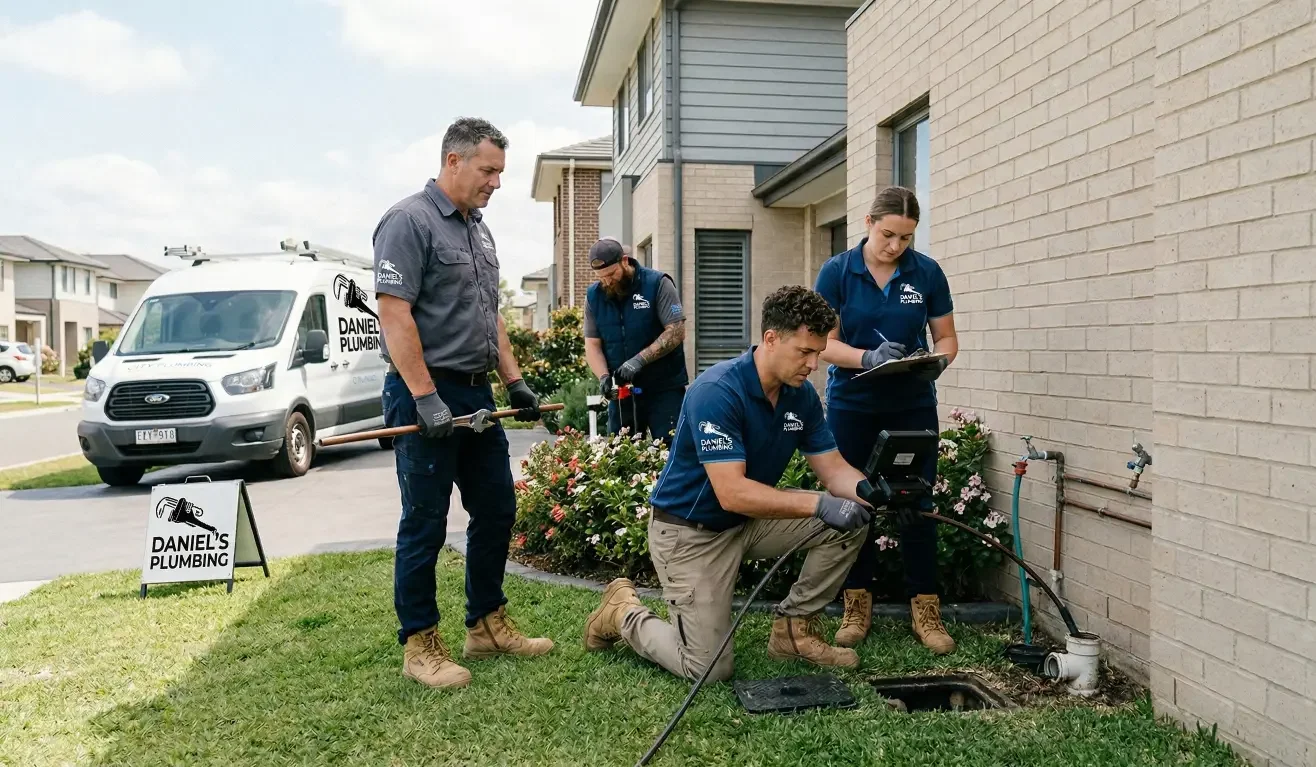
Daniel’s Plumbing Services works with both routine and more complex plumbing concerns, which can be useful for businesses that want one relationship supporting inspections, repairs, and broader plumbing needs over time.
Common Mistakes Small Businesses Make With Plumbing Maintenance
The most common mistake is waiting for a clear failure before taking action. That approach feels practical in the short term, especially when budgets and time are tight. But it can also keep a business locked in a cycle where every plumbing decision happens under pressure.
Another common mistake is assuming that no visible leak means no problem exists. Plumbing systems often signal trouble indirectly. A drain that keeps slowing down, a toilet that has become unpredictable, or a water heater that seems less reliable than it used to be may all deserve attention even before something visibly breaks.
Some businesses also normalize recurring problems. The staff learns that a certain sink “always drains slowly” or that one restroom “acts up sometimes.” Once a pattern gets treated as normal, it stops triggering action. That is risky because recurring clogs may signal a deeper plumbing issue rather than simple bad luck.
Documentation is another weak point. If no one records where leaks happened, which drain backed up, or how often a problem has returned, the owner loses useful context. When the plumber arrives, the conversation starts from zero every time.
There is also a planning mistake that shows up often in smaller properties: assuming maintenance has to mean a large formal program. In reality, a workable plumbing maintenance plan for business operations may begin with a short checklist, a staff walkthrough, a service contact list, and a few scheduled inspections around known risk points.
The best prevention plans are not always elaborate. They are consistent.
Building a Maintenance Rhythm That Works for Your Business
A maintenance plan only helps if the business can actually follow it.
That is why rhythm matters more than ambition. A small business does not need a complex facilities system copied from a large corporation. It needs a manageable cadence that matches the property, the operational demands, and the history of plumbing issues.
For some businesses, quarterly checkups may make sense. For others, seasonal reviews are enough unless a specific problem area requires closer monitoring. A restaurant with heavy kitchen use may need more frequent drain attention than a boutique retail store. A business in an older building may need more routine review than one in a newer space with fewer known issues.
It also helps to schedule maintenance during slower periods whenever possible. If a business knows Mondays are lighter, or late winter is quieter than the holiday season, that may be the right window for an inspection or service review. Maintenance is easier to act on when it does not compete with the most stressful moments of the year.
The rhythm should also include internal habits, not just service calls. Managers can look for visible leaks during opening routines. Staff can report unusual fixture behavior instead of ignoring it. Known plumbing trouble spots can be revisited before they become emergency sites again.
Over time, maintaining a relationship with a plumbing service provider can make this rhythm easier to sustain. The business is no longer starting from scratch each time something happens. There is already context, history, and a clearer sense of what the property needs.
When It’s Time to Put a Plumbing Plan in Place
Some businesses can postpone maintenance planning for a while and get away with it. Others are already past that point.
If your property has experienced recurring emergencies, frequent drain problems, surprise leaks, or repeated after-hours calls, that is usually a sign that the plumbing system needs a more structured approach. The same is true if the business is expanding, renovating, increasing customer traffic, or relying more heavily on water-using equipment than it used to.
A plan becomes even more valuable when the stress is no longer just mechanical. Once owners and staff start expecting the next plumbing issue, that uncertainty becomes part of operations. It affects scheduling, decision-making, and confidence in the building itself.
Putting a plan in place does not mean assuming the worst. It means deciding that repeated disruption is no longer acceptable as the normal way of dealing with the property.
If your business has experienced repeat plumbing issues or unexpected shutdowns, it may be time to move from reactive repairs to a structured maintenance plan. A professional inspection can help identify risks early and create a maintenance schedule tailored to your property. Contact Daniel’s Plumbing Services to schedule a commercial plumbing inspection and keep your business running without plumbing surprises.
FAQ Content
What should be included in a plumbing maintenance plan for business?
A useful plan usually includes scheduled inspections, drain and pipe review, leak awareness, water heater checks where relevant, staff awareness of shutoff locations, and a clear service contact process for urgent issues. The exact checklist depends on how the business uses its plumbing system.
How often should a small business schedule plumbing inspections?
There is no one schedule that fits every property. A restaurant or higher-use commercial space may need more frequent review than a small office or boutique. In general, the best cadence depends on building age, usage patterns, and whether the property has a history of recurring plumbing issues.
Why do plumbing emergencies happen after hours in commercial buildings?
Many after-hours emergencies begin as smaller issues that go unnoticed during the day, such as slow leaks, gradual drain blockages, or aging components under stress. They often become obvious only when the business is closed or when no one is on site to respond early.
What is a water shutoff drill for employees?
A water shutoff drill is a simple walkthrough that helps key staff know where the main shutoff valve is located, how to access it, and when to use it during a plumbing emergency. It is meant to improve response time, not replace professional plumbing service.
Can preventive plumbing maintenance reduce repair costs?
Preventive maintenance may help identify issues before they become larger failures, which can make emergency disruption less likely. It should not be treated as a guarantee against all repairs, but it can support earlier decision-making and better system awareness.
How can restaurants or retail stores avoid plumbing downtime?
They can reduce downtime by paying attention to recurring warning signs, scheduling preventive plumbing inspection for restaurant or retail properties, training staff on basic emergency response, and addressing known plumbing weak points before peak business periods.
If your business has experienced repeat plumbing issues or unexpected shutdowns, it may be time to move from reactive repairs to a structured maintenance plan. A professional inspection can help identify risks early and create a maintenance schedule tailored to your property.
Contact Daniel’s Plumbing Services to schedule a commercial plumbing inspection and keep your business running without plumbing surprises.
RELATED LINK:
U.S. Environmental Protection Agency (EPA) – WaterSense Commercial Buildings