
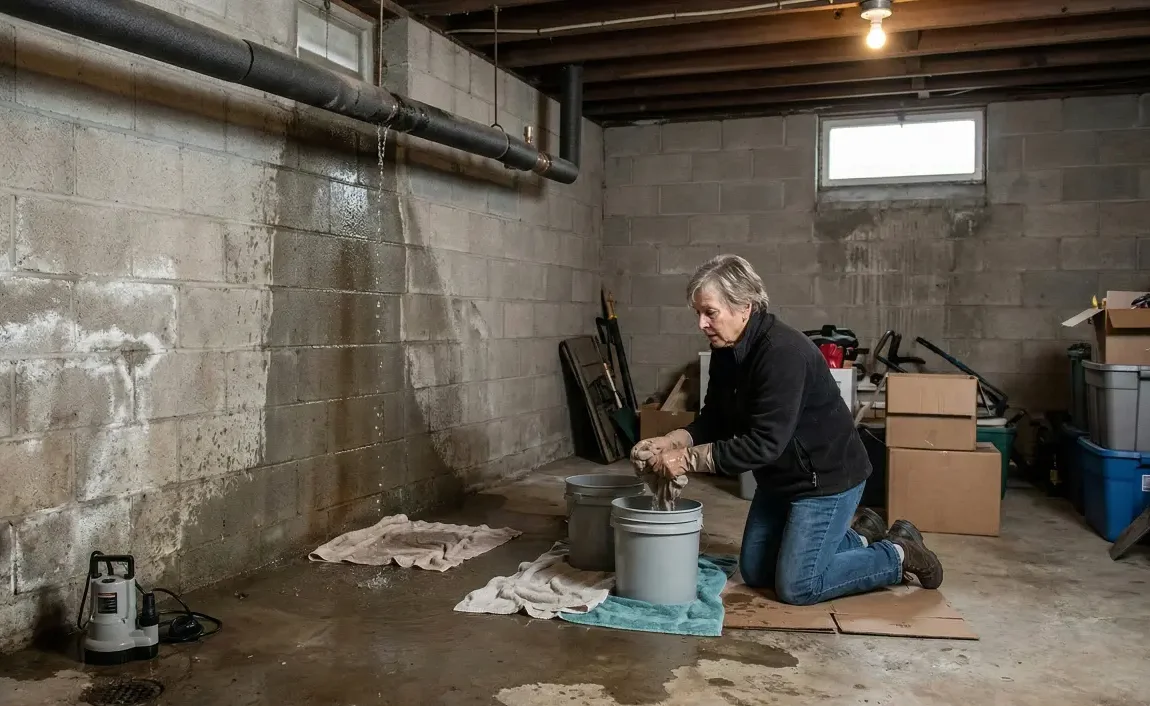
After your first leak, it’s normal to want “something” in place before the next one hits—most people start with a few leak sensors. But sensors and whole-home auto shutoff solve different problems, and choosing wrong can mean either a false sense of security or a system you don’t trust. This guide compares both approaches in plain terms so you can buy once and sleep better.
If you’re shopping for leak sensors vs whole house shutoff options, the simplest way to decide is to stop thinking in terms of gadgets and start thinking in terms of time:
- How fast can you notice a leak?
- How fast can you stop a leak?
- And what happens if you’re asleep, at work, or out of town when it starts?
That’s the real decision.
The real decision after a first leak: detect faster, stop faster, or both?
When people say “I don’t want water damage again,” they usually mean one of three things:
- “I want to know immediately if something is wet.” (detect faster)
- “I want the water to stop running if something fails.” (stop faster)
- “I want both, because I’m not always home to respond.” (detect + stop)
Your first leak probably taught you a painful lesson: the damage isn’t just the leak—it’s the time the leak has to run. A slow drip that goes unnoticed for days can cause more damage than a big leak that gets caught quickly.
That’s why “I bought sensors” can still leave big gaps. Sensors are excellent at finding water in specific places—but they don’t automatically stop the water supply unless you pair them with a shutoff solution. And if you miss the alert (dead battery, quiet phone, spotty Wi-Fi, do-not-disturb), you can still end up with the same outcome you’re trying to avoid.
A better question than “Which product is best?” is:
“What do I need my system to do when I’m not paying attention?”
What leak sensors do well (and where they fall short)
Leak sensors are the easiest and most common first step because they’re simple: put them where water shouldn’t be, and they alert you if they detect moisture.
Where leak sensors shine
Leak sensors work best in locations where:
- leaks are common,
- water will show up on the floor early,
- and you can respond quickly if you’re home.
In real homes, that often means:
- under sinks (kitchen and bath)
- behind toilets
- near water heaters
- under dishwashers or refrigerators with water lines
- near washing machines
They’re also useful when you want targeted monitoring, like a finished basement you rarely enter or a guest bathroom no one uses daily.
Where leak sensors fall short
Leak sensors have two big limitations you should be honest about:
- They alert you—but they don’t stop water by themselves.
Most sensors are designed to detect and notify. If you’re asleep, traveling, or simply miss the alert, the leak can keep going. - They only protect the spots you cover.
If you place a sensor under one sink, that sink is covered. But what about:
- the supply line behind the fridge
- a hose failure at the washer on the second floor
- a pinhole leak in a wall that never reaches a sensor until the damage is advanced
Sensors are great for “known risk points,” but they’re not a full-home safety net unless you place them thoughtfully—and maintain them.
Battery and app reality (the part nobody wants to talk about)
Leak sensors are a “set and forget” solution only if you actually maintain them.
A reliable sensor setup depends on:
- batteries that are still alive
- alerts that reach you
- notifications you’ll notice
- a habit of replacing batteries and testing periodically
If you’re the kind of homeowner who changes smoke detector batteries on schedule, sensors can be a strong tool. If you tend to ignore apps and push notifications, sensors alone can become a false sense of security.
What a whole-home auto shutoff adds (and what it doesn’t)
A whole-home auto shutoff is a different category. Instead of detecting water at a single location, it can shut off water at the main line—reducing how long a pressurized supply leak can run.
What it adds: broad protection for supply-side leaks
A main-line shutoff can reduce the duration of events like:
- a burst supply line
- a failed washing machine hose
- a broken toilet supply connection
- a pipe failure while you’re away
The value is less about finding the leak and more about limiting how much water can keep flowing once something goes wrong.
That matters most when:
- you travel
- you work long hours out of the home
- you have a second floor (where leaks can cascade through ceilings)
- your home has finished spaces you don’t want to risk
What it doesn’t do: solve every “water problem”
This is important: not every water damage event is stopped by turning off the main.
Examples include:
- drain or sewer backups (that’s not pressurized supply water)
- roof leaks
- groundwater seepage
- condensation issues
A whole-home shutoff is strongest against supply-side failures. It’s not a universal water-damage solution.
Installation and compatibility considerations (general, not brand-specific)
A whole-home shutoff typically lives on the main water line and becomes part of your plumbing system. That means:
- it’s more permanent than a sensor
- access and clearance matter
- the condition of your existing main shutoff valve matters
- you’ll want clear homeowner training on what happens during outages or connectivity issues (varies by system)
For some homes, it’s straightforward. For others—especially older homes or multi-unit buildings—there can be constraints that shape what’s possible.
Coverage tradeoffs: where sensors win, where shutoff wins, where you want both
If you want a clean mental model, think of it like this:
- Sensors: tell you where water is showing up
- Whole-home shutoff: can stop how long supply water runs
- Layered setup: catches small localized issues and limits big events
Here’s how that plays out in real-life scenarios.
High-frequency small leaks (toilets, under-sink drips)
These are the slow, annoying leaks that often start quietly:
- a toilet that slowly seeps at the base
- a loose supply line under a sink
- a tiny drip at the trap or shutoff valve
- a dishwasher line that seeps occasionally
Sensors win here because:
- the leak is localized
- water appears where a sensor can detect it early
- you may want to know the exact location
If you only install a whole-home shutoff without local detection, you might still miss early signs until the leak becomes large enough to trigger attention—especially if it’s a slow seep.
Practical takeaway: if your first leak was a slow drip under a sink, sensors are often the best first move.
High-severity events (burst supply line, washing machine hose)
These are the “minutes matter” events:
- a hose pops
- a line bursts
- a fitting fails suddenly
In these scenarios, stopping water quickly can be the difference between:
- a manageable cleanup
- and a major repair project that spreads through flooring, drywall, and ceilings
A whole-home shutoff is designed for this kind of risk because it can limit duration without waiting for you to notice an alert.
Practical takeaway: if your fear is a big event while you’re away or asleep, a whole-home shutoff becomes more compelling.
“Away from home” risk vs “home all day” reality
Your lifestyle matters more than most people realize.
If you’re frequently away:
- long workdays
- travel
- weekend trips
- second home
You have a higher need for “stop it without me.”
If you’re home most of the time:
- remote work
- retired
- multi-generational household with people present
You may be able to respond quickly to sensor alerts, making sensors more effective.
Simple if/then mapping:
- If you’re home and can respond quickly → sensors may cover most needs.
- If you’re away often or sleep through alerts → consider a whole-home shutoff.
- If you want the best “real coverage” → combine sensors in key spots with a main shutoff.
The false alarm question (and how to reduce it without losing protection)
False alarms are where good intentions fall apart. If your system creates enough nuisance alerts or shuts off water at the wrong moment, you’ll stop trusting it—and anything you stop trusting eventually gets ignored or disabled.
Common false-trigger scenarios (general)
False alarms and nuisance events can happen because of:
- sensor placement in areas that naturally get damp (condensation, splashes)
- sensors placed where minor humidity changes occur
- notifications that are too sensitive or too frequent
- rules that trigger shutoff for events that aren’t real leaks (depends on system logic)
Not every home experiences this, but it’s common enough that you should plan for it.
How to tune trust: placement, rules, and manual control
The goal is to reduce nuisance events without losing protection.
Helpful steps include:
- placing sensors where water shouldn’t be present during normal use (not where splashes are expected)
- choosing a setup that gives clear homeowner control: how to acknowledge an alert, how to restore water safely, and what triggers shutoff
- understanding your “manual override” process before you need it (during a busy morning, with guests over, etc.)
Over-automation can backfire if you stop trusting alerts
This is the contrarian moment homeowners need to hear:
If you build a system that shuts off water so often that you resent it, you’ll either disable it or ignore it—at which point you have less protection than when you started.
A better target is a system you’ll actually live with:
- thoughtful sensor placement
- a shutoff strategy you understand
- and a maintenance habit you can keep
Protection only works if you keep it turned on and maintained.
Best-fit home types: quick decision guide by living situation
Different homes have different risk profiles. Use these as sanity checks.
Older homes (unknown pipe conditions, multiple risk points)
Older homes often have:
- more unknowns behind walls
- mixed plumbing materials
- older shutoff valves that may not operate smoothly
- more “small leak” risk points
Best fit approach:
- start with targeted sensors at high-risk points (water heater, under sinks, laundry)
- add whole-home shutoff if you travel, have finished spaces, or want protection against sudden failures
- include a plumber review of your main shutoff condition before committing to a main-line device
Condos and townhomes (shared utilities, access constraints, HOA realities)
In multi-unit living, feasibility depends on how water is metered and accessed.
- Some units have a clear individual shutoff you can control.
- Others have shared infrastructure or limited access that affects what can be installed.
Best fit approach:
- sensors are often the easiest first step because they don’t require changes to shared plumbing
- a whole-home shutoff may still be possible, but you’ll want to confirm access, rules, and installation feasibility first
Homes with second-floor laundry or finished basements
These homes have high downside risk.
- Second-floor leaks can cascade through ceilings.
- Finished basements can hide damage until it’s expensive.
Best fit approach:
- sensors in laundry areas, near water heater, and near basement risk points
- strong consideration for whole-home shutoff if the consequence of a major leak is high
Short-term rentals and landlords (reliability + simplicity)
If you’re not always present, protection has to work without daily attention.
- You may not get alerted fast enough to respond personally.
- Tenants may not notice early signs or may not know what to do.
Best fit approach:
- layered setup can be practical: sensors for known points + main shutoff to reduce major events
- focus on systems that are easy to explain and easy to reset correctly after a shutoff event
A practical “starter plan” that scales (without buying twice)
If you’re buying sensors after your first leak, here’s the way to do it without building a patchwork system you outgrow.
Minimum viable setup after a first leak
Start with sensors in the highest-risk, highest-consequence places:
- near the water heater
- under the kitchen sink (most used, most cabinetry)
- behind toilets in the most-used bathroom
- near laundry connections (especially second-floor)
- near appliances with supply lines (if accessible)
You do not need a sensor under every sink on day one. You need coverage in the places most likely to cause expensive damage.
When to add a whole-home shutoff
A whole-home shutoff becomes more compelling when:
- you travel often
- your home sits empty during the day
- you have second-floor plumbing over finished spaces
- you’ve had more than one leak or a close call
- you want protection against the “big event” category
If your anxiety is coming from “What if it happens while I’m away?” that’s a clue.
Maintenance plan: battery schedule, test cadence, alert hygiene
Whatever you install, your protection is only as good as its maintenance.
A realistic plan includes:
- choosing a consistent time to check batteries (tie it to another recurring household task)
- testing sensors occasionally so you know alerts still reach you
- keeping notification settings meaningful (not so noisy you ignore them)
The goal isn’t perfection. It’s consistency.
What to ask your plumber/installer before you commit
Before you buy a system—or before you install a main-line shutoff—get clarity on a few practical points. These questions can save you frustration.
Where is the main shutoff, and what condition is it in?
You want to know:
- where the main shutoff is located
- whether it’s accessible (not buried behind storage)
- whether it turns smoothly and seals properly
- whether there’s adequate clearance for installation of a main-line device (if you choose one)
If the valve is old or unreliable, it may need attention as part of a whole-home shutoff plan.
Water pressure considerations (general)
Some homes have higher pressure than expected or pressure-related issues that contribute to leaks over time. Without getting into numbers, it’s reasonable to ask:
- whether your home’s pressure looks typical
- whether any pressure management is recommended based on your system condition
This is especially relevant in older homes and homes with frequent small leaks.
What happens during outages (power/Wi-Fi) and how do I restore water?
Smart systems vary. Ask your installer:
- how the system behaves if power goes out
- what happens if Wi-Fi is down
- how you manually restore water after a shutoff event
- what to do if you’re away and a shutoff triggers
You want a system you understand, not one that surprises you in a stressful moment.
Get leak protection that matches your home—and that you’ll actually trust
After a first leak, the goal isn’t buying gadgets—it’s choosing protection you’ll actually trust. We can map your home’s highest-risk points, recommend sensor placement, and confirm whether a whole-home shutoff makes sense for your layout. You’ll get clear options: sensors, shutoff, or a layered setup—installed and tested.
Call Daniel’s Plumbing Services or click Make Appointment to get leak protection that fits your home.
- FAQ content
1) Leak sensors vs automatic shutoff valve: which is better?
They solve different problems. Leak sensors are great for detecting water at specific risk points and alerting you quickly. A whole-home automatic shutoff valve can reduce how long a supply-side leak runs by shutting off water at the main. Many homeowners choose a layered setup: sensors where leaks start most often, plus a shutoff for major events when they’re away.
2) Do leak sensors stop water damage, or just alert you?
Most leak sensors primarily alert you. They can help reduce damage if you notice the alert quickly and respond. To automatically stop water flow, you typically need a shutoff device at the main line or a paired system that can close a valve.
3) What’s the best leak detection setup for an older home?
Start with sensors at high-risk points like the water heater, under sinks, and laundry areas, then assess whether a whole-home shutoff makes sense based on how often you’re away and how high the consequences would be from a major leak. In older homes, it’s also smart to confirm the main shutoff valve is accessible and in good condition before installing a main-line device.
4) Are smart whole-home shutoffs prone to false alarms?
False alarms can happen depending on system logic, setup, and how alerts are configured. The best way to reduce nuisance events is careful sensor placement (if used), thoughtful rules, and understanding the manual restore process so you stay confident using the system instead of disabling it.
5) Does a whole-home shutoff work for condos or townhomes?
Sometimes. It depends on whether your unit has an accessible, individual main shutoff and how water is metered and routed in the building. In many multi-unit homes, leak sensors are the easiest starting point, and a shutoff may still be possible after a quick feasibility check.
6) Where should I place leak sensors after my first leak?
Prioritize high-risk, high-damage points: near the water heater, under the kitchen sink, behind toilets in frequently used bathrooms, near laundry hookups (especially upstairs), and near appliances with supply lines if accessible. You can expand coverage over time based on your layout and risk tolerance.
After a first leak, the goal isn’t buying gadgets—it’s choosing protection you’ll actually trust.
We can map your home’s highest-risk points, recommend sensor placement, and confirm whether a whole-home shutoff makes sense for your layout.
You’ll get clear options: sensors, shutoff, or a layered setup—installed and tested.
Call Daniel’s Plumbing Services or click Make Appointment to get leak protection that fits your home.