
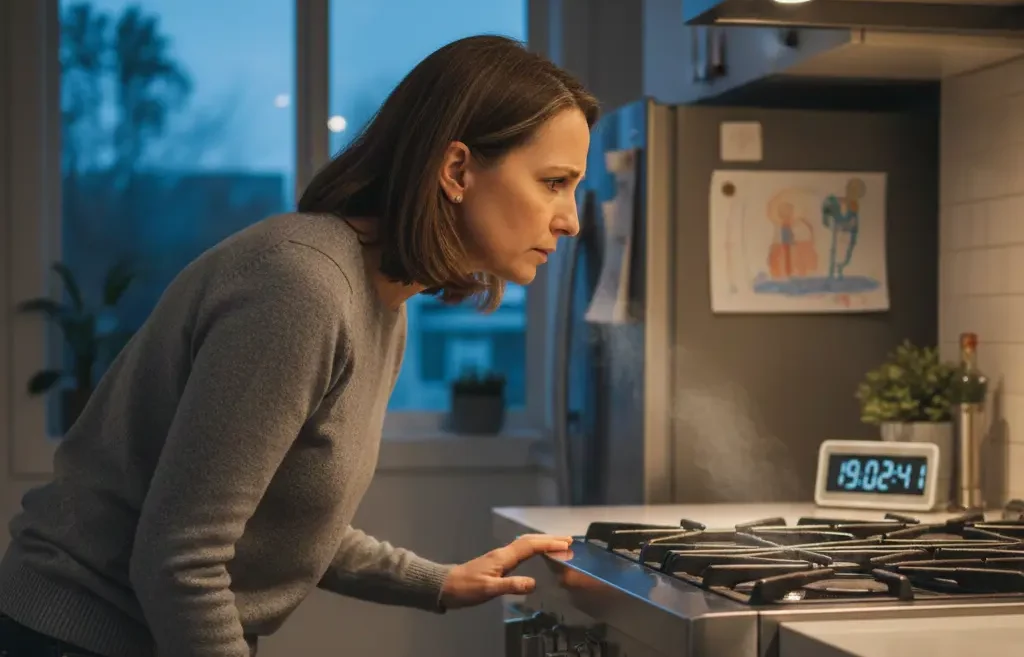
Smelling gas near a utility room can make your brain do two unhelpful things at once: panic—or rationalize it away as “probably nothing.” The safest response is neither. Treat the smell as real until proven otherwise, take a few simple steps that reduce risk, and get the right help involved quickly.
This guide, Gas Smell in the House: What to Do and Who to Call, walks you through what to do in the first few minutes, when you should leave immediately, and who to call first so the issue gets handled fast and correctly—especially when the smell seems strongest near a water heater, furnace, or other utility-room appliance.
First, treat it as real until proven otherwise
A gas odor is one of the few home “symptoms” that deserves immediate respect. You don’t need to be certain where it’s coming from to take safe action. In fact, trying to become certain—by lingering, searching, or “testing” things—can be what turns a manageable situation into a dangerous one.
A practical mindset that helps in the moment:
- Assume it’s real until a qualified responder confirms otherwise.
- Focus on reducing risk (people safe, ignition sources avoided, professionals contacted).
- Save diagnosis for the pros. Your job is the first response, not the investigation.
If the smell turns out to be minor or not a gas leak at all, you will still be glad you handled it with a clear, safety-first process. If it is a leak, you’ll be glad you didn’t lose time.
What to do in the first few minutes (a step-by-step response)
When stress spikes, it helps to follow a script. Think of this as a short sequence that prioritizes safety and speed.
Get people and pets to a safer spot
Start by moving everyone away from the area where the smell is strongest.
- If the odor is localized (for example, you smell it only right at the utility room door), you can begin by getting people and pets out of that area and closer to an exit.
- If the smell is noticeable in multiple rooms, or you’re not sure how widespread it is, shift immediately toward leaving the home.
This isn’t the moment to “finish the shower,” “grab a few things,” or “check one more room.” Your goal is to reduce exposure time and avoid having anyone near a potential ignition source.
Avoid actions that can ignite gas
In a possible gas leak situation, avoid anything that could create a spark or open flame.
Do not:
- Flip light switches on or off.
- Use lighters, matches, candles, or anything with an open flame.
- Turn appliances on/off or try to “test” the water heater, furnace, stove, or dryer.
- Run fans or powered ventilation equipment if it requires plugging in or switching something on.
If you’re already holding a phone, don’t stand in the utility room making calls while you decide what to do. Step away from the area first.
A simple rule: if you’re close to the suspected source, your best move is to leave the space, not to operate anything inside it.
Ventilation, if it can be done safely
Fresh air can help reduce odor in some situations, but ventilation should never become an excuse to linger near the smell.
Safe, simple ventilation can look like:
- If you’re already on the way out and a door or window is easy to open without turning on lights or moving deep into the home, you can open it as you leave.
- If opening a window means walking back toward the utility room or searching for the “best” window to open, skip it and prioritize leaving.
Ventilation is optional. Getting people out and making the right call is not.
When you should leave immediately (evacuation cues homeowners can recognize)
If you’re debating “Do we need to evacuate?” it helps to have clear cues that don’t require technical thresholds or special tools. If any of the following are true, treat it as a leave-now situation and contact the appropriate emergency/utility help from a safe location.
- The smell is strong or unmistakable.
- The smell does not fade quickly after you move away from the utility room.
- The smell seems to be spreading to multiple rooms.
- You hear a hissing sound near an appliance connection or gas line area (without attempting to locate it precisely).
- Anyone feels unwell (such as dizziness, headache, nausea, or unusual lightheadedness). You don’t need to diagnose symptoms—just leave and get help.
In practice, many homeowners hesitate because the smell is “faint.” But faint does not automatically mean safe. It can mean the leak is small, intermittent, or happening in a space where it’s not obvious. If you’re unsure, choose the safer path: leave and call.
Also, consider what “leave” means in real life:
- Get everyone outside and away from the home.
- Don’t gather on the porch right next to the utility room wall or near gas meter areas.
- Avoid re-entering “just to check” once you’re out.
If you need to alert a neighbor or family member, do it from outside.
Who to call first (and why it depends on what you’re noticing)
One reason gas smell situations feel paralyzing is that homeowners aren’t sure who “owns” the problem: the gas utility, a plumber, HVAC, an appliance installer, or emergency services. The fastest path is to separate urgent response from repair planning.
Here’s a practical way to think about it.
If the smell is strong, persistent, spreading, or you’re unsure: start with urgent response.
- If you believe there is an immediate hazard, emergency services may be appropriate.
- Your gas utility provider often has an emergency line for suspected leaks and can guide next steps.
- The goal at this stage is safety and stabilization—confirming whether there is a leak and making the area safe.
If the immediate risk is cleared or ruled out: move to repair planning.
Once you’re told the situation is safe (or the smell is confirmed as non-emergency), a licensed plumber is typically the right professional to diagnose and repair gas line issues and appliance connections—especially around utility rooms and water heaters. In some cases, HVAC or appliance specialists may be involved depending on what the inspection reveals, but you don’t have to solve that routing yourself upfront. A qualified plumber can identify whether the issue is on the gas piping side, the appliance connection side, or related to a recent install.
A helpful mental model:
- Utility/emergency help addresses “Is this dangerous right now?”
- A plumber addresses “What caused it, what needs repair, and how do we prevent it from recurring?”
If you’re in the moment and don’t know which bucket you’re in, assume it’s the first bucket. It’s always easier to step down from an emergency response than to scramble upward after time has been lost.
Gas smell near a water heater or utility room: common causes (without guessing)
Utility rooms concentrate a lot of the usual suspects: gas appliances, shutoff valves, fittings, flex connectors, and sometimes recent service activity. That’s why “I smell it near the water heater” is such a common trigger.
The key word here is “common,” not “certain.” You should not try to pinpoint the cause yourself. But understanding the typical categories can help you communicate clearly when you call and avoid getting steered into the wrong kind of appointment.
Appliance connection or flex line issues
Many gas appliances are connected using an approved flexible connector (often called a flex line). Over time—or after an appliance is moved, replaced, or serviced—connections can loosen or be stressed.
What homeowners often observe:
- The smell seems strongest right near the appliance.
- The smell may come and go, especially if the appliance cycles on and off.
- The smell may appear after a new installation, replacement, or maintenance visit.
Do not try to tighten connections yourself. Gas work should be handled by qualified professionals with the right testing process.
Shutoff valve, fittings, or nearby joints
Gas shutoff valves and fittings are another frequent area of concern in utility rooms because they’re often located close to appliances and get handled during service work.
A few realities that matter:
- A very small leak at a fitting can create noticeable odor in a confined area.
- A problem at a joint may not be visible.
- The “strongest smell” can be misleading because odors move and collect based on airflow.
This is why a proper inspection focuses on detection methods and confirmation, not guesswork.
Recent installation or service work
A significant number of gas odor calls happen shortly after:
- A new water heater, furnace, stove, or dryer is installed.
- An appliance is moved for flooring, renovation, or cleaning.
- A utility room is modified (new valves, new lines, new connectors).
- Work is performed that required disconnecting/reconnecting an appliance.
In these scenarios, the most important thing is not to blame anyone or assume incompetence—it’s to treat the smell as a real signal and request a proper post-service check. Small connection issues can happen even with good technicians, and the correct response is verification and correction.
The misconception that causes delays
Two misconceptions show up constantly in gas smell situations—and they both create dangerous delays.
Misconception 1: “It’s faint, so it’s not dangerous.”
Faint can mean many things: a small leak, an intermittent leak, a leak in a space that isn’t ventilated well, or even an odor source that’s not gas at all. The problem is that you don’t know which one it is in the moment. Faint isn’t a reliable safety indicator. The reliable indicator is this: you noticed a gas smell, and you’re uncertain. That’s enough to choose the safety-first play.
Misconception 2: “I should find the leak myself before I call.”
Homeowners often feel they need to provide a precise location to avoid “wasting someone’s time.” That instinct makes sense in normal home repairs. It does not apply here. The best contribution you can make is a clear description of what you noticed:
- Where you first noticed the smell (utility room, near water heater, near furnace).
- Whether it’s strong or faint.
- Whether it is persistent or comes and goes.
- Whether there was recent installation or service work.
That information helps professionals respond appropriately without you having to risk prolonged investigation.
The quickest safe path is: act, leave if needed, call, and let the inspection confirm the source.
What a professional inspection should include (so you know it’s being handled properly)
Once immediate risk is addressed and you’re working with a professional, it helps to know what “good” looks like—so you can feel confident the situation is being handled thoroughly.
A professional inspection should focus on confirmation, not assumptions.
At a high level, you should expect:
- A structured leak detection approach rather than a quick glance.
- A clear check of key connection points and fittings in the area you flagged.
- Verification steps after any adjustment or repair—so you’re not left wondering whether it’s truly resolved.
You don’t need to direct the technician’s process, but you can ask a few simple questions to ensure you’re getting a real inspection:
- “Can you confirm where the odor is coming from?”
- “What did you check to rule out other locations?”
- “After the repair, how do we verify it’s resolved?”
You can also ask for documentation in plain language—especially if the smell appeared after recent install work or if you anticipate warranty or coordination issues.
A calm, professional contractor should welcome those questions. This is one of those home issues where clarity builds trust.
Next steps after the immediate risk is handled (repair planning without downtime)
After the “right now” moment passes, homeowners often hit a second wave of stress: What happens next? Who coordinates what? How do we make sure this doesn’t happen again?
This is where repair planning matters—and where a diagnosis-first approach saves you time and anxiety.
What to ask for in a repair visit
If you’re scheduling a repair assessment (or a follow-up after a utility response), request an appointment that is focused on diagnosis and verification, not just a quick patch. Practical requests include:
- A clear explanation of the suspected source and what confirms it.
- A scope that covers the likely connection points in the utility room (not just one visible fitting).
- Retesting/verification after any work is performed.
- A plan for any recommended replacement or upgrade work (if the issue involves an aging connector, valve, or appliance connection).
If it’s appliance-related: coordination without the blame game
Sometimes an inspection points to an appliance-specific issue rather than the home’s gas piping—especially if a smell appears near a furnace, water heater, dryer, or stove. In those cases, the right next step may involve coordination between a plumber and an HVAC or appliance technician.
You don’t need to referee that technical boundary. Your goal is simply:
- Ensure the immediate risk is addressed.
- Ensure the right trade is engaged for the confirmed issue.
- Ensure the final result is verified and documented.
If you recently had an appliance installed or serviced, it’s reasonable to request a post-install inspection and clear confirmation that connections are sound. Avoid DIY “fixes” in the meantime.
Schedule a gas line inspection/repair assessment
If you noticed a gas smell near your utility room, the safest next step is a clear inspection once the immediate risk is addressed. A licensed plumber can evaluate gas lines, fittings, and appliance connections and recommend the right repair plan—based on evidence, not guessing.
If you’re in the Atlanta-area markets served by Daniel’s Plumbing Services, you can schedule an appointment for a gas line inspection and repair assessment so you can move from uncertainty to a documented, safety-first plan.
FAQ
- I smell gas in my house—what should I do first?
Move people and pets away from the area where the smell is strongest, avoid anything that could create a spark or flame, and be ready to leave the home if the odor is strong, spreading, or you’re unsure. Treat it as real until a qualified professional confirms otherwise. - Is a faint gas smell dangerous, or can it wait until morning?
A faint smell isn’t a reliable way to judge safety. If you smell gas and you’re unsure what it is, the safest approach is to treat it seriously and contact the appropriate emergency/utility help from a safe location. Avoid waiting simply because the odor seems mild. - Who do I call first for a gas leak: the utility company or a plumber?
If the smell is strong, persistent, spreading, or you feel uncertain about immediate safety, start with urgent response—often the gas utility’s emergency line and/or emergency services as appropriate. Once the immediate risk is cleared, a licensed plumber is typically the right professional to diagnose and repair gas line or appliance connection issues. - What if the gas smell is near my water heater or utility room?
Utility rooms are a common place to notice gas odors because they often contain gas appliances, shutoff valves, and multiple fittings. Don’t try to locate the exact source yourself. Follow safety steps, leave if needed, and request a professional inspection that checks appliance connections and nearby fittings. - How do I shut off gas to the house safely?
If you’re not completely sure where the correct shutoff is or how to operate it safely, prioritize leaving and calling the utility/emergency help first. Gas shutoffs can vary by home setup, and the safest approach is to get guidance from professionals rather than experimenting in the moment. - Should I request a gas line inspection after a new appliance install?
If an appliance was recently installed, replaced, or serviced—especially if you notice any odor afterward—it’s reasonable to request a post-install inspection to confirm connections are sound and everything is operating safely. This can provide peace of mind and documentation if needed.
Schedule a gas line inspection / repair assessment (safety-first, diagnosis-first).
If you noticed a gas smell near your utility room, the safest next step is a clear inspection once the immediate risk is addressed. We can evaluate gas lines, fittings, and appliance connections and recommend the right repair plan with documentation you can trust. Schedule an appointment with Daniel’s Plumbing Services for a gas line inspection and repair assessment.
Request post-install gas line inspection (after appliance install/service).
If the smell started after a new appliance install or recent service work, request an inspection that confirms connections are sound and provides a clear, documented path forward.
RELATED LINKS:
Connecticut State Government — What to Do If You Smell Natural Gas