
A water test report is supposed to bring clarity, but for most homeowners it creates a new problem: numbers, abbreviations, and a dozen “solutions” that all claim to be the answer. If you pick a system based on a single contaminant—or a sales pitch—you can spend a lot and still hate your water. This guide shows how to interpret your report at a decision level, what questions actually matter (flow rate, whole-home vs point-of-use, maintenance), and how to choose a setup that fits your home.
If you’ve been searching “choose water filter after water test,” you’re probably not looking for a chemistry lesson. You’re looking for a way to turn your report into a plan you can live with: water that tastes better, looks clearer, and doesn’t require you to become a part-time filter technician.
Your water test report doesn’t tell you what to buy—this does
Most test reports do one thing well: they list what was measured. What they don’t do well is tell you what category of solution matches your goals.
That’s why homeowners end up with a cart full of “stages” and a garage full of replacement cartridges—without a clear improvement.
A better approach is to treat your report like an input, not a verdict. The system you choose should match:
- What you’re trying to improve (taste, odor, visible particles, staining, “hard water” feel)
- Where you want the improvement (whole house vs one sink)
- How your home actually uses water (flow rate and peak demand)
- What you’re realistically willing to maintain
You can make a smart decision without obsessing over every number. The goal is to connect your results to the right type of equipment, sized for your household, with a maintenance plan you’ll follow.
Start with this decision checklist (use your report as the input)
If you have your report in hand, walk through this checklist in order. It’s designed to keep you from buying the wrong system based on one scary-sounding line item—or one persuasive salesperson.
1) Target contaminants you actually need to address
Circle the items that match what you experience at home. For example:
- You notice a strong taste or odor (especially “city water” smell)
- You see particles, cloudiness, or sediment
- You see staining, scale buildup, or have “hard water” symptoms
Your report may list several items. That doesn’t always mean you need a complex system for everything. Start with the problems you’re trying to solve.
2) Whole-home vs point-of-use: what problem are you solving?
Ask: “Do I want all water in the house improved—or just drinking and cooking water?”
- Whole-home filtration is about protecting the entire plumbing system and improving water at every faucet and shower.
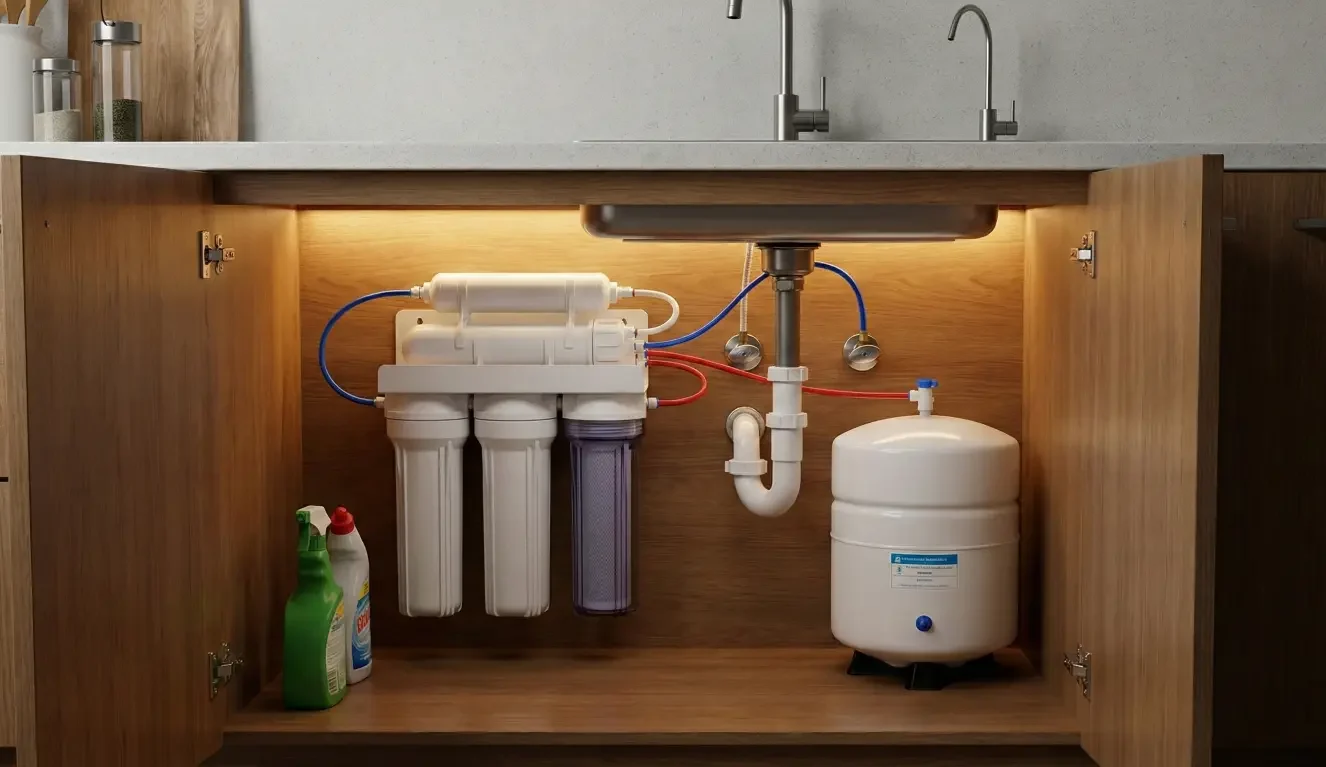
- Point-of-use filtration (like under-sink) is targeted and often makes sense when your main concern is drinking water.
There’s no universal right answer. It depends on your goals and budget.
3) Flow rate + peak demand: can the system keep up with your house?
A whole-house filter that can’t keep up with your home can create frustration—weak shower pressure, inconsistent flow, or a system that feels like it “chokes” when multiple fixtures run.
You don’t need to be an engineer, but you do need to think about peak demand: two showers plus a dishwasher, or a busy morning with multiple bathrooms in use.
4) Maintenance reality: what will you actually maintain?
Some systems are simple; some are high-touch. Before you buy, be honest:
- Will you change cartridges on schedule?
- Do you want reminders and easy access—or are you okay with a more involved setup?
- Do you want professional service support?
A system that’s perfect on paper but neglected in real life won’t deliver the outcome you’re paying for.
5) Budget with a “total ownership” mindset (without numbers)
Instead of asking “what’s the cheapest system,” ask:
- What does it take to keep it working?
- How often are filters replaced?
- Is maintenance easy or complicated?
A lower-cost system with constant cartridge changes can feel more expensive over time than a slightly higher-quality setup you can maintain easily.
Step 1 — Match the system to the problem: taste/odor, particles, or “hardness” symptoms
This is where most bad purchases happen: people buy a system because it’s popular, not because it fits the problem they actually have.
Use your report and your lived experience to decide which bucket you’re in.
Chlorine taste/odor and general “city water” issues
If your biggest complaint is taste and odor—especially a chlorine smell—many systems designed for taste/odor improvement focus on carbon-based filtration.
The practical question isn’t “Is carbon good?” The question is:
- Is your problem mainly taste/odor at multiple faucets and showers, or just drinking water?
If you want showers, laundry, and sink water to feel and smell better, that leans toward whole-home filtration. If it’s mainly drinking water, point-of-use can be a practical first step.
Sediment and visible particles
If you see particles, cloudiness, or grit—especially after storms or utility work—a basic prefilter can help reduce particles and protect other filtration stages.
Think of sediment filtration as protection as much as “water improvement.” It can help:
- Reduce visible particles
- Protect more sensitive filters downstream
- Reduce buildup in fixtures and appliances
If your report shows sediment-related concerns, or you see particles at home, don’t skip this step. Many “fancy” systems perform better when they’re protected by the right prefiltration.
Hard water confusion (filter vs softener) and “which comes first”
This is one of the most common points of confusion after a water test: people hear “filter” and “softener” used interchangeably, but they aren’t the same.
In simple terms:
- A filter targets certain contaminants and can improve taste/odor and reduce particles.
- A softener addresses hard water symptoms like scale buildup, spots on dishes, and reduced soap performance.
If you’re seeing hard water symptoms, a softener may be part of the solution. But it doesn’t automatically replace filtration, and filtration doesn’t automatically solve hardness.
As for “filter vs softener which first,” the best order varies. An installer can recommend a layout based on your water and equipment. The key takeaway is not to assume one device replaces the other. They solve different problems.
Step 2 — Use your report to prioritize: what matters most vs what can wait
After a water test, it’s easy to think you need to solve everything at once. That’s how homeowners end up overwhelmed and overspending.
Instead, prioritize based on:
- What affects your daily experience the most (taste, odor, visible sediment, staining)
- What affects your plumbing and appliances (buildup, particles, system protection)
- What’s easiest to maintain and sustain
This is where “buy everything” becomes a trap. More stages isn’t automatically better, especially if it creates a maintenance burden you won’t keep up with.
When point-of-use solutions make sense:
- You want better drinking and cooking water first
- You’re not ready to commit to whole-home equipment
- You want a targeted improvement while you plan a broader system
When whole-home makes sense:
- You want improvement at showers and sinks, not just the kitchen faucet
- You want plumbing protection and consistent water experience throughout the house
- You’re ready to size the system properly and maintain it
If you’re unsure, a consultative approach can help: take your report, clarify goals, and build a staged plan that makes sense for your home.
Step 3 — Ask the flow-rate questions before you pick a whole-house system
Whole-house filtration looks straightforward online until you hit the flow rate questions. This is a good thing. It forces you to match a system to your home’s real use.
What flow rate means in real life:
- How well water flows when multiple fixtures run
- Whether showers feel normal during peak usage
- Whether appliances fill and run as expected
How undersizing shows up:
- Noticeable drop in pressure during simultaneous use
- A “thin” shower experience when a second bathroom runs
- Frustration that feels like a plumbing issue, even though it’s a sizing issue
A system should be sized for how your household uses water, especially during simultaneous use. If you’re comparing whole-home systems online, don’t treat flow capacity as a minor detail. It’s one of the main reasons homeowners regret their purchase.
If you’re not sure what to choose, write down:
- How many bathrooms you have
- How many people live in the home
- Typical peak times (morning showers, evening laundry/dishwasher use)
You don’t need perfect numbers—just a realistic picture.
Step 4 — Maintenance and upkeep: choose what you’ll actually maintain
A filtration setup is only as good as its upkeep. If it’s too complicated or too inconvenient, it will be ignored—and performance will quietly decline.
Cartridge change frequency, access, and reminders
Before buying any system, ask:
- How often do filters need to be changed (in general terms)?
- Can I access the filter easily where it’s installed?
- Do I want reminders or professional service support?
If access is difficult—tight spaces, awkward plumbing layout, or a location you never visit—maintenance becomes a chronic issue.
Softener upkeep basics (high-level)
If a softener is part of the plan, maintenance isn’t necessarily complicated, but it is real. Many homeowners prefer to understand the basics upfront so it doesn’t become a surprise.
Keep it simple:
- Know what it needs to operate
- Know what “normal” upkeep looks like
- Know who to call if performance seems off
When professional service is the better fit
If you travel often, manage a busy household, or simply don’t want one more thing to track, professional support can be the best decision—even if you’re capable of doing it yourself.
The best system is the one that stays maintained. If you know you won’t keep up with it, choosing a simpler setup or scheduling service is a smarter move than buying the most complex system available.
The misconception that leads to bad purchases
Two misconceptions show up constantly after water tests:
- “More stages = better water.”
- “One system fixes everything.”
More stages can mean more maintenance, more replacement parts, and more ways for performance to degrade if upkeep slips. And “one system fixes everything” is rarely true because homes have different goals, water sources, usage patterns, and tolerance for maintenance.
The right solution depends on:
- Your goals (taste, odor, particles, hardness symptoms)
- Your test results (as a starting point, not a marketing trigger)
- Your house usage (flow rate and peak demand)
- Your maintenance reality
If you keep those four in front of you, it’s much harder to get talked into the wrong system.
Common failure modes after a water test (and how to avoid them)
Here are the most common ways homeowners end up unhappy after buying a system—plus how to avoid each one.
Buying equipment before confirming what the report indicates
A report can prompt action, but it doesn’t automatically dictate equipment. If you’re not sure what a result means for equipment choice, ask for interpretation rather than guessing.
Installing filter/softener in the wrong sequence
Sequencing depends on goals and system design. Don’t let a quick internet rule decide your plumbing layout. A consultative recommendation should explain the “why,” not just the “what.”
Ignoring plumbing layout and space needs
Whole-home systems need physical space and the right install location. If the plan doesn’t fit your home’s layout, it becomes expensive and messy after the fact.
Overlooking prefiltration and protection
Skipping a basic prefilter can make other filtration stages work harder than they should. If you have sediment concerns—on your report or in your lived experience—address that early.
Next steps: bring your report and get a consultative recommendation
If you have a water test report in hand, the fastest path forward is to translate it into an equipment plan that matches your goals, your home’s flow needs, and your maintenance reality.
What to bring:
- Your water test report (the full document, not just a screenshot)
- Your top 1–2 goals (taste/odor, sediment, hardness symptoms, staining, etc.)
- Household basics (number of people, bathrooms, and peak usage times)
What a good recommendation includes:
- A clear match between your goals/results and equipment type (filter vs softener, whole-home vs point-of-use)
- Proper sizing based on household demand
- A maintenance plan you can realistically follow
If you have a water test report in hand, we can help translate it into the right filtration plan—sized for your home and your daily water use. We’ll focus on the contaminants and symptoms you actually want to solve, then recommend a setup you can maintain. Schedule an appointment with Daniel’s Plumbing Services to review your report and plan the right installation.
FAQ
1) I have water test results—what filter do I actually need?
Test results are a starting point, but the right filter depends on what you’re trying to improve and where you need improvement. Start by identifying your goals (taste/odor, sediment, hardness symptoms), then choose whole-home vs point-of-use, confirm flow needs, and pick a system you’ll maintain.
2) Do I need a whole-house filter or just an under-sink filter?
If you want improvement at showers and every faucet, whole-house filtration is often the better fit. If your main concern is drinking and cooking water, an under-sink option can be a practical first step. The right choice depends on your goals and household use.
3) What’s the difference between a filter and a water softener?
A filter is designed to address certain contaminants and can improve taste/odor and reduce particles. A softener is focused on hard water symptoms like scale buildup and reduced soap performance. They solve different problems, and some homes benefit from both.
4) Should a filter go before or after a water softener?
The best order varies based on your goals and system design. An installer can recommend a layout based on your water test results, plumbing configuration, and what you’re trying to solve. Avoid relying on a one-size-fits-all rule.
5) How do I choose the right flow rate for a whole-house filter?
Choose a system sized for your household’s peak demand—when multiple showers and appliances may run at once. If a system is undersized, you may notice pressure drops or inconsistent performance during busy times.
6) What questions should I ask before buying a water filtration system?
Ask what the system is targeting, whether it’s whole-home or point-of-use, how it should be sized for your household flow needs, what maintenance looks like, and what the installation requires in terms of space and plumbing layout.
If you have a water test report in hand, we can help translate it into the right filtration plan—sized for your home and your daily water use.
We’ll focus on the contaminants and symptoms you actually want to solve, then recommend a setup you can maintain.
Schedule an appointment with Daniel’s Plumbing Services to review your report and plan the right installation.