
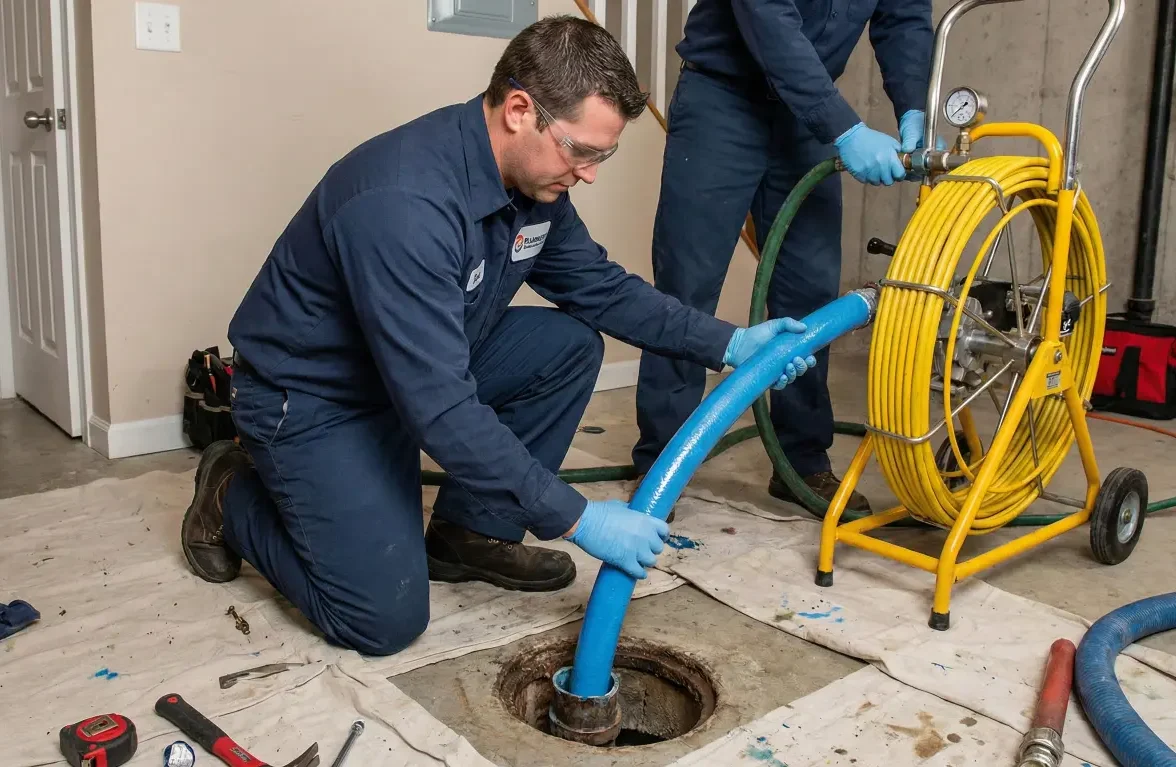
If the same line clogs every month, it stops being a “bad luck” issue and becomes an operations problem: tenant complaints, emergency callouts, and avoidable downtime. The temptation is to either keep paying for cleanings—or jump straight to an expensive fix without proof. This guide shows how to separate “needs cleaning” from “needs rehabilitation,” and what evidence to request before approving either.
This is written for the person who has to own the decision: the property or facility manager juggling tickets, vendor recommendations, and budget approvals. You don’t need a crash course in plumbing jargon. You need a defensible framework that reduces repeat incidents and keeps you from paying twice.
So, what’s the best option, pipe lining or cleaning?
When the same line clogs every month, it’s rarely “random”
A monthly clog cycle is a pattern, not a mystery. Something is repeatedly re-forming or catching debris in the same segment of pipe. The result is predictable: you authorize a cleaning, the system behaves for a short window, and then you’re back to after-hours calls and unhappy occupants.
The real problem isn’t just the blockage. It’s the operational cost of recurrence:
- Repeated dispatches and invoices that are hard to forecast
- Tenant disruption and reputational drag (“this always happens here”)
- Pressure from ownership to “fix it permanently” without overspending
This is where managers often get pushed into false choices. Cleaning sounds like “maintenance,” lining sounds like “capital.” But the right answer depends on what the pipe is doing between cleanings—and whether you have evidence that the line is structurally prone to re-blocking.
A useful distinction:
- Temporary relief clears what’s in the line today.
- Addressing a recurring cause targets why the line keeps re-blocking in the same place.
Your job is to determine which one you’re dealing with before you approve the next scope.
A fast triage: what the clog pattern is telling you
You can learn a lot from three categories of clues: timeline, location, and triggers. These don’t replace an inspection, but they help you ask better questions and avoid vague recommendations.
Timeline clues
Start with “how soon after the last cleaning did symptoms return?” and “is the cycle getting tighter?”
- If the line clogs again within a short window after a cleaning, that can suggest the cleaning didn’t fully clear the restriction—or that there’s a defect that quickly catches debris again.
- If the interval between clogs is shrinking (every six months → every two months → monthly), that often signals the underlying condition is worsening or the line is accumulating material faster than it can pass.
Document this as simply as possible: date of service, what was done (snaking, jetting, etc.), and when symptoms returned. That timeline becomes your evidence trail for ownership.
Location clues
Next, confirm whether the issue is truly “the same line” and how consistent the symptoms are.
- Is it always the same stack, branch, unit line, or main line?
- Are backups showing up at the same fixtures or floor levels?
- Do multiple areas back up at once, or is it isolated?
Location consistency matters because it separates “random usage problems” from “repeat trouble spot.” If the same segment is implicated every time, your next step should be proof-driven rather than guess-driven.
Trigger clues
Finally, look at what tends to precede the event.
- Does it happen after peak usage periods (weekends, move-ins, events)?
- Does it correlate with heavy rain (especially if you’re dealing with storm/roof drains or older infrastructure where systems interact)?
- Does it align with a specific tenant type (restaurant grease, hair-heavy usage, high-occupancy turnover)?
This isn’t about blaming tenants. It’s about identifying whether the problem behaves like a usage-driven accumulation that a proper cleaning program can control—or a condition-driven recurrence that will keep beating your maintenance schedule.
Once you’ve captured timeline, location, and triggers, you’re ready for the first decision: is cleaning still a reasonable next step, and if so, how do you make sure it’s not a “light pass”?
When cleaning is often the right call (and how to make it actually work)
Cleaning is often the right call when the problem is primarily obstruction and buildup—not a structural defect. The trap is approving “another cleaning” without improving scope or documentation. If you keep repeating the same intervention, you shouldn’t be surprised by the same outcome.
Cleaning may be the right next step when:
- The line responds well to cleaning and stays clear for a meaningful period
- The recurrence appears tied to usage patterns (heavy load periods, certain waste streams)
- There’s no evidence yet that the pipe is damaged or deformed in a way that traps debris
If you’re going to clean again, the goal is not just to clear today’s blockage. The goal is to confirm whether the line can be restored to stable flow with a thorough cleaning—or whether it quickly re-blocks because something inside the pipe is still catching material.
What to request so it’s not a “light pass” that fails again:
- A clear description of the method used (snaking vs jetting vs other approaches) and why it was selected
- The approximate location of the restriction (where they met resistance, where flow restored)
- What came out of the line (grease, roots, scale, wipes, sediment) in plain language
- Whether the technician believes the restriction was fully cleared or partially relieved
- A recommendation for next steps if symptoms return, including whether a camera inspection is warranted
If you’re managing recurring incidents, ask for a service note that you can share internally. “Cleared line” is not useful. “Cleared grease buildup at X location; heavy re-accumulation likely if usage continues; recommend camera if recurrence within Y window” is useful—without needing hard numbers or promises.
If drain cleaning keeps failing, the question isn’t “Is cleaning bad?” The question is “Are we cleaning thoroughly enough, or are we cleaning the symptom while a defect keeps re-forming the blockage?”
Signs the line may need more than cleaning
If you’ve been stuck in monthly recurrence, it’s reasonable to consider that cleaning alone is not solving the true cause. Several conditions can make a line prone to repeat blockages, and an inspection is needed to confirm which one applies. But you don’t have to wait for a catastrophe to start making evidence-based decisions.
Recurrence despite “proper” cleanings
A manager’s biggest pain point is paying for “the same job” repeatedly. Before concluding the line needs rehabilitation, clarify whether prior cleanings were truly comparable and complete.
A “proper” cleaning, in practical terms, should:
- Clear the restriction enough that normal flow returns reliably
- Address the suspected material in the line (not just punch a hole through it)
- Include documentation of where the problem was and what was found
If you’ve authorized thorough cleanings and the line still clogs on a predictable monthly rhythm, that’s a strong signal that something is re-creating the restriction quickly.
This is where “drain cleaning keeps failing why” becomes less of a question and more of a statement: the system behavior is telling you the line is either not being fully restored or is structurally primed to re-block.
Likely culprits: what can make a line prone to repeat clogs
Without a camera, you can’t confirm the cause. But it helps to understand the categories of issues that commonly lead to recurring clogs in a building:
- Root intrusion: Roots can enter through joints or openings and create a recurring catch point.
- Offsets or misalignments: A section that isn’t aligned can create a lip that catches solids.
- Cracks or deterioration: Damage can roughen the interior surface and snag debris.
- Scale buildup: Mineral buildup can narrow the pipe and reduce flow capacity over time.
- Sagging sections: A belly or low spot can hold water and solids, encouraging re-accumulation.
These don’t all point to the same solution. Some are cleaning-managed. Some indicate the pipe needs rehabilitation. The point is that recurring clogs often have a mechanical reason that won’t disappear just because you schedule the same service more often.
Why the same obstruction keeps returning
Recurring clogs usually come down to one of two mechanisms:
- The line keeps generating or receiving the same material, and it re-accumulates faster than your maintenance can remove it. Think of a recurring buildup situation: the pipe is “functional,” but the operating conditions produce consistent deposits.
- The line has a repeat catch point, and even normal debris loads snag at the same location. In this case, the system isn’t just dirty—it’s structurally biased toward blockage.
Both mechanisms can look identical from the outside (backups, slow drains, tenant complaints). The difference is what you can prove—and what evidence you need before approving something like pipe lining.
The camera inspection checkpoint: what to ask for before approving pipe lining
If you’re debating pipe lining or cleaning, a camera inspection is often the decision checkpoint that turns anxiety into clarity. It provides direct visual evidence of what’s happening inside the line.
As a manager, you don’t need a technical dissertation. You need documentation that ties a recommendation to a finding.
What to request from a camera inspection report:
- Video or clear visual documentation of the problem area
- Location notes that identify where the finding is (distance markers, directional notes, and how it relates to access points)
- Condition summary in plain language: what was seen, how severe it appeared, and what it likely means operationally
- Context on whether the line is suitable for lining (not every segment is a good candidate; suitability depends on pipe condition and configuration)
How to connect findings to the next step:
- If the camera shows a line that is primarily obstructed with buildup but structurally intact, your next step may be a thorough cleaning plan and monitoring.
- If the camera shows a condition that repeatedly catches debris or compromises the pipe’s interior, rehabilitation may be appropriate—potentially including lining, depending on suitability.
This is also where “camera inspection before pipe lining” should be treated as a governance practice, not a buzzword. If you’re being asked to approve a higher-cost intervention, you should be able to say, “We saw evidence of X at location Y, and this scope addresses it.”
If a recommendation can’t be explained with evidence, it’s not ready for approval.
Pipe lining vs cleaning: a decision framework you can defend to ownership
Here’s a simple way to structure the decision so it’s defensible, repeatable, and easy to communicate.
Start with four columns: symptoms, evidence, recommended action, expected operational impact.
1) Symptoms
- Monthly clogs in the same line
- Slowdowns that precede backups
- Repeat tickets from the same area
- Trigger correlation (heavy use, rain events, tenant type)
2) Evidence
- Service history notes (dates, methods, outcomes)
- What material was found during cleanings
- Whether the restriction location is consistent
- Camera inspection findings (video + location notes)
3) Recommended action
- Cleaning-first when evidence suggests obstruction/buildup without a confirmed structural catch point
- Inspection-first when recurrence is tight and documentation is insufficient to decide
- Rehabilitation consideration (including lining, if suitable) when evidence indicates a recurring defect or condition that keeps re-forming the blockage
4) Expected operational impact
- Cleaning: faster, lower disruption, but may require ongoing maintenance if conditions persist
- Lining/rehabilitation: potentially fewer repeat incidents if the cause is a structural catch point, but requires proper scoping and confirmation of suitability
It helps to clarify what each approach is trying to solve:
- Cleaning solves obstruction. It removes what’s in the pipe now.
- Pipe lining aims to rehabilitate a problematic segment when the recurring cause is tied to pipe condition and configuration rather than just what’s flowing through it.
This is the heart of “pipe lining or cleaning” as a decision: not which service sounds better, but which one aligns with the evidence you have.
The misconception that causes wasted budgets
Managers often get trapped between two confident-sounding statements:
- “If it clogs a lot, it must need lining.”
- “If we clean more, it’ll stop.”
Both can be wrong—because neither is evidence.
Frequent clogs do not automatically mean lining is appropriate. If the recurrence is driven by usage conditions or incomplete cleanings, lining may be unnecessary and expensive.
And increasing cleaning frequency doesn’t automatically fix the problem if the line has a structural catch point. In that case, you’ll just pay more often for relief that doesn’t last.
The misconception isn’t about pipe lining or cleaning being “good” or “bad.” The misconception is believing you can choose the right scope without proof.
A better stance is simple: If the same line clogs every month, your next spend should buy you information, not just relief. That’s why service history documentation and camera inspection checkpoints matter.
Common failure modes (and how to avoid approving the wrong work)
When budgets get wasted, it’s usually not because the manager didn’t care. It’s because the process lacked checkpoints and documentation.
Here are common failure modes—and how to prevent them.
Approving lining without confirming the problem is in a line segment that can be lined.
Suitability depends on pipe condition and configuration. Before approving, you need confirmation that the segment is a good candidate and that the findings match what lining addresses.
How to avoid it: require camera evidence, location notes, and a clear explanation of why this scope fits the observed issue.
Accepting vague recommendations without documentation.
“Needs lining” isn’t a finding. “We observed repeated root intrusion and a condition that catches debris at this location” is a finding.
How to avoid it: ask for a written condition summary and any available visual evidence to attach to your approval request.
Failing to address upstream/downstream contributors.
Sometimes the issue isn’t confined to one spot. If you line a segment but ignore what’s feeding it or what’s happening adjacent to it, recurrence can continue and the scope won’t look like it “worked.”
How to avoid it: make sure the recommendation addresses the full recurrence pattern. Ask, “If we do this, what else could still cause the same symptom?”
Treating each incident like an isolated event.
If you authorize work without a running log, you lose your strongest tool: pattern recognition.
How to avoid it: maintain a simple recurrence tracker (dates, method, area impacted, notes on material found, downtime).
This isn’t bureaucracy. It’s how you stop making the same decision under pressure.
Next steps: stop the monthly clogs with the lowest-friction plan
The best next step depends on what your triage and documentation show. The goal is to reduce downtime and avoid unnecessary spend.
If you’re leaning cleaning-first, prioritize two things: scope quality and documentation.
- Schedule a thorough cleaning appropriate to the system and recurrence pattern.
- Request clear notes on what was found, where the restriction was, and whether the technician believes it was fully cleared.
- Set a practical trigger: if symptoms return within a short window, move to the camera checkpoint rather than repeating the same cleaning.
If you’re leaning lining-first, don’t jump straight to approval without proof.
- Request a camera inspection with documentation: video, location notes, condition summary.
- Confirm the recommendation is tied to observed findings and that the segment is suitable for rehabilitation.
- Plan sequencing to reduce downtime: access points, tenant communication, and realistic scheduling.
If the same line clogs every month, the fastest way to stop the cycle is to confirm the cause—not guess between another cleaning and a bigger fix. We can assess the recurrence pattern and, when appropriate, recommend a camera inspection so you have documentation for ownership. Schedule an appointment with Daniel’s Plumbing Services to get a clear, evidence-based path forward.
FAQ
1) Why does the same drain line keep clogging every month in a building?
When clogs return on a predictable cycle, it’s often a sign something is repeatedly re-forming or catching debris in the same part of the system. That can be driven by recurring buildup conditions, incomplete clearing during cleanings, or a pipe condition that acts like a “catch point.” Tracking timeline, location, and triggers helps narrow which category you’re in before approving the next scope.
2) If drain cleaning worked once, why does it keep failing now?
A cleaning can restore flow temporarily even if the underlying condition remains. If a cleaning doesn’t fully clear the restriction, symptoms can return quickly. And if the line has a condition that repeatedly traps debris, a clean line today can become a clogged line again under normal use. That’s why documentation and recurrence tracking matter.
3) When should a property manager request a camera inspection before approving more work?
A camera inspection is often the right checkpoint when the same line keeps clogging on a tight recurrence schedule (like monthly), when vendor recommendations conflict, or when you need documentation to justify a larger scope to ownership. It provides direct visual evidence of what’s happening inside the line and helps connect findings to the correct intervention.
4) What camera findings typically point toward pipe lining instead of another cleaning?
Camera findings that suggest a recurring structural or configuration issue may point toward rehabilitation rather than repeated cleaning. Examples can include conditions that repeatedly catch debris or compromise the pipe interior. The key is not the label of the finding but whether the evidence shows the problem will predictably re-form after cleaning.
5) Can roots cause recurring clogs, and does that always mean pipe lining?
Roots can contribute to recurring clogs by creating a repeat catch point, but it doesn’t automatically mean pipe lining is required. The right approach depends on what the camera shows, how extensive the intrusion is, and whether the affected segment is suitable for rehabilitation. An evidence-based recommendation should explain why lining is appropriate versus other options.
6) How do I justify pipe lining vs repeated cleanings to ownership?
Use a simple decision record: document the recurrence pattern (dates and downtime), what was found during cleanings, and the camera inspection findings with location notes and visuals. Then connect the recommended scope directly to the observed condition. Ownership typically responds well to a clear chain: symptom pattern → evidence → scoped solution → expected impact on recurrence and downtime.
If the same line clogs every month, the fastest way to stop the cycle is to confirm the cause—not guess between another cleaning and a bigger fix.
We can assess the recurrence pattern and, when appropriate, recommend a camera inspection so you have documentation for ownership.
Schedule an appointment with Daniel’s Plumbing Services to get a clear, evidence-based path forward.
RELATED LINKS:
U.S. Environmental Protection Agency SSO FAQ