
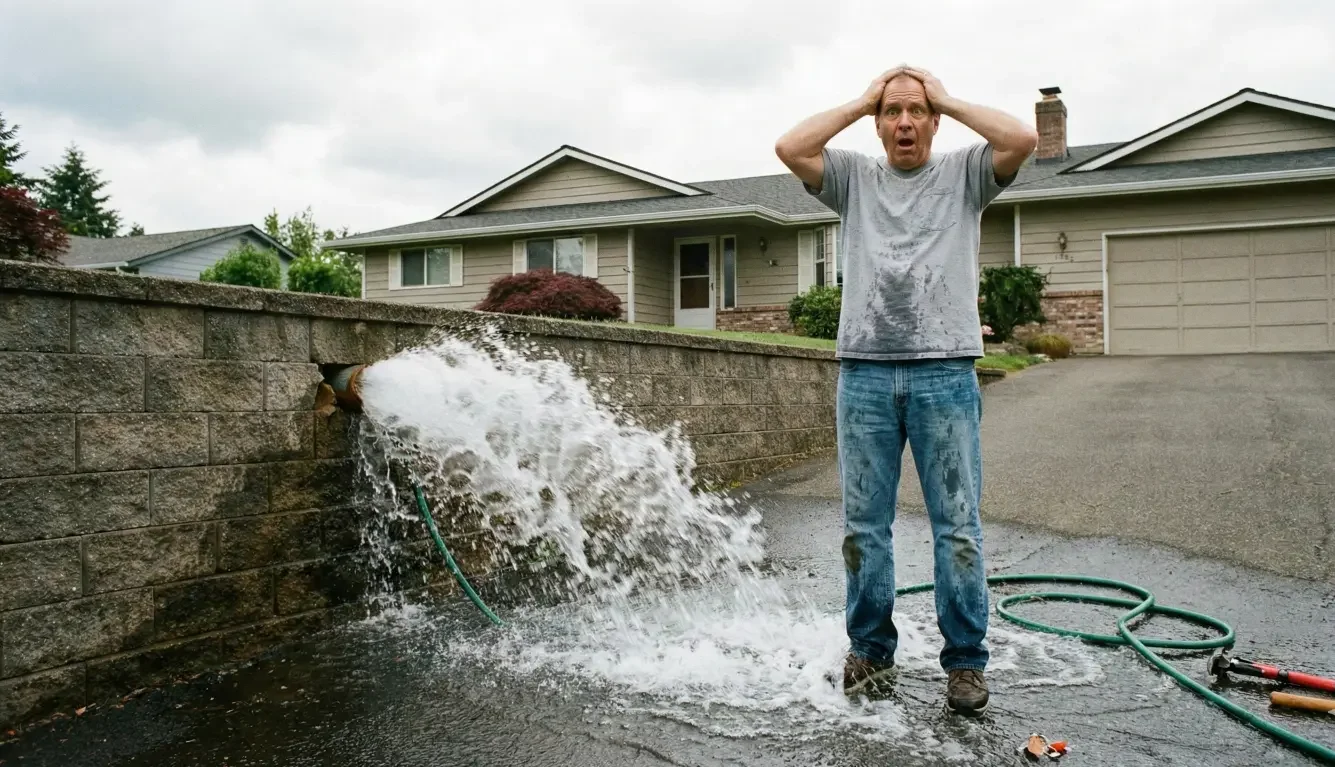
When water is spreading across the floor, your brain goes straight to panic—and that’s when people waste precious minutes searching for the wrong valve. The fastest way to limit damage is knowing which shutoff to use for the situation: the toilet valve, a fixture shutoff, or the main water shutoff for the whole house. This guide walks you through exactly what to do in the first few minutes, even if you’ve never touched a valve before.
The goal is simple: stop the water fast, turn things off safely, and then take the right after-shutoff steps so cleanup and repairs go smoother.
It’s very important to know how to shut off water main valve fast in an emergency.
First 60 seconds: what to do before you search for the main shutoff
In the first minute, you’re making a quick decision: can you stop the leak locally, or do you need to shut off water to the entire house?
Protect people first, then property
- If anyone could slip (kids, elderly family members), move them out of the area.
- If water is pooling near outlets, cords, or appliances, avoid stepping into it and don’t touch anything electrical. Your first job is to stop water flow, not to troubleshoot wiring.
Grab basics only if it doesn’t slow shutoff
If a towel or bucket is within arm’s reach, use it to keep water from spreading. But don’t spend time hunting for supplies. Two minutes of “getting ready” can be the difference between a small cleanup and soaked flooring.
Your fastest path is: locate the leak → pick the closest shutoff → turn it off gently but firmly.
The fastest shutoff depends on the leak location
Different leaks have different “best first moves.” If you pick the right shutoff, you can often stop damage in seconds.
Toilet leak or overflow
Common scenarios:
- The toilet is overflowing and the water is rising.
- Water is spraying or dripping behind the toilet from the supply line or connection.
Under-sink supply line leak
Common scenarios:
- Water is dripping or spraying under the kitchen or bathroom sink.
- A small connector or valve is leaking when the faucet is off.
Water heater area leak
This can be confusing because “water near the water heater” doesn’t always mean the heater is the source. It could be a nearby pipe, a valve, or a drain pan issue. Your priority is still to stop incoming water to whatever is leaking, then get help if the source isn’t obvious.
“I can’t tell where it’s coming from”
If you can’t find the exact leak quickly, or water is coming from a wall/ceiling, skip straight to the main shutoff. When visibility is poor, the whole-house shutoff is the safest way to stop damage and buy time.
How to shut off water to a toilet quickly
If the toilet is the problem, you can usually stop it without shutting down the whole house.
Locate the toilet stop valve
Look behind the toilet, low on the wall or sometimes coming up from the floor. You’ll usually see a small valve connected to a flexible supply line that goes into the toilet tank.
Turn direction and what “fully off” feels like
Most toilet stop valves shut off by turning clockwise (to the right). Turn it gently until it stops. You’re not trying to “crank it down”—you’re trying to close it.
A few practical notes:
- If the toilet is overflowing from the bowl, lifting the tank lid and pushing the flapper closed can slow the flow, but the shutoff valve is the real stop.
- If the tank keeps refilling, the water isn’t fully off yet. Keep turning gently until it stops, without forcing.
What to do if it won’t turn
If the valve doesn’t move easily, don’t force it hard. A stuck valve can break or leak more. If it won’t turn:
- Go to the next shutoff tier: the main water shutoff.
- Once the main is off, call a plumber to handle the stuck toilet valve and the original leak safely.
How to shut off water to a sink or appliance fast
Most sinks and many appliances have local shutoffs that are faster than the main—if they work.
Fixture shutoffs (under sinks, behind appliances)
Under most sinks, you’ll find two small shutoff valves:
- One for cold water
- One for hot water
If the leak is coming from a supply line or connection under the sink:
- Turn the relevant valve clockwise (right) until it stops.
- If you’re not sure which one is feeding the leak, you can shut off both.
For appliances:
- Washing machines often have hot and cold shutoffs behind the unit.
- Some refrigerators have a small shutoff for the ice maker line, often located under the sink or in the basement/crawlspace depending on how the line was run.
What to do if there are no local shutoffs or they don’t work
Not every home has accessible or functional shutoffs at every fixture. If:
- You can’t find a local valve fast, or
- You turn it and the leak continues, or
- The valve looks corroded or starts leaking when you touch it
…move to the main water shutoff. In an emergency, the goal is stopping flow—not proving you can fix it locally.
Where the main water shutoff usually is (and how to turn it off)
If water is rising or you can’t isolate the leak quickly, shutting off the main is the fastest “stop everything” move.
Common locations to check first
Main shutoffs vary by home type, but common places include:
- A garage wall near the front of the house
- A utility room or mechanical closet
- Near where the water line enters the home
- Near the water heater area (sometimes nearby, not always)
- Outside near the foundation on the side facing the street
- At or near the water meter (sometimes in a ground box near the street)
If you’ve never found it before, that’s normal. In an emergency, you’re scanning likely entry points and looking for the biggest valve tied to the main line.
Turning it off safely
Most main shutoff valves shut off by turning clockwise (right) until fully closed. Some homes have a lever-style valve that turns 90 degrees to shut off. The “safe” rule is the same either way: turn firmly, but don’t force a stuck valve so hard that you snap it or cause a worse leak.
What to do if the valve is stuck or unclear
If the main shutoff won’t move or you’re not sure you’ve found the right valve:
- If the leak is actively damaging the home, call for emergency plumbing help immediately.
- If you can safely access the meter area, the meter shutoff is often another option (location and access vary by neighborhood and home setup). If you’re unsure, it’s better to get professional help than to break something while rushing.
The main point: don’t let a stuck or confusing valve keep you from escalating. If you can’t stop the water quickly, treat it as urgent.
What to do right after the water is off
Once the water stops, it’s tempting to relax and walk away. This is where smart, calm next steps reduce damage and make repairs faster.
Confirm the leak stopped and relieve pressure safely (basic)
- Look at the leak source and confirm flow has stopped or slowed.
- Open a faucet briefly to relieve built-up pressure in the lines. This can reduce dripping while you wait for help. Don’t leave faucets running; you’re just relieving pressure.
Protect electrical safety zones (high-level)
If water reached areas near outlets, cords, appliances, or panels:
- Avoid standing water in those areas.
- Don’t touch electrical devices that were in contact with water.
If you’re worried about electrical safety, call a professional. This is not the moment for DIY electrical troubleshooting.
Start cleanup and ventilation basics
Water damage gets worse the longer materials stay wet. If it’s safe:
- Mop up standing water.
- Move rugs or towels to stop wicking.
- Increase airflow (fans, open windows if weather allows).
If water soaked into walls, cabinets, or ceilings, don’t assume it will “dry on its own.” Those situations often need professional assessment.
Document with photos for repair/records
Take quick photos or a short video of:
- The leak source
- The affected area
- The shutoff valve you used
- Any visible damage
This helps a plumber diagnose faster and helps you keep a clear record of what happened.
Common mistakes in emergency shutoffs
These mistakes are common because people are trying to act fast under stress. Knowing them helps you avoid losing time.
Turning off the wrong valve
People often shut off a nearby valve that isn’t connected to the leak. If water is still flowing, assume you haven’t isolated it yet and move up one level (fixture → main).
Cranking a stuck valve too hard
A stuck valve can break, and then you’ve added a second emergency. If the valve won’t turn with reasonable effort, stop and escalate rather than forcing.
Assuming the water is “off” when a tank is still refilling
Toilets and some appliances may continue to run briefly if a valve isn’t fully closed. If you still hear water movement, re-check that the shutoff is fully closed.
Waiting too long to escalate
If you can’t stop water quickly, every minute matters. If you’ve tried a local shutoff and it didn’t work, go to the main. If the main won’t close, call for emergency plumbing help right away.
When to call a plumber immediately (and what to tell them)
Some emergencies are “turn it off and then schedule service.” Others are “call now.”
Call immediately if:
- You can’t stop the water with any shutoff you can access
- You suspect a main line break (heavy flow, yard flooding, or water coming from places that don’t make sense)
- Water is near electrical panels/outlets and you can’t safely keep people away
- Water is coming through a ceiling or down a wall (source may be hidden and damage can spread)
- A shutoff valve failed, broke, or started leaking after you touched it
What to tell the plumber (it speeds everything up)
Have these details ready:
- Where the leak is (toilet, under sink, water heater area, ceiling)
- Whether you shut off a local valve or the main
- Whether the leak stopped completely or is still dripping
- Whether any valves were stuck or wouldn’t turn
- What areas were affected (flooring, cabinets, ceiling)
Clear information helps the plumber prioritize tools and parts and reduces time spent “finding the story.”
Prevention you can do later (so the next leak isn’t a crisis)
Once the immediate problem is resolved, a few simple steps can prevent the next leak from becoming a panic moment.
Locate and label shutoffs
When you’re calm:
- Find the main shutoff and label it.
- Find the toilet and under-sink shutoffs and label them.
A small tag or label can save minutes in an emergency.
Test valves periodically
Valves that never get used are the ones most likely to stick. A periodic gentle test can reveal problems before you need the valve in a crisis. (TBD: Confirm a safe interval recommendation; keep it general.)
Consider smart leak detection + auto shutoff for high-risk homes
If your home has:
- A history of leaks
- Finished basements
- Older plumbing
- Frequent travel or extended time away
…smart leak detection and auto shutoff can reduce risk. Some systems can monitor water flow and send alerts, and certain setups can automatically shut off water if abnormal flow is detected. It’s not a substitute for good plumbing, but it can be a strong layer of protection.
FAQ content
- How do I shut off water to the house fast?
If you can’t stop the leak at a toilet or fixture shutoff within moments, shut off the main water valve. Main shutoffs are typically near where the water line enters the home, in a utility area, garage, or outside near the foundation. Turn it off gently but firmly until it stops, and confirm the leak flow stops. - Where is the main water shutoff valve usually located?
Common locations include a garage wall, utility room, mechanical closet, near the water line entry point, outside near the foundation, or at/near the water meter. Home layouts vary, so if you can’t find it quickly, a plumber can help locate and label it. - How to shut off water main if the valve is stuck?
Don’t force a stuck valve hard enough to break it. If reasonable pressure doesn’t move it, escalate: call for emergency plumbing help. If a meter shutoff is accessible and you know how to use it safely, that may be another option depending on your neighborhood setup. - How do I shut off water to a toilet quickly?
Look behind the toilet for the stop valve on the wall or floor. Turn it clockwise until it stops. If it won’t turn or the leak continues, shut off the main water and call a plumber to repair the valve and the leak source. - What should I do after shutting off water for a leak?
Confirm the leak stopped, relieve pressure by briefly opening a faucet, and start basic cleanup if it’s safe. Keep people away from wet areas near electrical outlets, document the damage with photos/video, and arrange repairs—especially if water reached walls, ceilings, or cabinets. - Should I turn off the water heater if I shut off the main water?
It depends on your setup and the type of heater. If you’re unsure, keep things stable and ask a licensed plumber for guidance—especially if the leak is near the water heater or you suspect the heater is involved.
If you’ve shut the water off but the leak source isn’t clear—or a valve won’t turn—don’t wait for damage to spread.
Call Daniels Plumbing Services for emergency plumbing help and we’ll guide you on the next safest step.
Once the situation is stable, ask us about smart leak detection and auto shutoff options to reduce risk in the future.
RELATED LINKS:
WSSC Water – Main Water Valve Operation Guide