
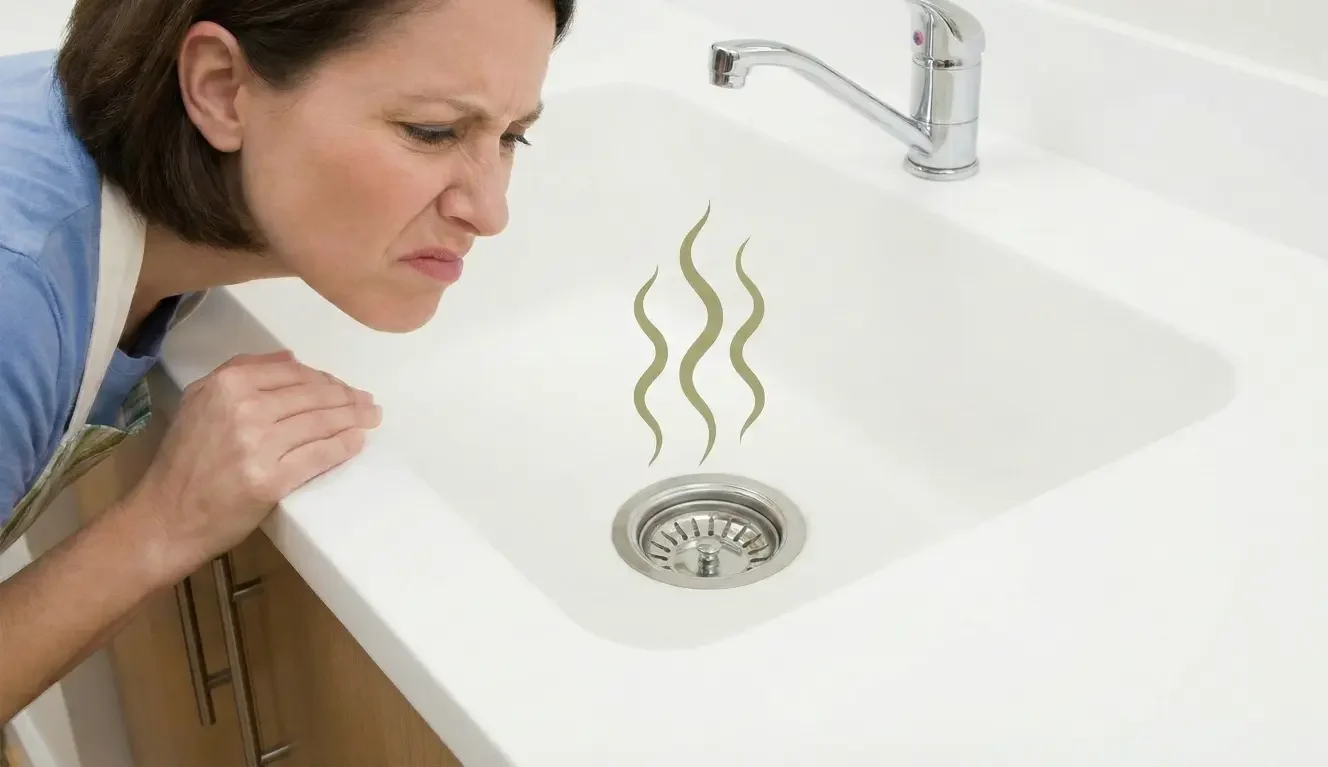
You cleaned the drain. You ran hot water. Maybe you tried baking soda and vinegar. The drain smells after cleaning continues…
When an odor returns within about 48 hours, it usually means one of two things: you didn’t actually remove what’s producing the odor (often a sticky buildup on the inside of the drain line), or the smell isn’t a “dirty drain” problem at all—it’s sewer gas getting past a missing water seal or a venting issue. A P-trap is designed to hold water that forms a barrier to keep sewer gas odors from entering the home.
This guide is a calm, homeowner-friendly way to figure out which bucket you’re in—so you can stop repeating the same rinse-and-scrub loop and take the least invasive next step.
The 48-Hour Rule: Why “I cleaned it” didn’t stick
Most “cleaning the drain” attempts focus on what you can see: the drain cover, the stopper, the hair catcher, the first inch or two of pipe. That’s not useless—sometimes that’s exactly where the smell is coming from. But persistent odors often live slightly farther down, where you can’t reach with a quick wipe.
Here’s why the 48-hour timeline matters:
- If the smell disappears for a few hours and then returns quickly, it often points to buildup on the pipe walls (biofilm) that wasn’t removed. Biofilm can hold onto organic residue and odor, and it can come back fast if you only “rinse” it.
- If the smell comes and goes depending on time, airflow, or fixture use, you may be dealing with a trap seal problem—meaning the barrier that blocks sewer gas isn’t reliably there. P-traps rely on retained water for that seal.
- If you notice gurgling, slow draining in multiple places, or odors after big water dumps (laundry, dishwasher), it can be venting/pressure-related—the system can’t “breathe,” and trap seals can be disturbed. Plumbing codes explicitly frame venting as protecting trap seals from siphonage/backpressure.
Think of the next steps like triage. Your goal isn’t to become a plumber—it’s to identify the most likely cause with simple observations.
First: Is this a drain odor or sewer gas?
You don’t need perfect certainty here. You just need a reasonable read on what you’re dealing with.
Some odors are more “local” to the drain:
- Musty, sour, “rotting food,” or “wet sponge” smells
- Strongest right at the drain opening
- Often worse in kitchen sinks or showers with frequent organic debris
Other odors are more consistent with sewer gas:
- “Sewage,” “rotten egg,” or a sharp sulfur-like smell (not always present, but common)
- Shows up even when the drain looks clean
- Sometimes stronger at certain times (morning, after HVAC runs, after other fixtures are used)
A safety note—keep this proportional: sewer odors are usually a plumbing function problem (trap/venting/leaks), not an emergency. Still, sewer gas can include hydrogen sulfide, which at low levels can irritate the eyes, nose, and throat; higher exposures are dangerous. If the smell is intense, ventilate the area and step away if you feel unwell.
If you want one quick reality check: if the odor is strongest right after you run water, that can mean either (a) you’re stirring up odor from buildup, or (b) water flow is affecting pressure/air movement in a way that’s pulling odors past a weak seal. That’s why the next section matters.
The Contrarian Moment: Your drain might be clean—your seal might be missing
Here’s the mindset shift that saves people a lot of frustration:
You can have a “clean” drain opening and still have odors, because the smell isn’t coming from grime—it’s coming from air.
A P-trap (that U-shaped bend under many sinks) is designed to hold a small amount of water. That water forms a seal that blocks sewer gas and odors from coming back up through the drain.
So if the smell keeps returning, ask: Is the seal there consistently?
Common reasons the seal isn’t there:
- Evaporation in rarely used fixtures (guest bath, basement shower, floor drains). If the fixture goes unused long enough, the water can evaporate and allow odor to escape.
- Siphonage / pressure issues related to venting. Plumbing venting is meant to keep pressure differentials at trap seals under control so the seal stays intact.
Soft next step (and a low-stress place to stop guessing): If your smell keeps coming back within 48 hours and you’re not sure whether it’s buildup or a trap/venting issue, a plumber can often identify the cause quickly by checking the trap seal, the fixture connection, and venting symptoms—before anyone talks about bigger repairs.
Triage Path A: Dry P-trap (odor comes and goes, worse after time away)
This is one of the most common “why does it smell like sewage?” causes—especially in homes with bathrooms or drains that don’t get used daily.
What to check:
- Is this fixture used infrequently (guest bath, basement sink/shower, laundry drain, floor drain)?
- Does the smell seem worse after the room has been closed up overnight or after time away?
- Does running water for 10–30 seconds reduce the smell noticeably?
Simple verification step:
- Run water in that fixture long enough to ensure the trap has refilled.
- Wait and observe: does the odor drop significantly and stay better?
If that fixes it, you likely had a dry trap seal. This is consistent with guidance that unused fixtures can lose trap water to evaporation.
If it keeps drying out:
- Log it as “needs deeper diagnosis.” Repeated trap-seal loss can be simple evaporation—or it can be related to pressure effects (siphonage) from venting/airflow issues. Plumbing codes discuss trap seal protection and venting specifically in this context.
- For some trap seals subject to evaporation (often floor drains), codes and standards discuss trap seal protection methods (like trap seal primers) rather than relying on memory alone.
Homeowner takeaway: if a rarely used drain is the culprit, the immediate fix may be as simple as restoring the seal with water. If it keeps happening, it’s worth a professional look—because the “why” determines the real fix.
Triage Path B: Biofilm (odor returns fast even after rinsing)
If your smell returns quickly—especially after you’ve “cleaned”—biofilm is a prime suspect.
Biofilm is a slimy layer that can form when bacteria adhere to pipe walls and trap organic residue. Because it clings to the inside of the pipe, it doesn’t always come out with a quick pour-and-rinse.
Biofilm vs. “a clog”
- A clog is about flow: slow draining, standing water, backups.
- Biofilm can be about odor first: drains may still “work,” but smell keeps returning.
A homeowner-friendly cleaning approach (process, not product roulette)
The goal is to remove what feeds odor—without turning this into a chemistry experiment.
- Remove what you can physically remove
- Pull hair/debris from the drain cover or hair catcher.
- Clean the stopper and the immediate area around the opening (this is where a lot of “hidden gunk” sits).
- Clean the drain wall area you can actually reach
- In many sinks, the stopper mechanism and the first section of drain pipe collect a surprising amount of residue. Focus on physical removal where possible. (If disassembly feels uncomfortable, don’t force it.)
- Flush and observe
- Run water to flush what you’ve loosened.
- Pay attention to the 48-hour test: if you actually removed the odor source, you should notice a meaningful improvement that lasts longer than a day or two.
“Proof posture”: what success looks like
- Odor reduces significantly and stays reduced beyond the first 48 hours.
- The smell doesn’t rebound immediately after running water.
- You stop noticing the odor “pulsing” in and out throughout the day.
If you’ve done basic physical cleaning and the smell still snaps back fast, that’s a strong signal you may need professional drain cleaning methods that reach farther down the line—especially if the odor is in a shower or a line that catches lots of hair/soap residue.
Triage Path C: Venting/pressure problems (gurgling + smell, multiple fixtures involved)
Venting is one of the most misunderstood parts of plumbing—until it’s not working.
Plain-English version: drains remove water; vents manage air. A vent system allows air to enter/exit so wastewater flows smoothly, while helping protect trap seals. Plumbing code language frames venting as permitting air movement so trap seals remain effective.
Signs you’re not dealing with “dirty drain” buildup
Look for patterns that involve air and pressure, not just residue:
- Gurgling in a sink or shower drain
- Odors that appear after another fixture is used (flush a toilet → sink gurgles)
- Slow draining across multiple fixtures
- Odor that seems to spread (more than one drain smells similar)
- Symptoms that get worse in certain weather or after long periods of system use
Consumer-facing resources often describe gurgling + foul odors as classic signs of venting trouble or blocked vents.
Why roof/vent issues often need a pro
The vent stack commonly exits through the roof. Diagnosing a venting issue can involve checking vent pathways, fixture venting, and how the system responds under load—often not a great DIY project (access, safety, and the risk of misdiagnosis).
If your situation fits this path, the best move is usually a diagnostic visit. The goal is to confirm whether vents are functioning, whether trap seals are being disturbed, and whether the issue is localized (one fixture) or systemic.
Common mistakes that make smells “come back”
A few common failure modes show up again and again:
Only cleaning the drain cover (not the source)
The drain cover is often the cleanest part. The smell can live on the stopper assembly, in the overflow path (where applicable), or on the pipe walls farther down.
Masking odor instead of removing it
Air fresheners can make the room tolerable while the problem persists—and sometimes it’s that persistence (the smell returning within 48 hours) that gives you the best diagnostic clue.
Overdoing harsh products
This guide intentionally avoids prescribing chemical “recipes.” Some combinations are unsafe, and many treatments are temporary if the underlying cause is trap seal loss or venting. If you’re unsure what a product contains or whether two products can interact, don’t mix them.
Ignoring system clues
If you hear gurgling, see multiple fixtures slow down, or notice odor after big discharges (laundry/dishwasher), it’s worth considering venting/pressure or a larger drainage issue rather than repeating the same drain-opening clean.
What to do next: the least-invasive fix order (a homeowner checklist)
Use this as your “stop guessing” sequence. The goal is to change one thing at a time and watch what happens.
- Restore the trap seal
- Run water in the fixture to make sure the P-trap is filled.
- If it’s a rarely used drain and the smell improves, you’ve learned something. Unused fixtures can lose trap water over time.
- Remove visible debris and clean contact points
- Hair catcher, drain cover, stopper, and the gunk that’s right at the opening.
- Clean what you can reach on the drain wall
- Focus on physical removal. Biofilm is often described as a sticky layer on pipe walls that can trap residue and odors.
- Watch for pattern clues over the next 48 hours
- If the odor returns fast even after physical cleaning, biofilm deeper down becomes more likely.
- If it comes and goes based on time or use, trap seal loss becomes more likely.
- If gurgling and multi-fixture symptoms appear, venting/pressure becomes more likely.
- Escalate based on the pattern (not frustration)
- Biofilm pattern → consider professional drain cleaning that reaches farther down the line.
- Trap seal keeps disappearing → investigate why (evaporation vs siphonage/venting).
- Venting pattern → diagnostic visit is usually the fastest path to a real answer.
Optional mental diagram (simple and useful):
Fixture → P-trap (water seal) → drain line → vent stack (air balance). When the seal is present and venting works, odors stay where they belong. When the seal is missing or pressure is off, odors can move into the room.
When to stop DIY and call a plumber
If you’ve tried the least-invasive steps and the odor is still winning, that’s not a personal failure—it’s a signal that the cause is likely beyond the drain opening.
Consider calling a plumber if:
- The odor persists after you’ve restored the trap seal and done basic physical cleaning.
- You notice gurgling, slow draining across multiple fixtures, or recurring backups.
- The smell is no longer isolated to one drain, or it consistently returns within 48 hours despite your efforts.
- You suspect venting issues (especially if symptoms show up after flushing or big water use). Venting is specifically tied to trap seal protection in plumbing codes and guidance.
When you call, you can frame it in a way that keeps it calm and focused:
- “I need a diagnostic visit for a recurring drain odor.”
- “Can you check trap seal issues and venting symptoms?”
- “If needed, can we evaluate the line (camera inspection) to rule out deeper problems?”
If you’re in metro Atlanta and want a low-pressure next step, Daniels Plumbing Services can check the common causes—trap seal problems, drainline buildup, and venting symptoms—and tell you what’s actually driving the odor.
FAQ
- Why does my drain smell after cleaning?
If the smell returns quickly, the odor source may still be present. Often that’s residue on the inside of the drain line (biofilm) that a quick rinse didn’t remove, or it’s sewer gas getting past a missing water seal in the P-trap. P-traps are designed to hold water that blocks sewer gas odors from entering the home. - Why does the drain odor come and go during the day?
“Comes and goes” often points to trap seal or airflow/pressure patterns—like a rarely used drain drying out, or venting issues that change how air moves through the system. If you also hear gurgling or see multi-fixture symptoms, venting becomes more likely. - What causes a sewer smell from a shower drain even when it’s not clogged?
A shower drain can smell even when it drains fine if the P-trap seal is weak or missing, or if venting/pressure issues disturb trap seals and allow odors back into the bathroom. Unused fixtures can also lose trap water over time. - How do I know if a P-trap is dry?
A common clue is a sewer-like smell that improves after you run water in the fixture. If the drain hasn’t been used for an extended time, the trap water can evaporate and allow odors to escape. - How can I clear biofilm in drain lines without guessing?
Start with physical removal: clean the stopper/drain opening parts that collect residue, remove hair/debris, and clean the drain wall area you can reach. Then use the 48-hour test: if the smell returns fast, you may be dealing with biofilm deeper in the line that needs more thorough cleaning than a surface rinse. Biofilm is often described as a sticky layer that forms on pipe walls and can hold odors. - When does a drain smell mean a vent problem?
If the smell pairs with gurgling, slow draining across multiple fixtures, or odors that appear after flushing or other big water use, venting/pressure issues become more likely. Resources and code guidance tie venting to maintaining trap seals and preventing odors from entering living spaces.
If the smell comes back within 48 hours, you shouldn’t have to keep guessing. We can check the most common causes—trap seal issues, drainline buildup, and venting symptoms—and tell you what’s actually driving the odor. Call or use our Make Appointment form to schedule a quick diagnosis.
Not sure if it’s a simple cleanup or something deeper? Ask about a drain cleaning and inspection-style visit so you can get clarity without committing to unnecessary work.
RELATED LINKS