
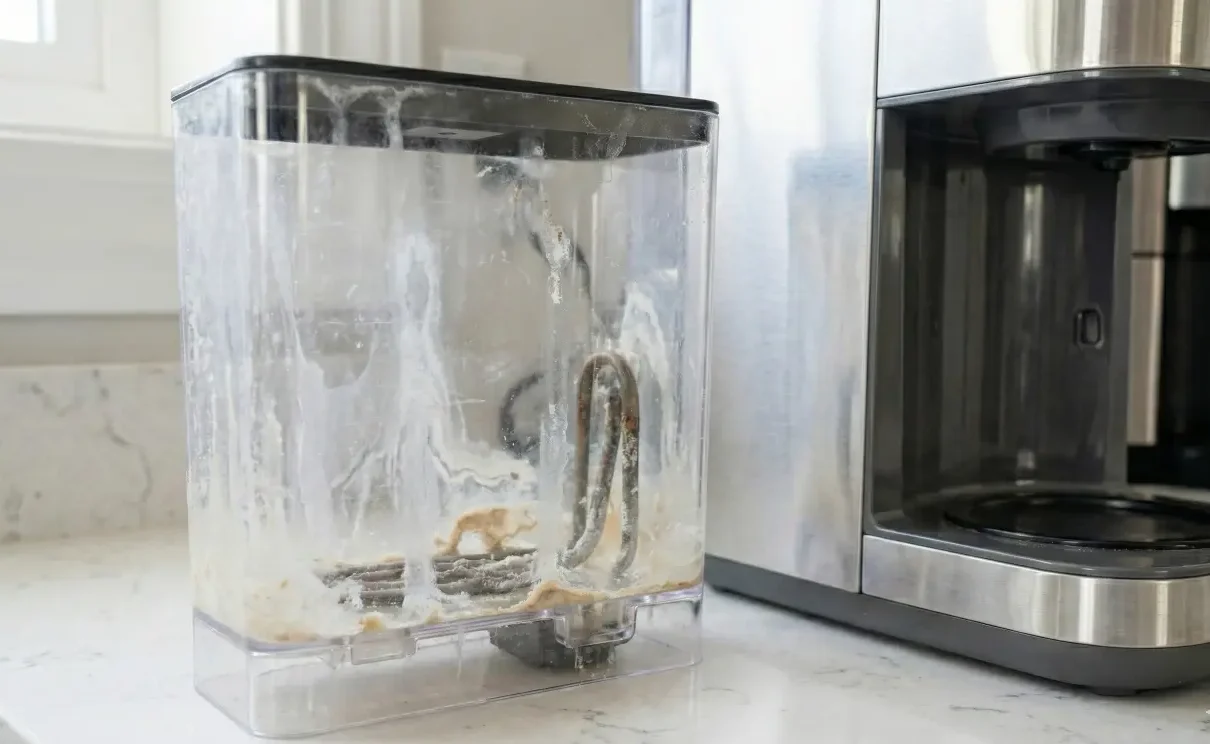
If you live in a hard-water area, you already know the everyday annoyances:
- Spots on glasses
- Soap that doesn’t lather well
- Stiff towels and dull fixtures
Most people stop the conversation there—“It’s annoying, but we’re used to it.”
What’s less obvious is how those same minerals are quietly shortening the life of your water heater, dishwasher, washing machine, fixtures, and even your plumbing, year after year. Over a 10–15 year period, the hidden bill for hard water appliance damage can easily outweigh the cost of a properly designed whole-home treatment system.
This article walks through what hard water actually does to your equipment, how that shows up as repair and replacement costs, and how treatment turns “nicer-feeling water” into a financially rational upgrade.
What Hard Water Actually Is—and Why It Wrecks Equipment
Minerals, temperature and scale: the chemistry in plain English
“Hard” water simply means water with higher levels of dissolved minerals—mainly calcium and magnesium. The water is clear when it comes out of the tap, but those minerals don’t just disappear:
- When water is heated or allowed to evaporate, the minerals come out of solution.
- They form a hard, chalky coating known as scale on anything they touch.
Think of it like tiny rock dust carried in your water. Every time water runs through your appliances and plumbing, a little more of that dust gets left behind.
Why heated surfaces (like water heaters) get hit first
Heat accelerates scale formation. That’s why:
- Water heater elements and tank walls
- Dishwasher heating elements
- Internal parts of washing machines
…are often the first victims. Hot surfaces essentially bake minerals onto themselves, layer by layer. Over time, the scale:
- Narrows passages
- Insulates heating elements
- Causes parts to overwork and overheat
Which all adds up to shorter lifespan and higher energy use.
Visible symptoms: spots, stiff laundry, dull fixtures
The things you see are just surface clues:
- Spots on shower doors and glasses
- A ring of white around faucets and showerheads
- Laundry that feels scratchy even with fabric softener
If you’re seeing this on the outside, there’s usually much more happening inside your plumbing and appliances.
Water Heaters: The Silent Budget Killer
How scale cuts efficiency and lifespan by years
Inside a traditional tank water heater, hard water minerals settle to the bottom and coat components:
- Sediment builds up on the tank floor
- Heating elements get covered in scale
- The unit has to work harder to deliver the same hot water
This can shorten the practical life of a water heater and increase the likelihood of:
- Lukewarm water complaints
- Rumbling or popping noises from sediment
- Leaks or premature failures
Instead of getting the full expected lifespan, hard water can push you into early replacement cycles, adding hundreds or thousands of dollars sooner than necessary.
Energy waste: paying to heat rock instead of water
Scale acts like insulation in the wrong place:
- The burner or element has to heat through a layer of mineral buildup
- More energy is spent to deliver the same temperature water
Over years of daily use, that added energy consumption becomes a serious, ongoing cost—essentially paying to heat rock.
Replacement timelines: treated vs untreated systems
While exact numbers vary, a reasonable expectation in many homes is that:
- A water heater on untreated hard water may need replacement noticeably sooner than one on treated water.
- A heater on properly conditioned water can often reach, or get closer to, its design lifespan.
Spread across 10–15 years, an extra replacement or a few “big repairs” on your water heater can easily outweigh a significant part of a treatment system’s cost.
Dishwashers, Washing Machines and Everyday Workhorses
Mineral buildup on elements and internal lines
Dishwashers and washing machines handle:
- Hot water
- Detergents
- Frequent cycles
That combination makes them prime targets for scale on:
- Heating elements
- Spray arms and jets
- Internal hoses and valves
Mineral buildup means:
- Poorer cleaning performance
- Clogged or uneven spray
- More strain on pumps and motors
All of which makes hard water appliance damage much more likely.
The cost and frequency of “mystery” mid-life failures
Many homeowners have experienced an appliance that:
- Fails halfway through its expected lifespan
- Needs a major repair that’s half the price of a new unit
Hard water is often a silent partner in those “mystery failures.” Over 10–15 years, multiple mid-life breakdowns across:
- Dishwasher
- Washing machine
- Ice maker lines
…can add up to several extra repair or replacement events that might have been avoided—or at least delayed—with better water quality.
How warranty fine print may treat hard water damage
Some appliance warranties:
- Exclude failures related to water quality
- Require “proper installation and suitable water conditions”
That doesn’t mean every claim will be denied, but it does mean:
- You may have less leverage if hard water is clearly contributing to a failure.
- Treatment can be part of protecting not just the equipment, but your ability to rely on warranties.
Fixtures, Showerheads and Hidden Plumbing
Dripping faucets, clogged aerators and shower issues
On the “small stuff” side, you may see:
- Faucets that drip or don’t shut off cleanly
- Aerators that clog and spray in odd directions
- Showerheads that plug up and lose pressure
Individually, those are manageable annoyances. But:
- Replacing cartridges and fixtures more often
- Regularly cleaning or swapping aerators and showerheads
…is another way hard water quietly takes money and time.
Scale inside pipes: rougher surfaces, reduced flow, more friction
Inside your plumbing:
- Scale can accumulate on pipe walls
- Surfaces get rougher, and internal diameter effectively shrinks
- Flow and pressure can drop over time in extreme cases
While modern piping can handle a lot, long-term buildup raises the chance of:
- More complex plumbing work down the road
- Less efficient water movement throughout the home
Think of it as slowly turning smooth pipes into gravel-lined ones—nothing breaks right away, but everything is under more strain.
Cumulative effect on home value and buyer perception
When it’s time to sell, buyers and inspectors notice:
- Tired fixtures
- Low-flow showerheads and faucets
- Evidence of frequent water heater or appliance replacement
A home that feels “tired” or “worked hard” by mineral-laden water can subtly impact:
- Buyer confidence
- Perceived future maintenance costs
- Negotiation leverage and offers
Conditioned water doesn’t guarantee a higher sale price, but it helps your home present as well cared for and lower-risk.
POV – “I’ll Just Replace Stuff When It Breaks” Is Expensive Thinking
The false comfort of treating breakdowns as normal
It’s easy to shrug and say:
“Appliances don’t last like they used to.”
Some wear and tear is inevitable, but:
- Accepting early failures as “normal” can hide how much hard water is accelerating them.
- You may be writing off preventable wear as just “part of owning a home.”
How clustered failures blow up a household budget
Hard water rarely picks one appliance and leaves the rest alone. Instead, it:
- Affects every hot-water-using appliance and many fixtures
- Increases the odds that multiple items age faster together
That can mean:
- Water heater issues
- Dishwasher failure
- Laundry problems
…all within a similar timeframe. Clustered failures strain budgets much more than one planned upgrade at a time.
Why investors and landlords don’t accept preventable wear
Rental property investors often:
- Look at total cost of ownership over 5–15 years
- Track how often units need new water heaters, dishwashers, and fixtures
- Aim to minimize surprise work orders and tenant complaints
From that perspective, reducing hard water appliance damage is not a luxury—it’s a way to protect cash flow and preserve property value.
Ten-Year Cost Scenarios: With vs Without Water Treatment
Let’s look at simplified, illustrative scenarios. These are examples, not promises, but they show how the math can work.
Baseline assumptions: number of appliances and local costs
Assume a typical single-family home with:
- 1 water heater
- 1 dishwasher
- 1 washing machine
- A reasonable number of fixtures (faucets, showerheads, etc.)
Assume:
- Hard water contributes to shorter lifespans and more service calls.
- A professionally installed whole-home treatment system has an upfront cost plus modest ongoing maintenance.
Scenario 1: Single-family home, moderate use
Untreated hard water (10-year period, example only):
- Water heater replaced earlier than expected
- One major repair and one replacement between dishwasher and washing machine
- Multiple fixture/aerator replacements
- Extra energy use from scale in the water heater
With properly designed treatment:
- Water heater more likely reaches closer to its expected lifespan
- Fewer mid-life appliance failures
- Less frequent fixture replacement and less cleaning effort
- Improved energy efficiency at the water heater
When you compare:
- Extra replacements + extra energy + extra maintenance
…to:
- Cost of a treatment system + its maintenance
…it’s easy to see how a treatment system can pay for itself over a decade in many homes, especially in hard-water-heavy regions.
Scenario 2: Busy household or rental property with heavy turnover
Busy homes or rentals:
- Run laundry more often
- Use dishwashers heavily
- See more frequent hot-water usage
- Have guests or tenants who may not treat appliances gently
In these settings, hard water speeds things up:
- Appliances reach their failure point faster
- Complaints and service calls increase
- Replacement cycles tighten (more big-ticket expenses in a shorter window)
Adding treatment:
- Spreads out replacement cycles
- Reduces “mystery” failures
- Provides a better experience for tenants or guests
Again, the goal isn’t perfection—it’s turning constant surprises into predictable, budgetable upgrades.
Primary CTA (after Ten-Year Scenarios):
Request a Personalized Hard Water Cost-Savings Analysis – Daniels Plumbing can look at your current appliances, local water conditions, and typical usage to estimate how much hard water may be costing you—and how a treatment system could change that over the next 10 years.
Decision Point – Do You Need Whole-Home Treatment or Targeted Fixes?
When point-of-use makes sense (and when it doesn’t)
Point-of-use filters and softeners (at a single sink or appliance) can help when:
- You mainly care about drinking water taste at the kitchen sink
- You’re renting and can’t modify the main plumbing system
- Budget is tight, and you need a small first step
They can improve experience in key spots, but they don’t protect:
- The water heater
- Internal appliance components
- Most fixtures and plumbing runs
Advantages of whole-home systems for protection and convenience
Whole-home systems treat water as it enters the house, benefiting:
- Every appliance that uses hot water
- Fixtures and showerheads
- Internal plumbing and valves
Advantages include:
- One central system instead of many small ones
- Consistent water quality throughout the home
- Protection for both visible and hidden equipment
For long-term owners and investors, this is typically where real cost protection comes from.
Budget and home profile factors to consider
When deciding what level of treatment makes sense, consider:
- How long you plan to stay in the home
- The age and value of your existing appliances
- Whether you have finished basements or high-value fixtures
- If you own rentals or multiple properties in hard-water areas
The more value you have tied up in equipment and plumbing—and the longer your timeframe—the stronger the case for whole-home protection.
Transformation – What Life Looks Like with Conditioned Water
Fewer surprises and more predictable replacement cycles
With properly treated water, homeowners often experience:
- Fewer sudden failures from scale-related issues
- More appliances reaching their expected lifespans
- The ability to plan upgrades instead of reacting to breakdowns
That predictability makes budgeting easier and reduces stress.
Cleaner fixtures, glassware and bathrooms with less effort
Conditioned water also means:
- Fewer spots on glassware and shower doors
- Less crusty buildup on faucets and showerheads
- Easier cleaning routines overall
These comfort and convenience benefits are real, but they’re also part of the financial story: less time, fewer cleaning products, fewer fixture replacements.
The subtle effect on comfort, resale and day-to-day satisfaction
Over time, the difference shows up in:
- How your home looks and feels
- How appliances perform and sound
- How much work it takes to keep things looking “like new”
When you eventually sell, being able to say the home has protected plumbing and appliances with water treatment can be a quiet but meaningful plus.
Next Steps: Testing, System Selection and Installation
Getting your water tested and interpreted correctly
A smart starting point is to:
- Have your water tested for hardness and other key parameters
- Review the results with a qualified professional who understands both treatment and plumbing
This gives you a clear picture: How hard is your water, really? And how aggressively is it likely to affect your home?
How to compare treatment options without getting lost in jargon
When you start looking at systems, it’s easy to get overwhelmed. Focus on:
- What the system is designed to remove or reduce (hardness, other contaminants, or both)
- Where it’s installed (point-of-use vs whole-home)
- Maintenance requirements (media changes, salt, filters, etc.)
- Warranty and expected service life
You don’t need to become a water chemist. You just need a system that:
- Matches your water conditions
- Fits your home’s size and layout
- Makes financial sense over the years you plan to own the property
Questions to ask before approving a whole-home system install
Before you move forward, ask your plumber:
- “What are my current hardness levels and main risks to equipment?”
- “How will this system protect my water heater and major appliances?”
- “What are my upfront and annual maintenance costs?”
- “What changes should I expect in cleaning routines and appliance performance?”
Secondary CTA (after Next Steps):
Schedule a Water Quality Test and Home Review – Daniels Plumbing can test your water, inspect your key appliances, and recommend a right-sized treatment plan to protect your home—not oversell it.
Conclusion: Turning Invisible Wear into Visible Savings
Hard water doesn’t make a dramatic entrance. It doesn’t flood your basement or set off alarms. It just quietly:
- Coats heating elements
- Clogs tiny passages
- Shortens lifespans
- Steals efficiency
Over 10–15 years, that hard water appliance damage can translate into:
- Extra water heater replacements
- More frequent dishwasher and washer failures
- Constant fixture and showerhead issues
- Higher energy and maintenance costs
When you add all of that up, whole-home water treatment shifts from “nice-to-have” to financially sensible protection for one of your biggest investments.
As a community-rooted plumbing company, Daniels Plumbing is here to help you see the full picture—not just sell a box. With good testing, clear math, and the right system design, you can turn invisible mineral wear into visible long-term savings and a home that simply feels—and runs—better.
Request a Personalized Hard Water Cost-Savings Analysis – Contact Daniels Plumbing today, and let’s compare the cost of doing nothing with the long-term savings of treating your water, so you can decide what makes the most sense for your home or investment property.